




01. Edit your cna pre employment physical form online
Type text, add images, blackout confidential details, add comments, highlights and more.

Type text, add images, blackout confidential details, add comments, highlights and more.

Draw your signature, type it, upload its image, or use your mobile device as a signature pad.

Send cna physical form via email, link, or fax. You can also download it, export it or print it out.
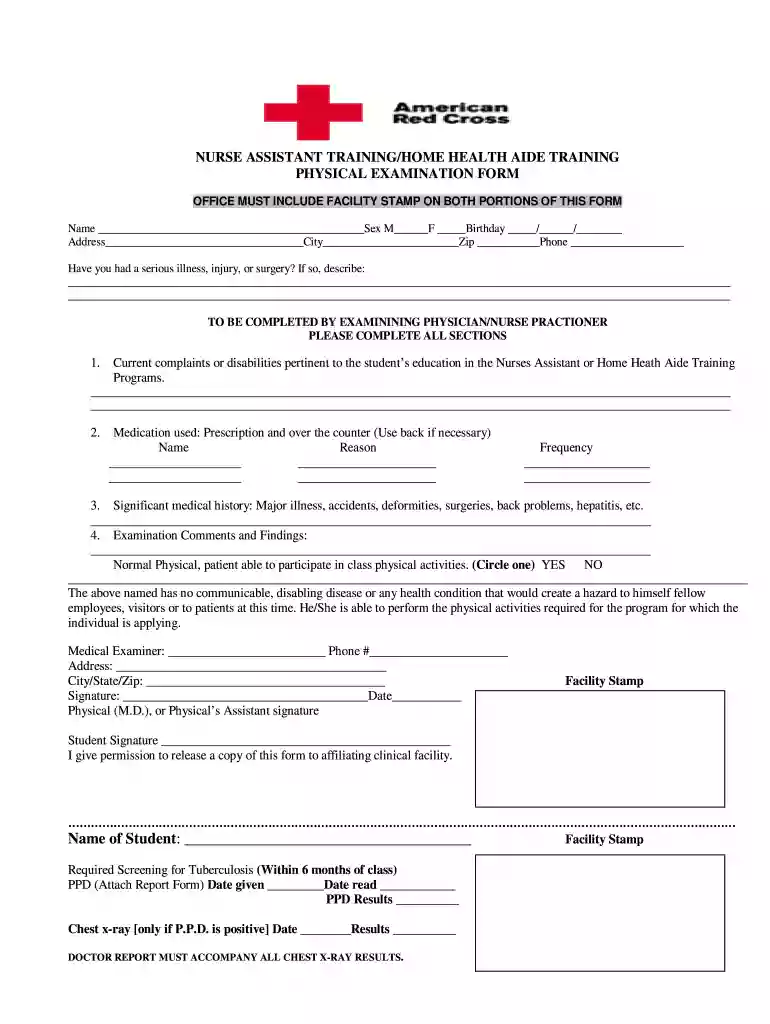
The CNA physical form is a critical document that ensures Nurse Assistant (CNA) students meet the health requirements necessary for training programs and employment in healthcare settings. This form helps assess a candidate's physical capability to perform tasks associated with patient care, ensuring both their safety and that of the patients they will care for. Generally required by educational institutions and healthcare employers, the form collects vital personal details, medical history, and examination results, allowing the appropriate authorities to verify readiness for the demands of healthcare roles.
The significance of the CNA physical exam form lies in promoting safety and compliance within the healthcare sector, ensuring that only eligible individuals participate in training and practice.
The CNA physical form consists of several detailed components that document a candidate's health status. Understanding these elements is essential for compliance and to fulfill the form's purpose effectively.
Section One: Student Information
Section Two: Medical History Disclosure
Section Three: Physical Examination Findings
Section Four: Tuberculosis Screening
Each of these components plays a vital role in ensuring that candidates are fully prepared for the rigors of healthcare roles they aim to undertake.
Completing the CNA physical form correctly is essential for a smooth transition into the training program. Adhering to each step ensures compliance and minimizes delays.
Gather Necessary Information:
Schedule a Physical Examination:
Complete the Medical History Section:
Physical Assessment:
Finalize the Form:
Following these steps will help ensure that you submit a fully completed form that meets all requirements.
The CNA physical form must comply with various federal and state regulations, which safeguard the interests of both candidates and patients in nursing care settings. Understanding these legal aspects ensures that candidates are educated about their rights and responsibilities.
Legal Obligations:
Compliance with Training Institutions:
Consequences of Non-Compliance:
Understanding these compliance requirements is crucial for candidates navigating through the healthcare training process.
Healthcare candidates may face unique circumstances that impact the completion of their CNA physical form. Recognizing these exceptions ensures proper handling and transparency.
Pre-existing Health Conditions:
Age and Maturity Assessments:
Emergency Protocols:
Addressing these special considerations ensures that all candidates are appropriately supported and prepared for their healthcare training.
At DocHub, your data security is our priority. We follow HIPAA, SOC2, GDPR, and other standards, so you can work on your documents with confidence.
Apr 15, 2024 List of Forms for all Program Types. Nurse Assistant Training Program. BCIA 8016 (PDF) Request for Live Scan Service; BCIA 8016 SAMPLE (PDF)Read more
Setting CNA Bandwidth Physical Disks . 98. 14.11. Create a Virtual DiskRead more
1. Health Physical: A physical form must be completed within 11 months of starting class. 2. Immunization Requirements: Students must show officialRead more


