
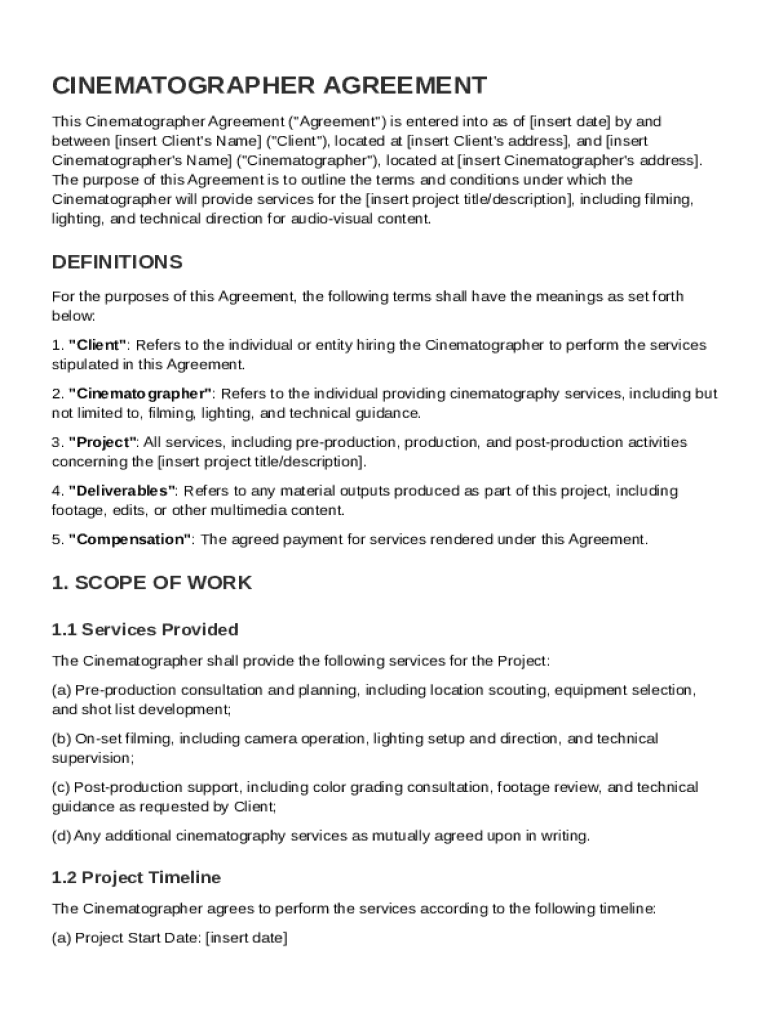







Definition and Function of Cinematographer Contract Template
The Cinematographer Contract Template is a detailed legal document used to outline the terms and conditions for a cinematographer's services on a particular project. This contract is essential for defining roles, responsibilities, and expectations between the cinematographer and the client, ensuring a clear understanding of the workflow, deliverables, and financial arrangements. It includes specific sections on the scope of work, compensation, ownership of the work produced, confidentiality agreements, and mechanisms for resolving disputes. The contract's primary purpose is to protect the interests of all parties involved, reducing risks and providing a legal framework that guides professional engagements in cinematography.
How to Use the Cinematographer Contract Template
To effectively utilize the Cinematographer Contract Template, begin by familiarizing yourself with its structure and sections. Each part of the contract serves a specific legal and practical purpose:
- Review each section: Start with understanding the scope of work. Clearly outline the cinematography services to be provided, setting precise expectations to avoid misunderstandings.
- Fill out the details: Input specific project details such as the names of the parties involved, project timelines, and payment terms. Make sure all blanks are completed accurately.
- Adjust as needed: Customize terms like compensation and rights to tailor the contract to the specific project. Ensure that any additional clauses are agreed upon by all parties.
- Seek legal advice: If necessary, consult a legal professional to review the contract to ensure that all terms conform to current legal standards and adequately protect your interests.
- Finalize and execute: Both parties should review and sign the document, which then becomes legally binding. Consider using digital signature tools for added convenience and security.
Steps to Complete the Cinematographer Contract Template
Completing the Cinematographer Contract Template involves a systematic approach to ensure all contractual obligations are covered:
- Gather necessary information: Collect all relevant project details, including timeline, compensation, and deliverables.
- Input details in the form: Carefully fill in each section with specific project information, using clear and concise language.
- Customize clauses: Modify any standard clauses to better fit the project's needs and ensure both parties' expectations are represented.
- Review thoroughly: Examine the entire contract with all involved parties, checking for errors or omissions that could lead to future disputes.
- Seek mutual agreement: Ensure all terms are mutually agreed upon before anyone signs the contract to prevent future conflicts.
- Sign and share the document: After obtaining signatures, distribute copies to all parties, maintaining one for your records.
Key Elements of the Cinematographer Contract Template
The contract template comprises several critical elements:
- Scope of work: A detailed description of the services and deliverables expected from the cinematographer.
- Compensation: The agreed payment structure, specifying when and how payments will be made, including any contingent compensation.
- Ownership and rights: This section defines who maintains the intellectual property rights to the footage and deliverables created.
- Confidentiality and non-disclosure: Clauses ensuring all project details and related information remain confidential.
- Termination conditions: Guidelines for how either party can terminate the contract and the consequences of such action.
- Indemnification: Outlines responsibilities for any potential liabilities and states how parties will be indemnified.
Legal Use of the Cinematographer Contract Template
When using the Cinematographer Contract Template, it's paramount that all legal stipulations align with U.S. law, specifically focusing on industry standards for audiovisual contracts. This ensures its enforceability and protection under national and state legal frameworks. Adhering to the ESIGN Act, signatures collected through digital platforms should be legally binding and recognized. The contract should also comply with regulations regarding intellectual property and workplace agreements, protecting the rights of all parties involved.
State-Specific Rules for the Cinematographer Contract Template
Depending on the state where the project is executed, the contractual terms might require adjustments:
- Employment laws: Different states such as California may have unique regulations about freelancer classification or specific industry rules.
- Intellectual property rights: Varying state laws might affect how intellectual property is valued and transferred.
- Dispute resolution: Some states mandate certain forms of mediation or arbitration before legal action is pursued.
- Payment terms: State laws may influence how payment and late fees can be structured.
Examples of Using the Cinematographer Contract Template
To gain a better understanding, consider these scenarios:
- Corporate project: A corporation hiring a cinematographer for promotional videos would specify expected content deliverables, usage rights, and compensation tied to project milestones within the agreement.
- Independent film: An independent film project might outline detailed budget constraints, revenue-sharing conditions, and credit acknowledgements.
- Advert production: For an advertisement, specify deadlines to align with marketing campaigns, along with exclusivity rights for footage usage.
Business Types that Benefit Most from Cinematographer Contract Template
Different businesses and organizations can greatly benefit from using this template:
- Film production companies: Safeguard against production disputes and clearly outline project deliverables and creative control.
- Event management firms: Ensure clarity in the documentation of live event coverage, securing rights and responsibilities.
- Corporate entities: Large corporations seeking advertising or promotional material can use the contract to formalize relationships and protect brand assets.
- Creative agencies: Agencies that regularly hire freelance cinematographers can streamline processes by having a standardized contract in place.