




01. Edit your form online
Type text, add images, blackout confidential details, add comments, highlights and more.

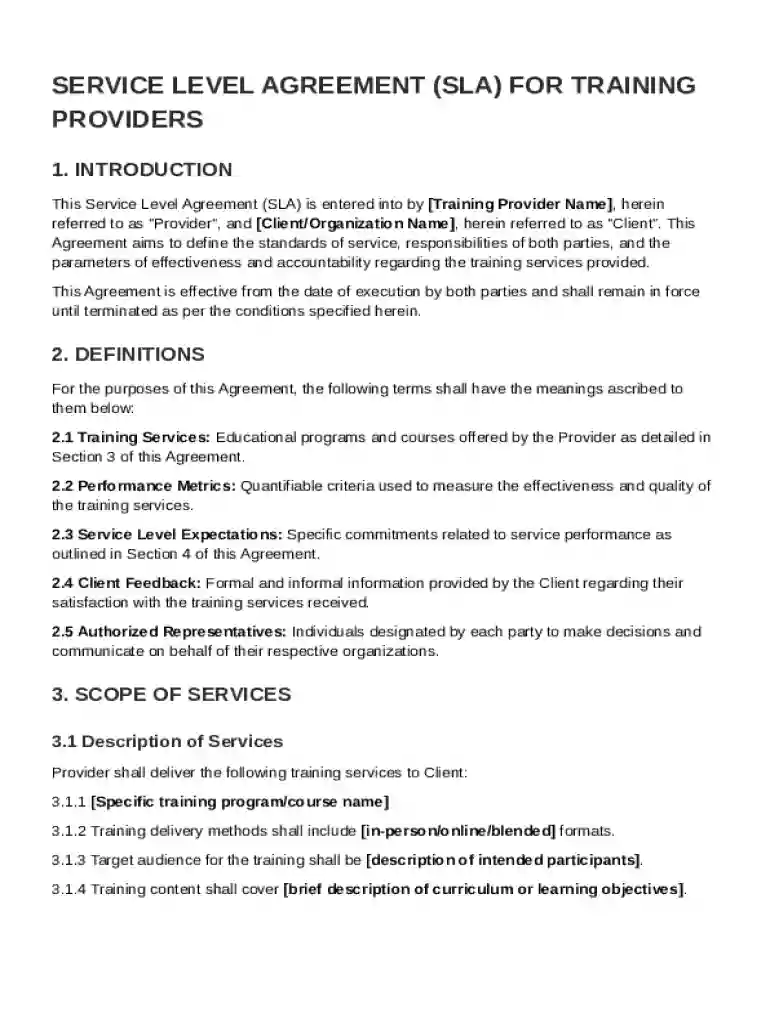
Type text, add images, blackout confidential details, add comments, highlights and more.

Draw your signature, type it, upload its image, or use your mobile device as a signature pad.

Send it via email, link, or fax. You can also download it, export it or print it out.
The "Service Level for Training Providers Agreement Template" is a formal document outlining the mutual responsibilities and expectations between a training provider and a client. This Service Level Agreement (SLA) details the standards for delivering training services, emphasizing accountability and quality assurance. By clearly defining performance metrics, communication protocols, and responsibilities, the SLA aims to set a framework for effective training delivery while ensuring both parties understand their obligations.
To effectively use the Service Level for Training Providers Agreement Template, you must customize it to fit the specific needs of the agreement between the client and the training provider. Begin by reviewing each section of the template, ensuring all terms and conditions are applicable to the services being provided.
The agreement template encompasses crucial elements that establish the framework for collaboration between the training provider and client. These components ensure the clarity and enforceability of the agreement.
Completing the Service Level for Training Providers Agreement Template involves several clear steps to guarantee accuracy and completeness.
Utilizing a Service Level Agreement Template is crucial in establishing a transparent business relationship. It serves as a protective tool for both parties, outlining mutual expectations and legal obligations.
Primarily, this SLA template is used by organizations that contract with training providers to ensure the quality and effectiveness of educational services.


Certain legal nuances need to be considered when drafting the Service Level for Training Providers Agreement Template, particularly in the context of enforceability and compliance with U.S. laws.
While this agreement can generally be used across the United States, it is necessary to consider specific state regulations that may influence its contents or enforceability.
Real-world case studies and practical scenarios highlight the utility of properly constructed SLAs in maintaining service quality and ensuring customer satisfaction.
At DocHub, your data security is our priority. We follow HIPAA, SOC2, GDPR, and other standards, so you can work on your documents with confidence.
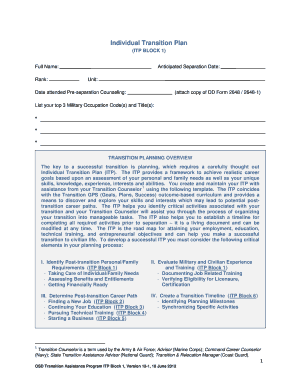
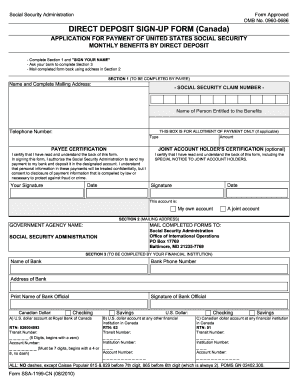

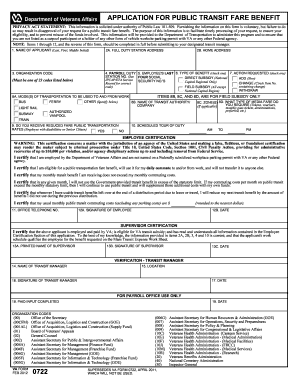



The purpose of this Contract is for the Agency to provide 12 hours of training on Quality Early Learning Practices-Positive. Behavior Support Foundations to an
Jul 1, 2025 This Service Level Agreement (SLA) is intended to identify the basic services, and any agreed upon optional services provided by the
The activation process provides location data required to deliver specific service levels as detailed in Section 6. 4. Obtaining Service. Contact Lenovo or a


