
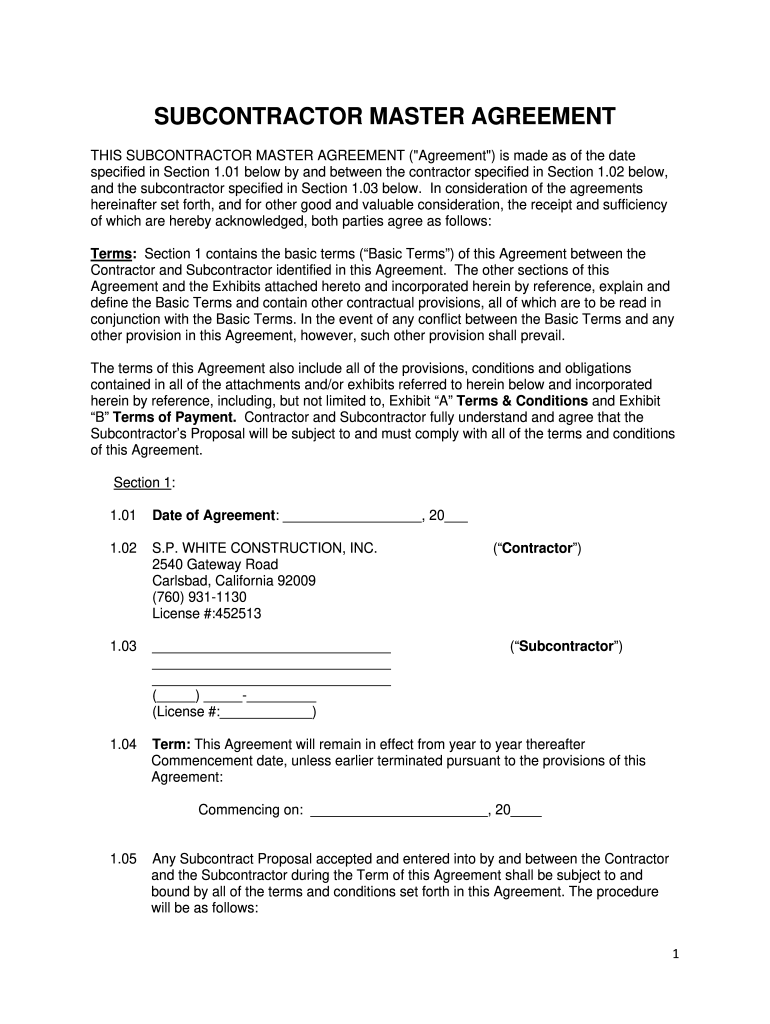







Definition and Meaning of the Subcontractor Master Form
The subcontractor master form is a fundamental document in construction and contracting that outlines the agreement between a general contractor and subcontractor. It serves to establish a clear framework for the scope of work, payment schedules, timeline, liabilities, and legal obligations. This master form is crucial for ensuring that all parties involved understand their roles and responsibilities, thereby minimizing disputes and ensuring compliance with industry standards and legal regulations.
Key components of the subcontractor master form include:
- Scope of Work: Detailed descriptions of the tasks that the subcontractor will perform, including location, specifications, and project deadlines.
- Payment Terms: Clear payment procedures, including amounts, schedules, and methods of compensation.
- Insurance and Licenses: Requirements for the subcontractor to carry specific types of insurance and maintain the necessary licenses to perform the work.
- Termination Clauses: Conditions under which the contract may be terminated by either party, including provisions for notice and dispute resolution.
Understanding the definition and meaning of the subcontractor master form is essential for both general contractors and subcontractors alike to foster healthy business relationships and ensure legal compliance.
How to Use the Subcontractor Master Form Effectively
Using the subcontractor master form effectively involves several strategic steps that ensure compliance with both parties' expectations. Adopt the following procedures to leverage this form:
- Review the Master Form: Both parties should carefully review the subcontractor master form to ensure all provisions meet their needs and comply with local laws.
- Negotiate Terms: Engage in discussions where needed to negotiate specific clauses, including scope, payment terms, and timelines.
- Gather Required Information: Collect relevant information such as insurance details, licenses, and other certifications needed to complete the form accurately.
- Complete All Sections: Ensure that every section of the subcontractor master form is filled out comprehensively, including any necessary signatures.
- Maintain Copies: Both parties should keep copies of the signed subcontractor master form for their records and future reference.
It’s essential that both the general contractor and subcontractor communicate openly throughout the process to minimize misunderstandings and ensure a successful collaboration.
Steps to Complete the Subcontractor Master Form
Completing a subcontractor master form requires following a systematic process. Here’s a step-by-step approach to ensure accuracy and completeness:
- Identify Project Details: Start by recording the project name, location, and the parties involved—specifically the general contractor and subcontractor.
- Define Scope of Work: Clearly outline the specific work the subcontractor will undertake. Ensure that descriptions are precise to avoid ambiguity.
- Establish Payment Terms:
- Specify the total amount to be paid and the payment schedule (e.g., milestones, upon completion).
- Include provisions for additional costs or change orders if applicable.
- Outline Legal Obligations: Include requirements for insurance, licenses, and any compliance with federal or state regulations.
- Incorporate Termination Clauses: Define the terms under which either party can terminate the agreement, including how disputes will be managed.
- Finalize with Signatures: Once all details are confirmed, both parties should sign the document. Retain copies to ensure both parties have access to the agreement.
Following these steps carefully will foster a clearer understanding between the parties involved and help mitigate risks associated with subcontracting work.
Important Terms Related to Subcontractor Master Form
Familiarity with key terms associated with the subcontractor master form is crucial for navigating contracts effectively. Some important terms include:
- General Contractor: The primary contractor responsible for the overall control of a project, including hiring subcontractors.
- Scope of Work: This defines the exact nature and extent of the work that subcontractors are contracted to perform.
- Change Order: A formal request to modify the project scope, often including adjustments in cost and timeline.
- Indemnification: A clause that protects one party from liability or loss, usually involving the terms under which a subcontractor may be liable for damages.
- Liquidated Damages: Pre-specified amounts that must be paid if the subcontractor fails to meet the contractual obligations, such as timelines.
Understanding these terms enhances comprehension of the subcontractor master form and ensures that both parties are aligned on the essential elements of their agreement.
Legal Use of the Subcontractor Master Form in the United States
The subcontractor master form serves an essential legal role in the construction industry and is governed by both state and federal laws. Ensuring proper legal use includes:
- Adhering to State Laws: Each state may have specific regulations regarding subcontractor agreements. Consult local statutes to ensure compliance.
- Documenting Proper Agreements: Ensure that all agreements and provisions are documented and signed. An oral agreement may not hold up in court without written verification.
- Compliance with Labor Laws: Ensure that the subcontractor complies with all applicable labor laws, including wage regulations and safety standards.
- Insurance Requirements: Frequently, proof of insurance is necessary to safeguard against potential liabilities. This may include general liability insurance and worker’s compensation.
By understanding and adhering to these legal considerations, all parties can protect themselves, reducing the risk of disputes and potential legal issues.
Examples of Using the Subcontractor Master Form
Practical examples of how the subcontractor master form is applied can offer valuable insights. Here are a few scenarios:
- Construction Project: A general contractor hires a plumbing subcontractor for a new residential development. The subcontractor master form outlines the scope of installation work, payment terms for completed tasks, and insurance requirements to protect against accidents.
- Renovation Job: An owner plans to renovate a commercial property and uses the subcontractor master form to hire various subcontractors (electrical, flooring) for the project, clearly defining each trade's responsibilities and the timeline for completion.
- Government Contracts: In public works projects, a prime contractor uses the subcontractor master form to engage specialists for specific trades, ensuring compliance with prevailing wage laws and regulations in the bidding process.
These examples highlight the versatility of the subcontractor master form across different situations, enabling clearer agreements that protect the interests of all parties involved.




