Definition and Meaning
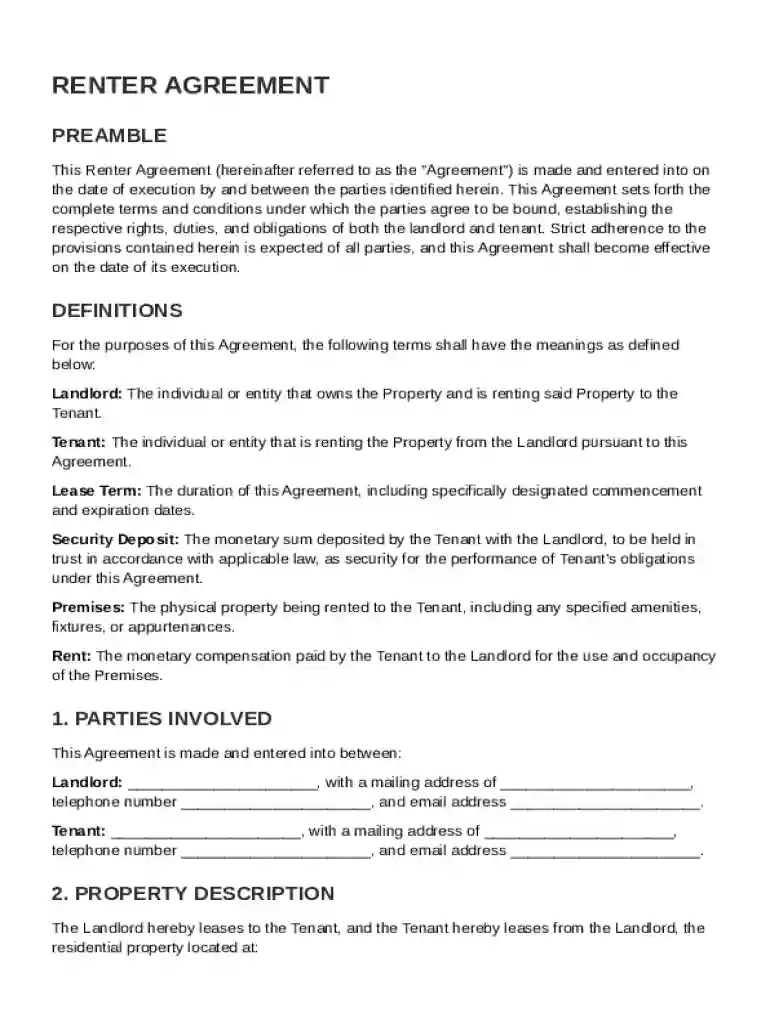
A Renter Agreement Template serves as a foundational legal document outlining the terms and conditions under which a property is rented from a landlord to a tenant. It includes specific clauses that define the rights and responsibilities of both parties, ensuring a clear understanding of the rental arrangement. The template typically encompasses sections such as rental payment terms, lease duration, and use of premises, providing a structured format to facilitate compliance and minimize disputes. By utilizing a Renter Agreement Template, both landlords and tenants can streamline the process of establishing a legally binding rental agreement.
How to Use the Renter Agreement Template
Utilizing a Renter Agreement Template involves several straightforward steps designed to customize the document to suit specific needs.
- Begin by downloading the template from a reliable platform like DocHub.
- Fill in the essential details, including the names and contact information of the landlord and tenant.
- Specify the property's address and describe its features.
- Insert the rental payment details, clearly stating the due date and method of payment.
- Define the lease term and any conditions for renewal or termination.
- Include additional clauses relevant to maintenance responsibilities and security deposits.
Once customized, both parties should review the completed agreement to ensure accuracy and relevance before signing.
Key Elements of the Renter Agreement Template
The Renter Agreement Template is composed of several critical elements essential for a comprehensive rental contract.
- Parties Involved: Clearly identify the landlord and tenant, complete with their full names and contact details.
- Property Description: Provide a detailed description of the rental property, including its address and specific characteristics.
- Lease Duration: State the duration of the lease, whether it is for a fixed term or a month-to-month arrangement, and include start and end dates.
- Rental Payment Terms: Clearly outline the rent amount, due date, late fee policies, and acceptable payment methods.
- Security Deposit Requirements: Specify the security deposit amount, conditions for its return, and any deductions allowed.
- Maintenance Responsibilities: Define the maintenance duties of both the landlord and tenant, including who is responsible for repairs.
- Use of Premises: Limit the use of the property to specified agreed-upon activities and set conditions for occupancy limits.
Steps to Complete the Renter Agreement Template
Completing the Renter Agreement Template is a step-by-step process that ensures all necessary details are accurately captured.
- Fill in Basic Information: Start by entering the names, addresses, and contact information of both the landlord and tenant.
- Describe the Property: Include a detailed description of the rental property, specifying the address and any unique features.
- Set Rental Terms: Input the amount of rent, frequency of payments, and due dates. Include any late payment penalties.
- Define Lease Terms: Specify the length of the agreement, whether it is a fixed-term or month-to-month lease, with clear start and end dates.
- Outline Additional Clauses: Add clauses concerning maintenance responsibilities, restrictions on use, and policies on alterations to the property.
- Capture Signatures: Ensure both parties read and agree to the terms, providing space for both signatures at the end of the document.
Legal Use of the Renter Agreement Template
The Renter Agreement Template is a legally binding document when correctly executed, meaning both parties must adhere to its terms. It is essential to ensure that the agreement complies with local and state laws applicable to rental properties.
- Review Laws: Before finalizing, review any state-specific landlord-tenant laws that might affect terms related to rent control, notice periods, or eviction processes.
- Include Legal Clauses: Ensure the inclusion of clauses such as governing law, which specifies the jurisdiction's laws governing the agreement.
- Consult Professionals: In complex rental scenarios, consult a legal professional to review the agreement for compliance and additional legal protections.
State-Specific Rules for the Renter Agreement Template
Rental laws in the United States vary from one state to another, so adapting the Renter Agreement Template according to the specific requirements of each location is crucial.
- Rent Control Regulations: Some states have rent control laws that limit rent increases, which should be reflected in the agreement.
- Security Deposit Rules: Varying by state, these rules govern the maximum allowable deposit, conditions for its return, and deadlines for refunding.
- Notice Requirements: Notice periods for lease termination or changes in rental terms may differ, and compliance with the state's requirements is mandatory.
- Eviction Protocols: The process for eviction must align with state laws, detailing the grounds and legal procedure for removing a tenant.
Important Terms Related to Renter Agreement Template
Understanding the key terms incorporated within a Renter Agreement Template is crucial for both landlords and tenants.
- Lease Term: Refers to the period during which the lease is in effect, which can be fixed-term or renewable.
- Security Deposit: A sum paid by the tenant at the lease's commencement to cover potential damages beyond normal wear and tear.
- Maintenance Responsibilities: Tasks and repairs the tenant or landlord must perform, as specified in the agreement.
- Governing Law: The legal framework within which the lease is interpreted and enforced, typically determined by the property's location.
Examples of Using the Renter Agreement Template
Practical examples illustrate the versatility and functionality of the Renter Agreement Template for various rental scenarios.
- Short-term Rentals: For vacation or temporary housing, a modified version of the Renter Agreement Template can specify different terms, such as rental period, deposits, and rules for use.
- Co-tenancy Arrangements: The template can be adapted to include clauses addressing responsibilities among co-tenants, such as shared payment of utilities and services.
- Commercial Leases: Although primarily for residential use, the structure can inspire clauses for small-scale commercial rental agreements, focusing more on business use and property alterations.