
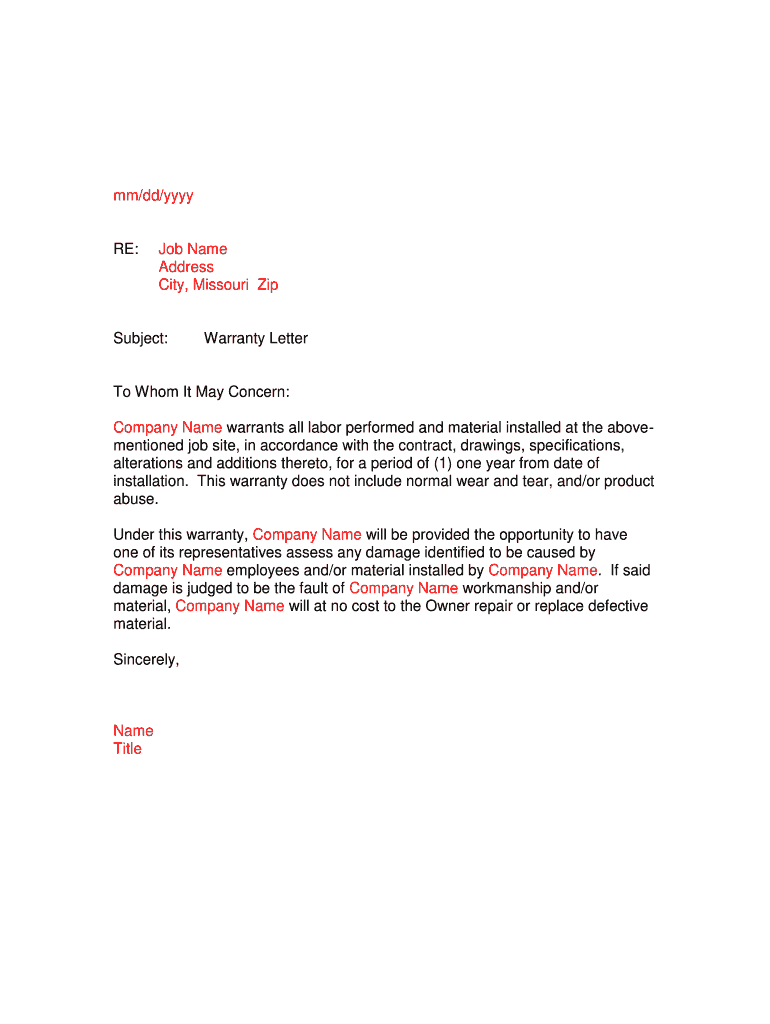







Understanding a Warranty Letter Template
A warranty letter serves as a formal communication from a company to its customers, outlining the guarantee related to products or services. This document typically specifies the duration of the warranty, what it covers, and the steps for claiming the warranty. The essential elements of a warranty letter include clear language, concise details, and a professional tone to ensure the information is easily understood by the recipient.
Key Elements of a Warranty Letter
When crafting a warranty letter template, several crucial components must be included to comprehensively convey the intended message.
- Company Information: Start with the company's name, address, and contact information. This allows recipients to know where to direct inquiries or concerns regarding the warranty.
- Customer Information: Clearly state the name and address of the recipient. Personalizing the letter makes it more official and shows attention to detail.
- Warranty Details: Include the effective date of the warranty and its duration, such as a one-year warranty. Specify what is covered and what is excluded, such as wear and tear or accidental damage.
- Claim Process: Provide clear instructions on how the recipient can exercise their warranty rights, including any necessary documentation or forms to submit.
- Signature Line: End with a section for the signature of an authorized representative of the company, adding legitimacy to the letter.
Sample Warranty Letter Format
A simple warranty letter format might look like this:
- Date: [Insert date]
- [Company Name]
[Company Address]
[City, State, Zip Code] - [Customer Name]
[Customer Address]
[City, State, Zip Code]
Dear [Customer Name],
We are pleased to confirm that your purchase from [Purchase Date] is covered under our warranty policy for a period of [Duration] from the date of purchase. This warranty guarantees that all materials and workmanship will be free from defects for the duration specified.
To claim your warranty, please contact us at [Contact Information] or follow these steps:
- Gather your proof of purchase.
- Fill out the warranty claim form attached to this letter.
- Send the completed form and proof of purchase to [Company Email or Mailing Address].
If you have any questions, feel free to reach out to us at any time.
Sincerely,
[Authorized Representative Name]
[Title]
[Company Name]
How to Write a Warranty Letter
Creating a warranty letter involves careful consideration to ensure clarity and coverage. Here are the steps to write an effective warranty letter:
- Draft the Header: Start with company and customer details, date, and a formal greeting.
- Outline the Warranty Terms: Detail what the warranty covers, any exclusions, and duration.
- Provide Comprehensive Instructions: Explain the steps customers should follow to initiate a claim. This may include submitting forms or contacting support.
- Use Professional Language: Write in a clear and professional tone to enhance the letter’s credibility.
- Review and Edit: Ensure that all information is accurate and the letter is free from errors.
Examples of Warranty Letter Scenarios
Different industries may have unique requirements for warranty letters. Here are a few examples illustrating various scenarios:
- Product Warranty: A consumer electronics company may offer a two-year warranty on their products, covering parts and labor for any manufacturing defects.
- Workmanship Guarantee: A contractor may provide a one-year warranty on construction work to assure clients that any issues arising from craftsmanship will be rectified at no cost.
- Extended Warranty Offers: Retailers often provide options for an extended warranty upon purchase, which may be detailed in a separate warranty letter to the customer.
Legal Considerations for Warranty Letters
In the United States, warranties must adhere to specific legal standards set forth by the Uniform Commercial Code (UCC) and the Federal Trade Commission (FTC). Here are relevant legal aspects to consider:
- Disclosure Requirements: Warranties must clearly disclose all terms and restrictions. Customers should understand what is and isn't covered.
- Implied Warranties: Be aware of implied warranties that exist even if not explicitly stated, covering the merchantability and fitness of the product.
- Limitations: Ensure that any limitations on claims or time frames are legally enforceable.
Warranty letters protect both the company and the customer by establishing clear terms regarding the service or product, emphasizing the company’s commitment to quality and customer satisfaction.




