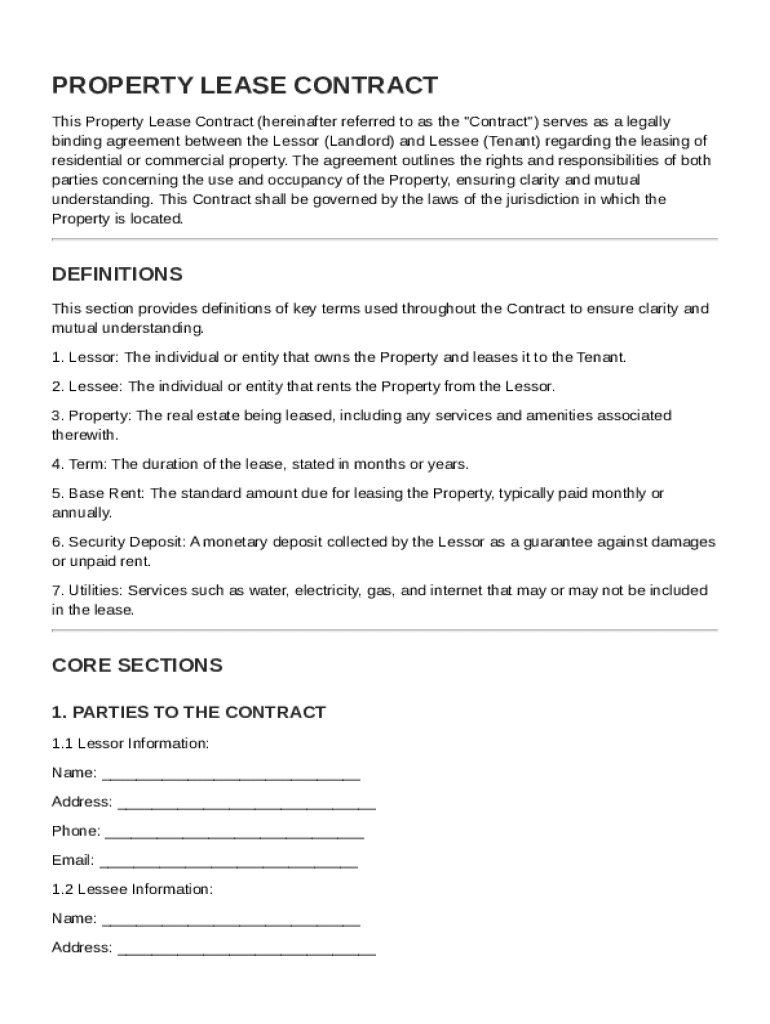







Definition and Meaning
A Property Lease Contract Template is a legally binding document that establishes the terms between a Lessor (Landlord) and a Lessee (Tenant) for renting residential or commercial property. This template serves as the foundation for ensuring all essential elements of a leasing agreement are clearly outlined and agreed upon by both parties. It captures the nuances involved in property leasing, ensuring that obligations, rights, and responsibilities are explicitly defined to avoid confusion or disputes. Key elements often included are the property details, duration of the lease, rent amount, payment schedule, and terms for renewal or termination of the lease.
How to Use the Property Lease Contract Template
Using a Property Lease Contract Template involves several precise steps to tailor it to the specific needs of the transaction. Begin by reviewing the existing fields within the template, ensuring that all necessary information pertinent to the specific property and agreement terms is included.
- Personalize Details:
- Input personal information of both the Landlord and Tenant.
- Specify property location and description.
- Define Terms:
- Clearly state the duration of the lease term.
- Add the agreed-upon rent amount and payment method.
- Include Specifics:
- Outline conditions related to utilities, maintenance, and repairs.
- Define rules regarding occupancy limits and alterations to the property.
- Add Legal Protections:
- Incorporate any local regulations or state laws particular to your jurisdiction.
- Ensure clauses regarding security deposits adhere to state regulations.
Once completed, both parties should review the document thoroughly before signing to certify understanding and agreement with all terms.
Steps to Complete the Property Lease Contract Template
Completing the Property Lease Contract Template requires attention to detail to ensure all aspects of the lease are covered comprehensively.
- Collect Required Information:
- Full names and contact details of both parties involved.
- Detailed property information, including address and type.
- Draft Agreement Details:
- Specify lease start and end dates.
- Set forth the payment terms, including due date and late fee policies.
- Outline Responsibilities and Restrictions:
- Specify which repairs the tenant is responsible for.
- Detail any restrictions on alterations or pets.
- Incorporate State-Specific Clauses:
- Include any mandatory state disclosures or addendums.
- Review and Revise:
- Both parties should review the draft.
- Amend any sections if necessary to reflect verbal discussions accurately.
- Sign and Execute:
- Once agreed, both parties should sign in the designated sections.
- Obtain copies for record-keeping by both landlord and tenant.
Important Terms Related to the Property Lease Contract Template
Understanding the terminology commonly used in Property Lease Contracts is crucial for both landlords and tenants.
- Lessor & Lessee: The landlord and tenant, respectively, in the agreement.
- Premises: The property being rented, including any included common areas.
- Term: Duration of the lease agreement, which can be fixed or periodic.
- Rent: The monetary payment the tenant agrees to pay the landlord regularly.
- Security Deposit: Funds held in trust by the landlord as security against damages.
- Maintenance Responsibilities: Clearly defined duties for repairs and upkeep.
These terms form the foundation of the contract, ensuring that all parties understand their rights and obligations clearly.
Key Elements of the Property Lease Contract Template
A comprehensive Property Lease Contract should address several critical elements to ensure clarity and legal sufficiency.
- Identification of Parties:
- Include full legal names and contact information for all signatories.
- Property Description:
- Provide a clear description, including address and any physical attributes.
- Lease Duration:
- Outline the specific time frame for the lease agreement.
- Payment Details:
- Clarify rent amount, due dates, and acceptable payment methods.
- Termination Clause:
- Define procedures for ending the lease by either party, including any notice periods.
- Renewal Options:
- State if and how the lease may be renewed at the end of the term.
- Governing Law:
- Identify the state laws that will govern the contract.
Including these elements ensures that the contract is legally robust and safeguards the interests of both parties involved.
Legal Use of the Property Lease Contract Template
Ensuring the legal validity of a Property Lease Contract is paramount for enforceability. The template should be adapted according to specific legal requirements of the jurisdiction where the property is located. This involves incorporating state-specific legal clauses, disclosure requirements, and any local ordinances affecting tenancy. It is also advisable to seek legal counsel to review the completed lease contract template to ensure compliance with all applicable laws and regulations. A well-drafted lease contract can protect against potential legal disputes by clearly laying out agreed-upon terms and legal obligations.
State-Specific Rules for the Property Lease Contract Template
Leasing laws can vary significantly from state to state, impacting how a lease contract should be structured within each jurisdiction.
- Security Deposit Rules:
- Many states have specific regulations regarding the maximum allowable deposit and the timeline for return.
- Disclosure Requirements:
- States may require landlords to disclose certain property conditions or hazards.
- Termination and Eviction Procedures:
- Legal procedures in case of lease violation or non-payment can differ greatly.
- Rent Control and Limits:
- Some jurisdictions may impose rent increase caps or controls.
It is critical for landlords to verify these state-specific rules to ensure their lease contract adheres to local legal standards. This helps protect both the landlord's investment and the tenant's rights.
Who Typically Uses the Property Lease Contract Template
The Property Lease Contract Template is predominantly utilized by:
- Landlords: Those seeking to lease residential or commercial properties to ensure a legally enforceable agreement.
- Tenants: Individuals or businesses wanting clear terms and conditions for renting property.
- Real Estate Agents: Professionals assisting clients with property leasing, using the template as a basis for agreements.
- Property Management Companies: Entities that manage rental properties on behalf of landlords and need standardized contracts to streamline operations.
These users rely on the template to provide structured, comprehensive lease agreements that clearly define all aspects of the tenancy arrangement, protecting the interests of all parties involved.