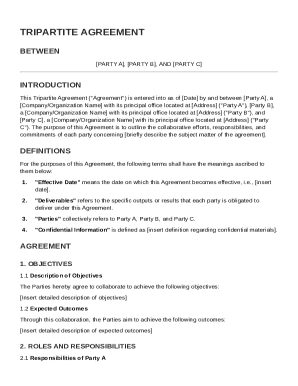
Definition & Purpose of the Academic Student Learning Contract
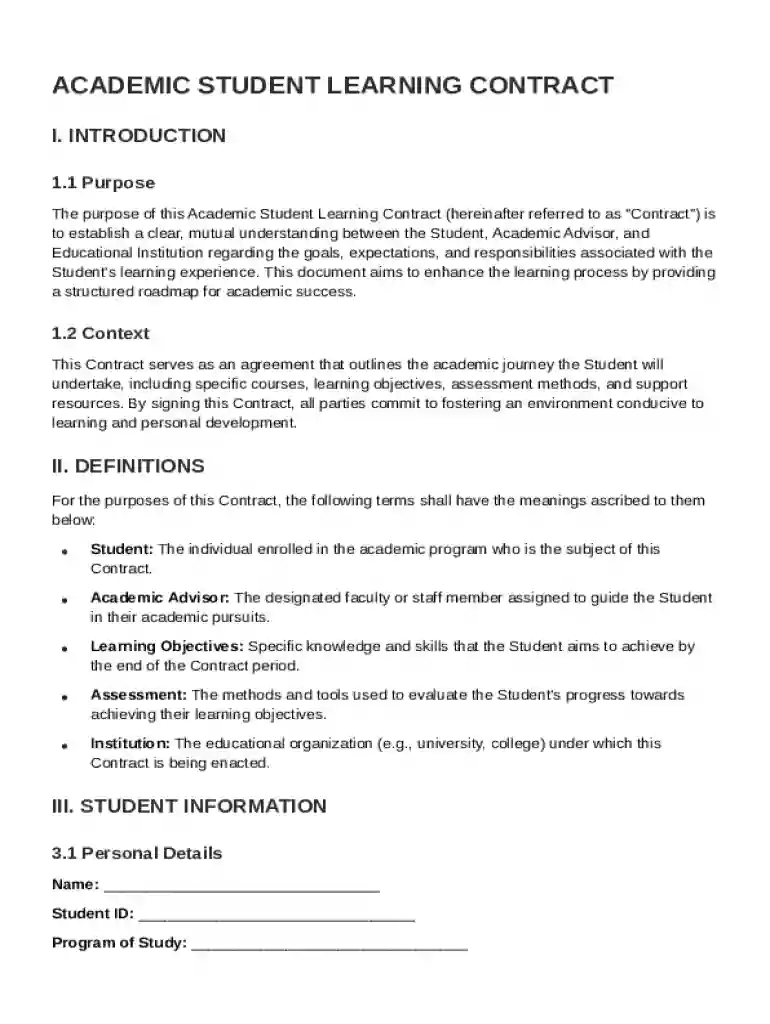
The Academic Student Learning Contract serves as a formal agreement between a student, their academic advisor, and the educational institution. It is designed to outline academic goals, responsibilities, and assessment criteria, ensuring all parties are aligned. This contract facilitates a structured approach to academic success, emphasizing mutual commitment and accountability. Students use this document to articulate learning objectives and course selections, while the advisor and institution provide guidance and resources to support these goals. It is not just a planning tool, but a framework promoting academic integrity and personal development.
Key Elements of the Academic Student Learn Contract Template
An Academic Student Learning Contract typically includes several essential components for a comprehensive framework:
- Learning Objectives: Clearly defined goals that a student aims to achieve, aligned with their academic plan.
- Course Selections: A record of courses that align with the student's academic objectives, ensuring a clear educational path.
- Assessment Methods: Specifications of how the student’s progress and performance will be measured and evaluated.
- Roles and Responsibilities: A clear delineation of duties and commitments for the student, advisor, and institution, each playing a pivotal role in the student’s educational journey.
- Support Resources: A listing of available resources and support systems, ensuring students have access to necessary tools for their success.
- Evaluation Schedule: Timelines for ongoing assessments and feedback sessions to monitor academic progress and make necessary adjustments.
Steps to Complete the Academic Student Learning Contract
Completing an Academic Student Learning Contract involves a series of detailed steps, ensuring the document reflects the student's educational aspirations accurately:
- Identify Academic Goals: The student must clearly articulate their long-term and short-term academic objectives.
- Select Appropriate Courses: Choose courses that align with these goals and meet institutional requirements.
- Determine Assessment Strategies: Collaborate with the advisor to decide on fair and effective assessment methods.
- Assign Roles and Responsibilities: Clearly delineate the obligations of all parties involved to maintain accountability.
- Review Support Resources: Ensure access to tutoring, advising, and other institutional support services.
- Schedule Evaluation Points: Set specific dates for evaluations to periodically review progress and adapt strategies as needed.
- Finalize and Sign: Once all sections are complete and agreed upon, all parties sign the contract to seal the agreement.
Legal Context & Considerations
Though the Academic Student Learning Contract is primarily a planning tool, it can also have legal implications in academia:
- Binding Agreement: This contract is often treated as a legally binding document within an educational context.
- Commitment to Integrity: It stresses adherence to academic policies, thereby upholding institutional standards.
- Modification Clauses: The contract may feature provisions for amendments, allowing flexibility for unforeseen academic or personal changes.
- Confidentiality: Provisions may be included to protect the student's academic records and personal information.
Examples of Using the Academic Student Learning Contract
Real-world scenarios demonstrate the utility of the Academic Student Learning Contract:
- Case Study: Undergraduate Progression: A student aiming to graduate with honors uses the contract to map out necessary courses and GPA goals, consulting regularly with their advisor to ensure on-track performance.
- Graduate Thesis Planning: A postgraduate uses the contract to delineate their thesis milestones and required submissions, engaging faculty support and feedback throughout the process.
- Remediation Plans: Students facing academic probation can outline a remedial strategy with their advisor, incorporating support resources to regain good standing.
Software Compatibility & Integration
The Academic Student Learning Contract can seamlessly integrate with digital platforms, enhancing its usability:
- Document Editing Tools: Compatible with software like Microsoft Word and Google Docs for easy creation and modification.
- Academic Portals: Many institutions offer platforms where contracts can be managed digitally, ensuring easy access and tracking by both students and advisors.
- Online Collaboration: Features from platforms like DocHub allow for real-time collaboration, whereby students and advisors can instantaneously update and share the document.
State-Specific Rules and Differences
The application and structure of the Academic Student Learning Contract can vary across locations:
- State Educational Policies: Some states mandate specific components be included, such as state-determined learning outcomes.
- Institutional Changes: Differences in institutional policies may affect the contents of the contract, such as varying graduation requirements or state-specific evaluation metrics.