
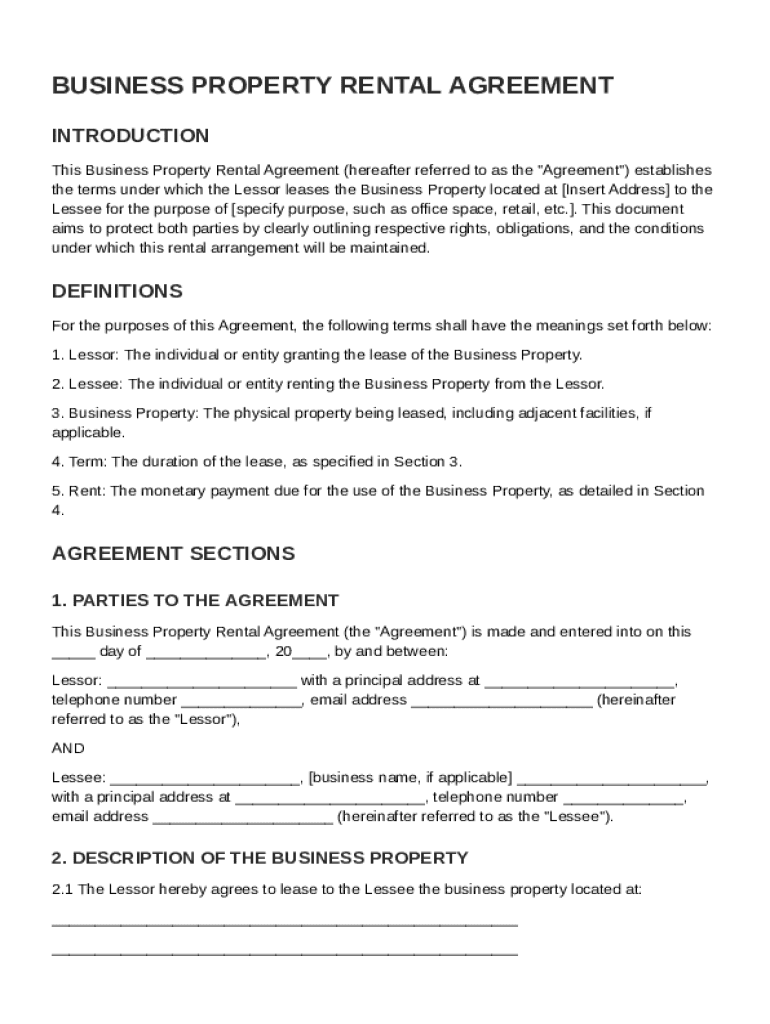







Definition and Meaning of a Business Property Rental Agreement Template
A Business Property Rental Agreement Template is a standardized document used to define the terms and conditions under which a commercial property is leased. This agreement outlines the responsibilities and obligations of both the Lessor (property owner) and the Lessee (tenant). Key elements often include rent amount, payment schedules, maintenance duties, insurance requirements, property usage stipulations, and termination conditions. Notably, this template provides a structured format ensuring both parties are aligned with legal governance and mutual expectations, vital for maintaining a professional business relationship and minimizing disputes.
Key Elements of the Business Property Rental Agreement
Business Property Rental Agreements often consist of the following crucial elements:
- Property Description: Specifies the address and any unique characteristics of the leased property.
- Lease Term: Defines the duration of the lease, including start and end dates.
- Rent Details: Outlines the rental amount, due dates, and late payment penalties.
- Maintenance Obligations: Describes the responsibilities of both parties for property upkeep.
- Insurance Requirements: Identifies insurance coverage required by the Lessee.
- Termination Conditions: Details the conditions under which the lease can be legally terminated.
- Security Deposit: Specifies the amount and conditions for refunding.
These components provide clarity in the legal and operational aspects of the property rental, ensuring both parties fully understand their roles and responsibilities.
Steps to Complete the Business Property Rental Agreement Template
Completing a Business Property Rental Agreement Template involves several methodical steps:
- Begin with Essential Details: Fill in the names and contact information for both the Lessor and Lessee.
- Include Property Description: Accurately describe the property, ensuring the locale and key features are well-documented.
- Define Lease Duration: Specify the lease period, including renewal options if applicable.
- Set Rent and Payment Terms: State the agreed rent, due date, and acceptable payment methods.
- Outline Maintenance Duties: Clearly define who is responsible for different types of property maintenance.
- Specify Insurance Requirements: Document the type of insurance coverage required.
- Determine Termination Policies: Include procedures for ending the lease and any conditions related to early termination.
- Add Security Deposit Information: Specify the conditions for the deposit and how it will be managed.
These steps ensure the document is comprehensive and legally binding, facilitating a smooth rental process.
How to Use the Business Property Rental Agreement Template
To effectively use the Business Property Rental Agreement Template, follow these guidelines:
- Review Customization Options: Ensure the template can accommodate specific clauses needed for your unique circumstances.
- Consult Legal Advice: Before completing the template, consider consulting with a legal professional to avoid missing critical legal stipulations.
- Ensure Clarity and Precision: Use clear and precise language to avoid ambiguities that could lead to misunderstandings.
- Collaborative Finalization: Both parties should review and agree on the terms before signing.
- Digital Signing: Utilize digital signing tools like DocHub to legally bind the agreement without the need for physical signatures, ensuring efficiency and security.
Using this template effectively streamlines the leasing process and ensures compliance with legal standards.
Legal Use of the Business Property Rental Agreement Template
When employing the Business Property Rental Agreement Template, it’s vital to adhere to legal guidelines:
- Compliance with State Laws: Ensure the template aligns with specific state regulations, which may have unique requirements for commercial leases.
- Fulfill Disclosure Obligations: Provide all necessary documentation and disclosure forms required under state law.
Legal compliance minimizes potential legal disputes or penalties, fostering a transparent and trustworthy leasing process.
State-Specific Rules for Business Property Rental Agreements
Leasing regulations can vary significantly by state, affecting how Business Property Rental Agreements are structured:
- Security Deposit Regulations: Varying limits and processing requirements for deposits.
- Termination Notice Periods: Different states may mandate specific notice periods for lease termination.
- Rent Control Rules: Some states impose rent control policies affecting rent increases.
- Property Condition Reports: Requirements for documenting the condition of the property at different stages of the lease.
Understanding and integrating state-specific rules is crucial for ensuring the enforceability of the agreement.
Who Typically Uses the Business Property Rental Agreement Template
The primary users of a Business Property Rental Agreement Template include:
- Landlords/Property Managers: For defining rental terms and minimizing disputes with tenants.
- Commercial Tenants: Small businesses and corporate entities leasing office or retail space.
- Legal Professionals: Attorneys who draft or review commercial lease agreements for their clients.
- Real Estate Agents: Assisting clients in managing leasing agreements as part of broader real estate services.
The template aids these users in creating legally sound and clear rental agreements tailored to their needs.


Important Terms Related to the Business Property Rental Agreement Template
Understanding key terms within a Business Property Rental Agreement is essential for both parties:
- Lessor and Lessee: The parties involved in the agreement—property owner and tenant.
- Leasehold Improvements: Alterations made by the tenant to suit their business needs.
- Covenant of Quiet Enjoyment: The right of the tenant to enjoy the property without disturbances.
- Sublease: The tenant’s ability to lease the property to another party, subject to agreement terms.
Familiarity with these terms helps in navigating the complexities of commercial property leasing agreements.




