
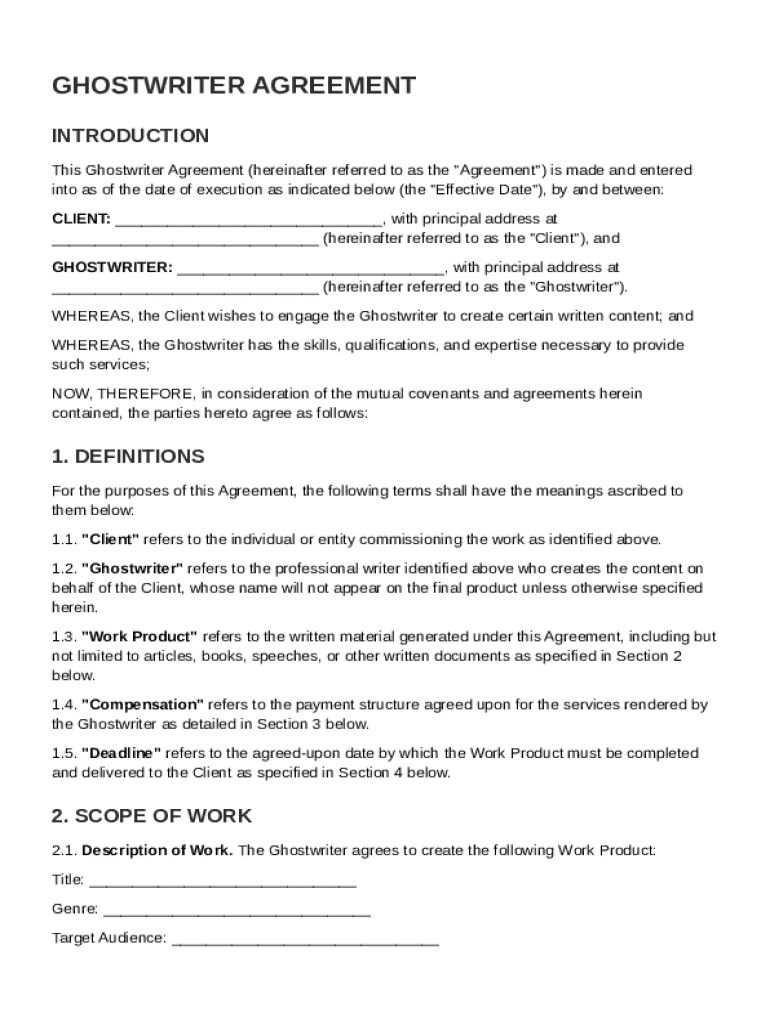







Definition & Meaning
A Ghostwriter Agreement is a formal contract outlining the terms and conditions between a client and a ghostwriter for the creation of written content. This legal document delineates the specific roles and responsibilities of both parties, including the scope of work, deadlines, compensation, and revision processes. The contract serves as a safeguard to ensure clarity and prevent misunderstandings, detailing expectations for the ghostwriting service and ensuring both the client and the ghostwriter understand their respective obligations and rights.
How to Use the Ghostwrit Contract Template
To effectively utilize the Ghostwrit Contract Template, begin by thoroughly reviewing each section to understand its purpose. Customize the template by filling in relevant details such as the names of both parties, the scope of work, and the agreed-upon timelines. Ensure that all terms related to compensation, confidentiality, and copyright ownership reflect the mutual consent of both parties. Once all the details are accurately included, both the client and the ghostwriter should review the entire document, make any necessary amendments, and agree on the final version before signing.
Steps for Customization
- Identify Participant Details: Enter the full names and contact information of the client and ghostwriter.
- Define Scope of Work: Clearly describe the content, style, and topic areas the ghostwriter is expected to cover.
- Set Deadlines: Agree on a timetable for drafts, revisions, and final submission.
- Outline Compensation: Specify the payment structure, including milestones or completion bonuses.
- Include Confidentiality Clauses: Add terms to protect private and proprietary information.
- Detail Revisions and Edits: Establish a process and limit for revisions to prevent excessive reworking.
- Finalize and Sign: Review the document for completeness and have all parties sign.
Key Elements of the Ghostwrit Contract Template
The Ghostwrit Contract Template includes several critical components essential for both legal protection and operational clarity. Core elements typically encompass not only basic contractual terms but also specific writing-related provisions tailored to the nature of the ghostwriting relationship.
Core Components
- Scope of Work: Outlines the specific assignments, including the subject matter, word count, and format.
- Compensation Details: Clearly defines payment amount, schedule, and any conditions for bonuses or penalties.
- Copyright and Ownership: Specifies who holds the rights to the finished content and under what circumstances rights might transfer.
- Deliverables: Lists expected outputs and any interim drafts or check-ins.
- Revisions and Acceptance: Details on allowable number of revisions and criteria for final acceptance.
- Termination Conditions: Stipulates conditions under which the contract can be ended by either party.
Legal Use of the Ghostwrit Contract Template
Utilizing the Ghostwrit Contract Template offers a legally binding framework that helps safeguard the interests of both the client and the ghostwriter. It ensures that the agreed-upon terms are enforceable within the legal jurisdiction specified in the contract, usually aligned with the location of the client or the ghostwriter.
Legal Considerations
- Jurisdiction: The contract should specify which state or district’s laws govern its terms.
- Compliance: Ensure that the contract adheres to local labor laws, intellectual property laws, and, if applicable, non-disclosure agreements.
- Dispute Resolution: Include mechanisms such as mediation or arbitration for resolving conflicts that may arise.
Important Terms Related to Ghostwrit Contract Template
To ensure clarity and mutual understanding, it is crucial to define key legal and industry-specific terms within the contract:
- Ghostwriter: The individual contracted to produce written material under the client's name.
- Client: The individual or entity hiring the ghostwriter and holding contractual rights to the final work.
- Confidential Information: Proprietary data or insights shared between parties that must remain undisclosed.
- Work For Hire: Legal terminology used to indicate that the client will hold rights to the resulting content.
- Revision Clause: Stipulations regarding the scope and extent of modifications post-initial submission.
State-Specific Rules for the Ghostwrit Contract Template
While ghostwriting contracts generally follow a standard format, state-specific variations may necessitate adjustments based on local legislation. These can influence elements such as employment classification, tax reporting requirements, and dispute resolution procedures.
Considerations by State
- Employment Law: Varies significantly, affecting the classification of a ghostwriter as an independent contractor versus an employee.
- Tax Implications: Different states might have unique requirements for reporting income derived from freelance contracts.
- Dispute Jurisdiction: The contract should specify which local courts or arbitration bodies have jurisdiction in the event of a disagreement.
Who Typically Uses the Ghostwrit Contract Template
The Ghostwrit Contract Template serves a diverse range of individuals and businesses seeking professional writing services. Typical users include:
- Authors: Engage ghostwriters for books, articles, and memoirs.
- Corporations: Hire ghostwriters to craft promotional content, reports, and presentation materials.
- Public Figures: Seek ghostwriters to help with autobiographies and speeches.
- Publishing Houses: Use ghostwriters to fulfill publishing contracts quickly.


Examples of Using the Ghostwrit Contract Template
Understanding real-world applications offers valuable insights into the versatility and effectiveness of the Ghostwrit Contract Template. Examples include:
- Author Solutions: A novelist utilizes the template to engage a ghostwriter for editing and crafting additional chapters.
- Corporate Use: A business contracts a ghostwriter for producing annual reports or developing comprehensive marketing copy.
- Public Agency Collaboration: Government agencies work with ghostwriters to draft policy documents, ensuring alignment with public communication goals.
These case studies demonstrate the template's applicability across various scenarios, ensuring that written content meets professional standards and contractual expectations.
This structured and in-depth format ensures the Ghostwrit Contract Template content is both comprehensive and tailored to specific user needs, adhering strictly to the outlined requirements and style.




