






Definition & Meaning
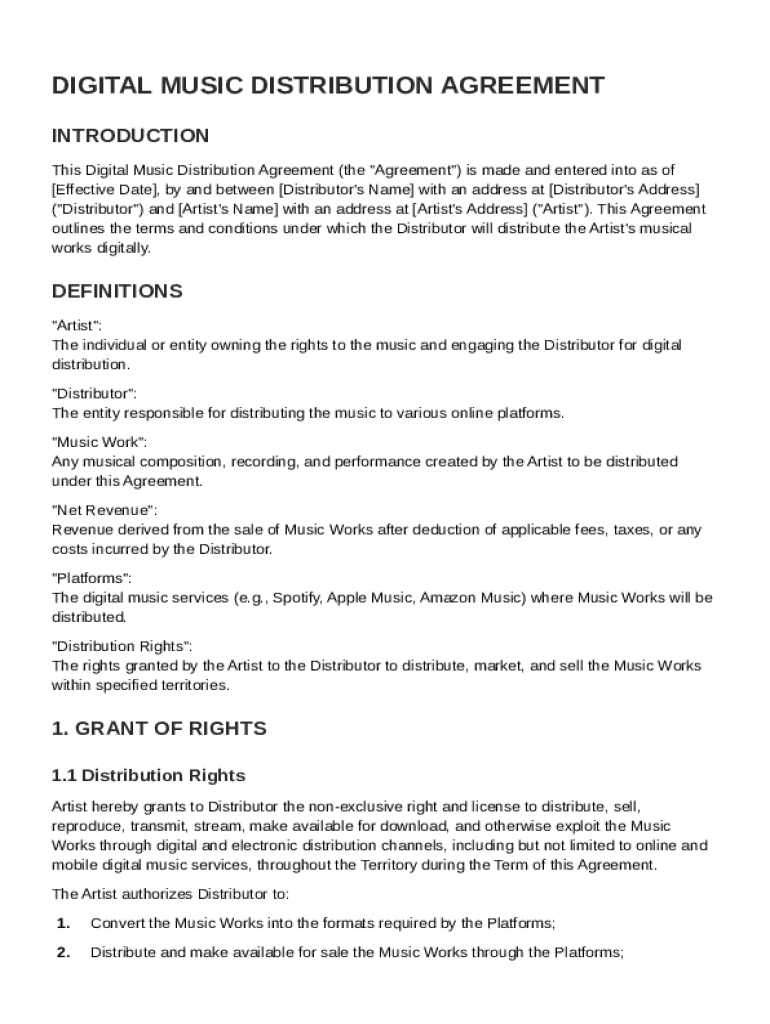
A Digital Music Distribution Agreement Template is a structured document used to outline the arrangement between a music distributor and an artist. It specifies the terms under which an artist's music is made available on various digital platforms like Spotify, Apple Music, and Amazon. Key components include the roles and responsibilities of both parties, revenue sharing contracts, and permissions granted to the distributor. Such templates provide a standardized approach to crafting these agreements, ensuring that all essential aspects of the distribution process are addressed clearly and effectively.
Example Components
- Roles and Responsibilities: Clearly delineates what is expected from both the artist and the distributor.
- Revenue Sharing: Specifies how revenues generated from digital sales and streams are divided.
- Distribution Rights: Outlines the extent of the distributor's rights in terms of marketing and distributing music.
Key Elements of the Digital Music Distribution Agreement Template
The structure of a Digital Music Distribution Agreement Template often includes several key components necessary to cover all relevant areas of digital music distribution. These elements ensure a comprehensive framework that protects the interests of both artists and distributors.
Core Sections
- Parties Involved: Identifies and details the parties entering into the agreement.
- Agreement Duration: Defines the term length of the agreement, including start and end dates.
- Music Content: Lists the specific musical works covered under the agreement.
Provision Examples
- Marketing Strategies: Describes the marketing obligations of the distributor.
- Performance Metrics: Establishes metrics for performance evaluation.
- Payment Terms: Specifies payment frequency and methods.
Steps to Complete the Digital Music Distribution Agreement Template
Completing a Digital Music Distribution Agreement Template involves several steps to ensure all relevant details are addressed and agreed upon by both parties.
Step-by-Step Instructions
- Review Standard Template: Carefully read through the template to understand the pre-set terms and sections.
- Fill in Personal Details: Start by entering the specific details of the artist and the distributor.
- Specify the Musical Works: Clearly list all musical works to be included under the distribution agreement.
Additional Steps
- Set Revenue Terms: Determine and jointly confirm the revenue sharing percentages.
- Agree on Duration and Termination Clauses: Specify the duration and conditions under which the agreement can be terminated.
- Finalize with Signatures: Obtain signatures from authorized representatives of both parties.
Important Terms Related to the Digital Music Distribution Agreement Template
Understanding the terminology within a Digital Music Distribution Agreement is crucial for artists and distributors. Proper comprehension ensures that the agreement is executed correctly and aligns with legal standards.
Common Terms
- Master Recording Rights: Refers to the rights held by a party over the master recordings of the music.
- Net Sales Revenue: The total revenue from sales after deductions like taxes or refunds.
- Exclusive vs. Non-Exclusive: Determines whether the distributor has exclusive rights to distribute the music.
Clarifications
- Indemnification Clauses: Protects both parties from potential liabilities.
- Warranties and Representations: Declarations made by both parties regarding their legal ability to enter into this agreement.
Legal Use of the Digital Music Distribution Agreement Template
The legality of using a Digital Music Distribution Agreement depends on its adherence to relevant music and contract laws. Proper use of the template can safeguard from potential disputes and legal pitfalls.
Compliance Requirements
- ESIGN Act Compliance: Ensure electronic signatures within the document comply with the ESIGN Act.
- Governing Law: The agreement should specify which state’s laws govern the agreement.
Legal Benefits
- Conflict Resolution: Provisions for how disputes will be resolved can mitigate legal disagreements.
- Specific Performance Clauses: Ensure that both parties can enforce the agreement terms legally.
Examples of Using the Digital Music Distribution Agreement Template
Using this template in real-world scenarios can demonstrate its applicability and comprehensive nature. The agreement can be adjusted to fit a variety of distribution environments effectively.
Practical Applications
- Independent Artists: Musicians self-publishing their work through digital platforms.
- Record Labels: Companies using the template for managing relationships with multiple artists.
Case Studies
- Online Platform Launches: Artists using a distribution deal template to release a new album across streaming platforms.
- Cross-National Distribution: Facilitating international availability while managing rights and royalties efficiently.
Software Compatibility
The Digital Music Distribution Agreement Template should be compatible with various document editing and signing software to facilitate ease of use.
Compatible Solutions
- DocHub: Allows seamless editing, distribution, and signing of agreements.
- Google Workspace Integration: Direct integration with Google tools for editing and sharing without unnecessary downloads.
- Adobe Acrobat: Utilized for managing PDFs with more complex structures.
Software Features
- Annotation Tools: Useful for adding comments or highlights in discussions and reviews.
- Version Control: Ensures all parties have access to the most recent document iteration.
Business Types That Benefit Most from the Digital Music Distribution Agreement Template
Different business entities stand to gain significantly from deploying a Digital Music Distribution Agreement Template, due to its comprehensive framework and adaptability.
Beneficial Business Structures
- Music Producers and Labels: Access to organized distribution formats allows smooth workflow.
- Independent Musicians: Enables professional and efficient management of music distribution without needing extensive legal knowledge.
Contextual Advantages
- Cost Efficient: Saves legal costs by using a pre-formatted template.
- Customizable Approach: Adjusting terms specific to a business’s operational model is facilitated.