






Definition and Purpose of the Custody and Access Agreement Template
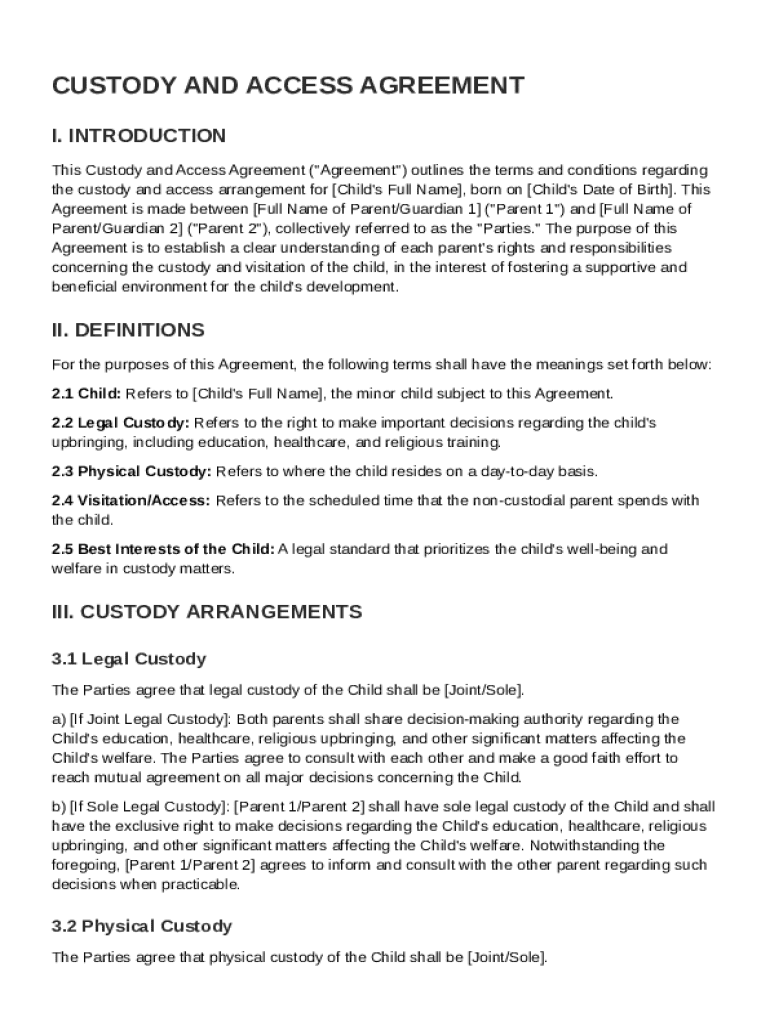
The Custody and Access Agreement Template is a legal document designed to outline the terms for custody and visitation arrangements for a minor child. It specifies both legal and physical custody rights, setting the framework for how parents will share responsibilities and time with the child. The agreement is essential to ensure the child’s well-being, emphasizing the child’s best interests by providing clear guidelines for parents to follow. These guidelines typically include visitation schedules, communication protocols between parents, and procedures for modifying the agreement if circumstances change.
Key Terms in Custody Arrangements
- Legal Custody: Refers to the right to make significant decisions affecting the child's welfare, including education, health care, and religious upbringing.
- Physical Custody: Deals with where the child resides and the everyday care they receive.
- Visitation Rights: Grants the non-custodial parent the opportunity to spend time with their child.
- Dispute Resolution: Methods outlined in the agreement to resolve disagreements between parents, usually involving mediation or arbitration.
Steps to Complete the Custody and Access Agreement Template
Completing the Custody and Access Agreement Template involves several critical steps. To ensure accuracy and compliance, follow this detailed process:
- Identify Parties: Start by detailing the full names and contact information of both parents.
- Child Information: Include the full names and dates of birth of each child involved in the custody agreement.
- Custody Arrangements: Specify whether custody will be joint or sole, detailing both legal and physical custody arrangements.
- Visitation Schedule: Outline a schedule detailing when and how the non-custodial parent will visit the child, including holidays and special occasions.
- Communication Guidelines: Establish a communication plan between parents, specifying methods and frequency.
- Modify Agreement: Provide procedures for altering the agreement if necessary, typically requiring mutual consent or court approval.
- Signature and Date: Both parties must sign and date the document to validate the agreement.
Practical Example
Consider a family with joint custody. Both parents agree to alternate weeks with their child and outline specific communication protocols to manage shared responsibilities effectively. In this case, the agreement ensures both parents are involved in major decision-making processes.
Key Elements of the Custody and Access Agreement Template
Critical elements within the Custody and Access Agreement Template ensure clarity and prevent future disputes. These components include:
- Custody Type: Clearly stating whether the arrangement is joint or sole between the parents.
- Visitation Rights: Specific days and times for visitation to prevent misunderstandings.
- Holidays and Vacations: Detailed plans for how these are split or alternated between parents.
- Decision Making: Processes for handling significant decisions concerning the child’s upbringing.
- Dispute Resolution Mechanisms: Steps to address conflicts, promoting alternative dispute resolution methods.
Legal Considerations in Custody and Access Agreements
When drafting a Custody and Access Agreement, legal considerations are paramount to ensure compliance with state laws. Key aspects include:
- Best Interests of the Child: The agreement must prioritize the child's welfare above all else.
- State Law Compliance: Each state has unique statutes governing family law and custody, necessitating adjustments to the agreement to meet local requirements.
- Enforceability: To be legal and enforceable, the document typically needs to be acknowledged by a court.
State-Specific Differences
In some states, specific forms or additional documentation may be required to validate the agreement legally. It is essential to consult legal counsel to ensure all state-specific regulations are met.
Who Typically Uses the Custody and Access Agreement Template
The Custody and Access Agreement Template is commonly utilized by:
- Divorcing or Separated Parents: To formalize custody and visitation arrangements.
- Legal Professionals: Attorneys specializing in family law may use the template to draft agreements for clients.
- Mediators: Professionals helping resolve custody disputes may rely on this template to facilitate agreements.


Why Use the Custody and Access Agreement Template
Utilizing a Custody and Access Agreement Template offers numerous benefits:
- Clarity and Structure: Provides a structured approach to determining custody arrangements, minimizing conflicts.
- Legal Protection: Ensures compliance with state laws, making the agreement more enforceable in court.
- Child-focused Arrangements: Emphasizes the best interests of the child, fostering a nurturing environment.
Examples of Custody and Access Agreement Scenarios
Real-world scenarios highlight the versatility of the Custody and Access Agreement Template:
- Joint Custody: Parents living in the same city may alternate weeks, with detailed stipulations for school holidays and family vacations.
- Sole Custody with Visitation Rights: One parent holds physical custody while the other has specified weekend visitations and shared holidays.
State Guidelines for Custody Agreements
State guidelines play a crucial role in shaping custody agreements. Some states may prioritize joint custody, while others focus more on the child's primary residence. Certain jurisdictions might have mandatory mediation sessions before court proceedings. Understanding these guidelines is crucial for drafting a compliant and effective agreement.