
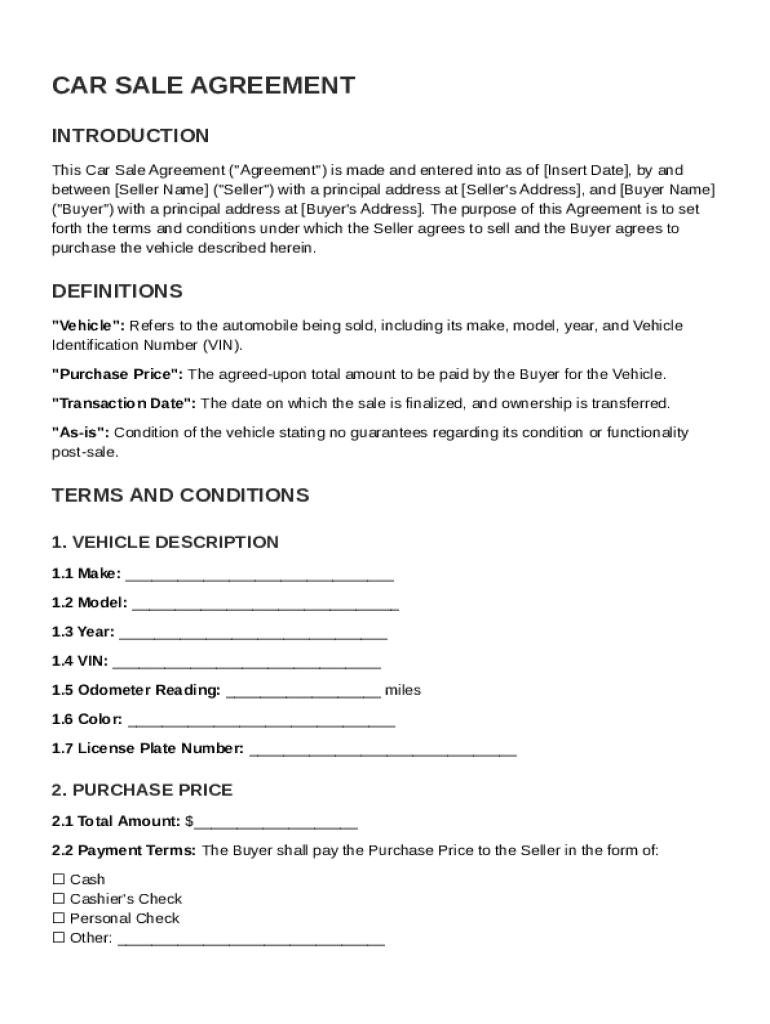







Definition & Meaning
The Car Sale Agreement Template is a structured document used to outline the legal terms and conditions of a vehicle sale between a seller and a buyer. It serves as a binding contract, ensuring both parties understand their responsibilities and rights in the transaction. This agreement typically includes essential details such as the vehicle description, the agreed-upon purchase price, payment terms, and any warranties or disclaimers. By formalizing these elements, the template helps protect the interests of both the seller and the buyer. Using a standardized document can also help avoid disputes by clearly defining the expectations and obligations of each party.
Key Elements of the Car Sale Agreement Template
A comprehensive Car Sale Agreement Template includes several critical components to ensure all necessary information is captured and both parties are protected. These elements typically include:
- Vehicle Information: Detailed description of the vehicle being sold, such as make, model, year, and VIN (Vehicle Identification Number).
- Purchase Price: The total amount agreed upon for the sale, along with payment terms and options.
- Seller and Buyer Details: Names, contact information, and addresses of both parties involved in the transaction.
- Warranties: Any guarantees provided by the seller regarding the condition or performance of the vehicle.
- Delivery Terms: Arrangements for transferring possession of the vehicle to the buyer.
- As-Is Clause: A disclaimer indicating that the vehicle is sold without warranties, emphasizing the buyer's responsibility to inspect it beforehand.
- Governing Law: Legal jurisdiction governing the terms and conditions of the agreement.
Steps to Complete the Car Sale Agreement Template
Completing a Car Sale Agreement Template requires attention to detail to ensure accuracy and clarity. Here’s a step-by-step guide:
- Gather Required Information: Collect details about the vehicle, including its VIN, make, model, and year, as well as the personal information of both the seller and the buyer.
- Enter Vehicle Details: Fill in the vehicle description section with all pertinent details to accurately identify the car.
- Specify Purchase Price and Payment Terms: Clearly state the agreed purchase price and outline how and when payments will be made.
- Include Warranty Terms: If applicable, detail any warranties offered by the seller.
- Define Delivery and Transfer of Ownership: Describe how and when the vehicle will be handed over to the buyer.
- Add Additional Clauses: Incorporate any special terms agreed upon by both parties, such as repair credits or contingencies.
- Review and Finalize: Check for completeness and accuracy, then print and sign the document. Both parties should retain a copy for their records.
Legal Use of the Car Sale Agreement Template
The Car Sale Agreement Template is a legally binding contract once signed by both the seller and the buyer. It should be used to formalize any vehicle sale to ensure both parties are protected under the law. Utilizing this agreement helps prevent misunderstandings by clearly delineating the terms of the sale, including responsibilities each party holds. It is important to note that the agreement must comply with state-specific laws governing vehicle sales to be enforceable. Parties should consider consulting with a legal professional to ensure all legal requirements are met and the document is valid.
Important Terms Related to Car Sale Agreement Template
Understanding the terminology used in a Car Sale Agreement Template is crucial for both the seller and the buyer. Common terms include:
- Lien: A right to keep possession of property belonging to another person until a debt owed by that person is discharged.
- Odometer Disclosure: A statement that shows the car's mileage at the time of sale, required in many jurisdictions.
- Title: A legal document showing ownership of the vehicle.
- Bill of Sale: A receipt that proves the sale of goods, including vehicles.
- VIN (Vehicle Identification Number): A unique code used to identify individual motor vehicles.
State-Specific Rules for the Car Sale Agreement Template
The legality and enforceability of a Car Sale Agreement can vary by state due to differing regulations. For instance, some states may require specific disclosures, such as the presence of a lien or the result of a recent inspection. Others may have unique stipulations for odometer readings or emissions testing. It’s essential to understand these local requirements when drafting the agreement. Buyers and sellers should verify compliance with their state-specific motor vehicle department to ensure all legal obligations are fulfilled, which can help in avoiding penalties or the invalidation of the sale.
Who Typically Uses the Car Sale Agreement Template
The Car Sale Agreement Template is commonly used by individuals and businesses selling or purchasing vehicles. This includes private parties engaged in the sale of personal vehicles, car dealerships selling new or used cars, and entities involved in fleet sales or leasing. The template serves a wide range of purposes, from facilitating personal sales to formalizing large-scale transactions for business purposes. Notably, it is a valuable tool for anyone looking to document a vehicle sale legally and comprehensively, providing clarity and reducing the risk of future disputes.


Examples of Using the Car Sale Agreement Template
Various scenarios showcase how the Car Sale Agreement Template can be utilized effectively:
-
Private Sale: John is selling his used car to his neighbor, Elaine. They use the template to document the sale, including the price and the car’s condition, thus ensuring both are satisfied with the transaction terms.
-
Dealership to Consumer Sale: A car dealership is selling a new vehicle to a customer. The template helps articulate various dealership-offered warranties, financing terms, and other conditional sale agreements.
-
Business Leases & Sales: A company leases a fleet of cars to another corporation. The template can adjust to specify sale or lease terms, payment schedules, and transfer of ownership rights, ensuring clarity in complex transactions.
In all these cases, using a standardized agreement provides legal assurance and clear communication between parties involved in the sale or exchange of vehicles.




