






Definition and Meaning
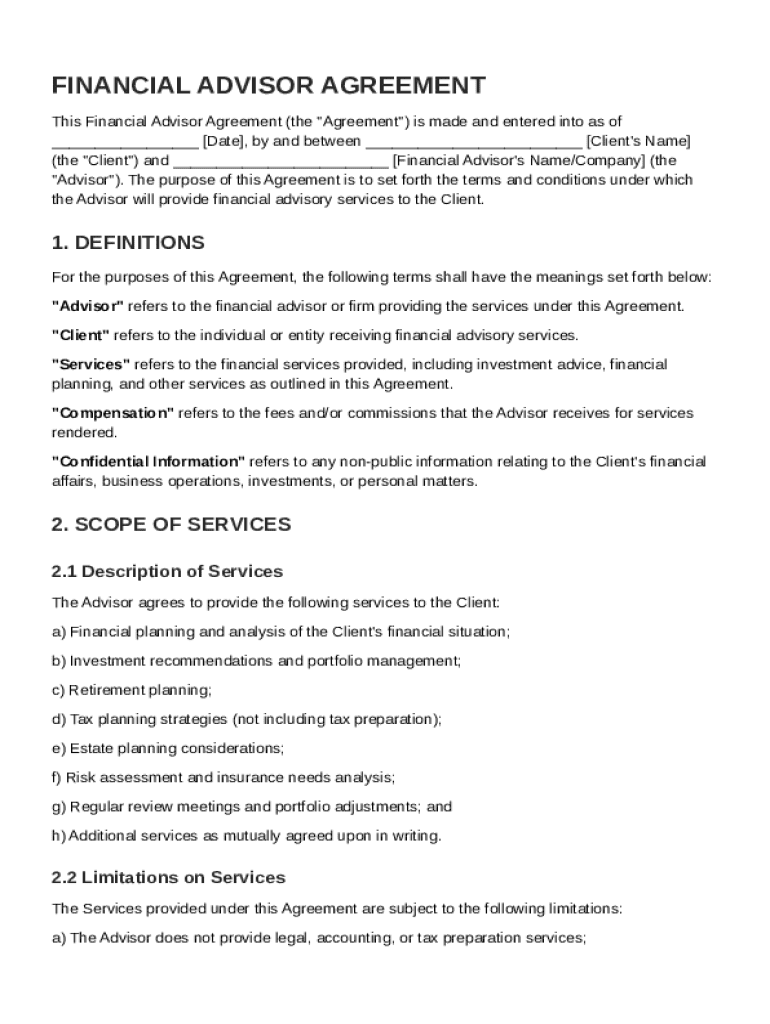
A Financial Advisor Agreement Template is a legal document that outlines the terms and conditions under which a financial advisor provides their services to a client. The agreement ensures that both parties clearly understand their roles, responsibilities, and expectations. It typically includes sections on the scope of services, compensation, confidentiality, fiduciary duties, dispute resolution, and termination of the contract. The agreement serves to protect both the advisor and the client by formalizing their relationship and setting clear legal guidelines that both parties agree to uphold.
Key Components
-
Scope of Services: Clearly defines the services that the financial advisor will provide, such as financial planning, investment management, and retirement advice.
-
Compensation Structure: Details the fees that the client will pay, whether fixed, hourly, or a percentage of assets under management, and when payments are due.
-
Fiduciary Duty: Establishes the advisor's obligation to act in the best interest of the client at all times.
-
Termination Clause: Specifies how the agreement can be terminated by either party, including notice periods and potential penalties.
How to Use the Financial Advisor Agreement Template
Step-by-Step Instructions
-
Download the Template: Obtain the Financial Advisor Agreement Template from a reputable source such as DocHub. Ensure it matches your state’s legal requirements.
-
Customize the Agreement: Fill in specific details such as names, addresses, and compensation details. Adjust the scope of services to accurately reflect what will be provided.
-
Review Key Sections: Pay extra attention to clauses regarding fiduciary duty, confidentiality, and dispute resolution to ensure they align with your intentions and obligations.
-
Legal Review: Have a legal professional review the agreement to ensure it meets all legal standards and adequately protects both parties involved.
-
Signatures: Both parties should sign the document to make it legally binding. Consider using electronic signatures for convenience and security through platforms like DocHub.
Why You Should Use a Financial Advisor Agreement Template
Advantages
-
Clarity and Transparency: Provides a clear outline of expectations and responsibilities, reducing misunderstandings.
-
Legal Protection: Both parties have a legal document that defines their rights and obligations, which can be important in case of disputes.
-
Professionalism: Demonstrates to clients that the advisor is serious about their business, enhancing credibility.
Scenarios for Use
Financial advisors often use this template when beginning a new client relationship. It sets the tone for a professional and transparent relationship from the outset. Furthermore, it is crucial for avoiding disputes and ensuring a mutual understanding of the advisory services provided.
Who Typically Uses the Financial Advisor Agreement Template


Common Users
-
Independent Financial Advisors: Those who offer personalized services need this agreement to formalize their relationship with clients.
-
Financial Advisory Firms: Companies providing comprehensive financial services use it to maintain consistency in their client agreements.

Tailored Use Cases
Independent advisors often customize these templates to reflect their specific service offerings and fee structures, ensuring that it aligns with their business model while adhering to legal standards.
Key Elements of the Financial Advisor Agreement Template
Essential Sections
-
Client Information: Includes names, contact information, and identifying details to personalize the contract.
-
Service Details: More than just listing services, this section may include timelines, performance metrics, and review processes.
-
Confidentiality Clause: Specifies how client information will be protected, emphasizing the advisor's duty to maintain privacy.
Variations and Exceptions
While most agreements are standard, some may include additional clauses, like those addressing cross-border transactions or specialized advisory services, to cater to unique client needs.
Legal Use of the Financial Advisor Agreement Template
Compliance and Regulations
-
Adherence to Laws: Ensure the agreement complies with relevant local, state, and federal laws, including the Investment Advisers Act of 1940.
-
Enforceability: A well-drafted agreement is legally enforceable, protecting both advisor and client in legal disputes.
Important Considerations
Advisors should keep abreast of regulatory changes that could affect their agreements and seek periodic reviews by legal counsel to maintain compliance.
Important Terms Related to the Financial Advisor Agreement Template
Common Terminology
-
Fiduciary Duty: The legal obligation of the advisor to act in the client’s best interests.
-
Assets Under Management (AUM): Refers to the total market value of the client's investments managed by the advisor.
-
Disclosure Statement: Part of the agreement that discloses any conflicts of interest or third-party referrals.
Glossary of Terms
A well-structured template may include a glossary section to help clients understand complex financial and legal jargon used in the agreement.
State-Specific Rules for the Financial Advisor Agreement Template
Regional Requirements
-
Differing State Laws: Each state may have specific requirements that affect the legality or language of financial advisor agreements.
-
State Registrations: Advisors may need to be registered in the states where they conduct business, which influences contractual terms.
Adapting to Local Regulations
Ensure the agreement is adapted to conform with state-specific regulations, which can include differences in taxation, consumer protection laws, and dispute resolution policies.