






Definition & Meaning
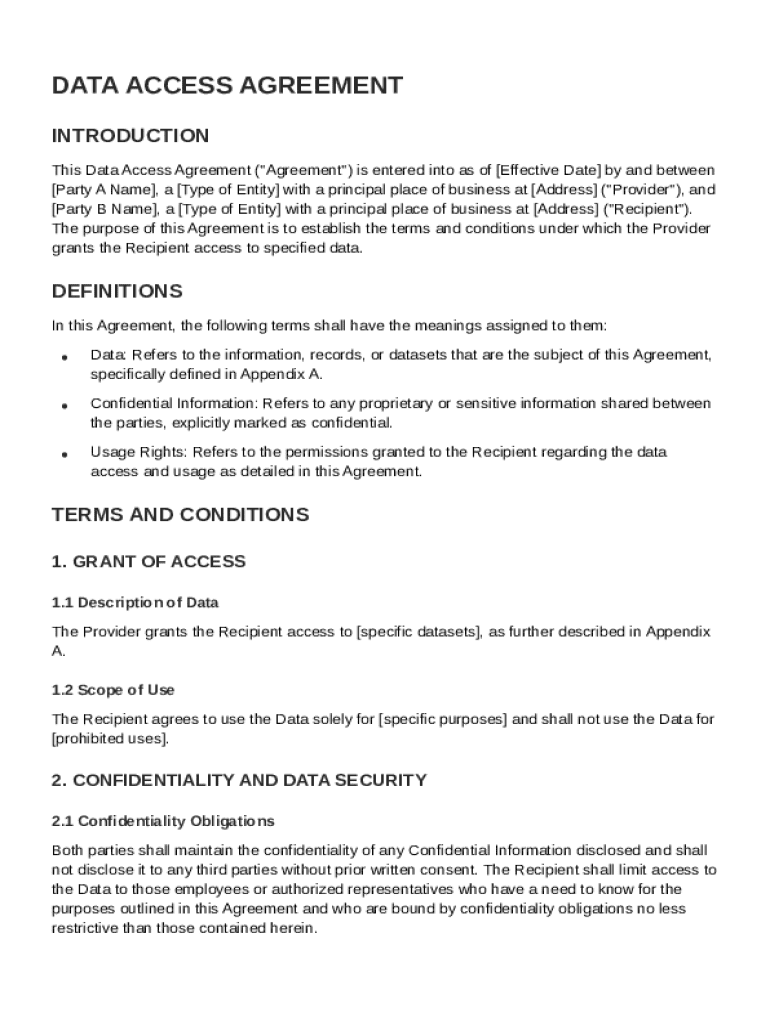
A Data Access Agreement (DAA) Template is a pre-formatted document designed to outline the terms and conditions under which a Provider grants access to their data to a Recipient. This form sets clear expectations regarding data usage, confidentiality, security, and compliance with legal standards. The agreement emphasizes non-transferability, which means that the Recipient must not share access with unauthorized parties. In the context of businesses, governmental agencies, or research institutions, this document ensures that the data is used solely for its intended purpose and safeguards are in place to protect it from breaches or unauthorized access.
Key Elements of the Data Access Agreement Template
The Data Access Agreement Template includes several critical components that ensure comprehensive protection and clarity:
- Definitions: Provides clear explanations for all terms used throughout the agreement to ensure mutual understanding.
- Confidentiality Obligations: Specifies requirements to preserve the confidentiality of the data, including methods and protocols for secure handling.
- Data Security Measures: Details the technical and organizational measures required to protect data from unauthorized access or breaches.
- Ownership Rights: Clarifies data ownership, stipulating that the Provider retains all property rights to the data.
- Compliance with Laws: Mandates adherence to relevant laws and regulations, including data protection and privacy laws.
- Indemnification and Liability Limitations: Outlines provisions for indemnification and caps on liability in case of breaches or misuse.
- Governing Law: Identifies which jurisdiction's laws govern the agreement, which is particularly crucial for international data exchanges.
How to Use the Data Access Agreement Template
Utilizing a Data Access Agreement Template requires careful execution to ensure it fulfills its purpose:
- Identify Data Type and Purpose: Clearly define the type of data being accessed and the purpose of access.
- Consult Legal Experts: Have a legal team review the document to account for any specific organizational or jurisdictional requirements.
- Customize the Template: Tailor the template to reflect the specific relationship between Provider and Recipient, ensuring all necessary customization fields are filled.
- Negotiate Terms: Discuss and agree upon the terms with the Recipient to ensure mutual understanding and compliance.
- Finalize and Sign: Once all parties consent to the terms, sign the agreement to formalize data access permissions.
Steps to Complete the Data Access Agreement Template
Completing the Data Access Agreement Template involves several systematic steps:
- Fill in Basic Information: Enter the complete legal names and addresses of both Provider and Recipient.
- Define Data Description: Specify the nature and scope of the data being accessed.
- Outline Duration: Determine and note the period for which access is granted.
- Specify Security Protocols: Clearly list the required security measures Recipient must adhere to.
- Detail Termination Conditions: Specify the conditions under which the agreement can be terminated early.
- Include Signatures: Ensure all authorized representatives sign the document on behalf of their respective organizations.
Legal Use of the Data Access Agreement Template
The Data Access Agreement Template is a legal tool that assists organizations in complying with various laws and regulations concerning data usage:
- Adherence to Privacy Laws: Ensures compliance with local and international privacy laws such as GDPR in the EU and CCPA in California.
- Legal Protections: Offers legal protection by defining boundaries and responsibilities for data usage.
- Dispute Resolution: Provides mechanisms for resolving disputes that may arise regarding data access or usage violations.
Important Terms Related to the Data Access Agreement Template
Understanding certain key terms is essential when dealing with a DAA Template:
- Recipient: The party that receives access to the data.
- Provider: The party granting access to their data.
- Confidentiality: Actions ensuring that the information is not disclosed to unauthorized individuals.
- Indemnification: A provision where one party agrees to protect the other against certain losses or damages.
- Non-Transferability: A restriction that prevents the Recipient from sharing data access rights with others.
State-Specific Rules for the Data Access Agreement Template
While the DAA Template provides a universal framework, legal requirements can vary by state:
- California: Must meet CCPA guidelines, which includes broad consumer privacy rights.
- New York: Needs to comply with New York State's data protection laws, which may impose additional security measures or consent protocols.
- Federal Requirements: Ensure alignment with federal laws such as HIPAA when dealing with healthcare-related data.
Business Types That Benefit Most from the Data Access Agreement Template
Several business types can significantly benefit from using the DAA Template:
- Technology Firms: Frequently share data across platforms and need robust safeguarding mechanisms.
- Healthcare Organizations: Must comply with strict regulations regarding patient data.
- Research Institutions: Require clear terms for handling sensitive and proprietary research data.
- Financial Services: Need specific agreements to ensure data integrity and security when handling personal and financial information.