
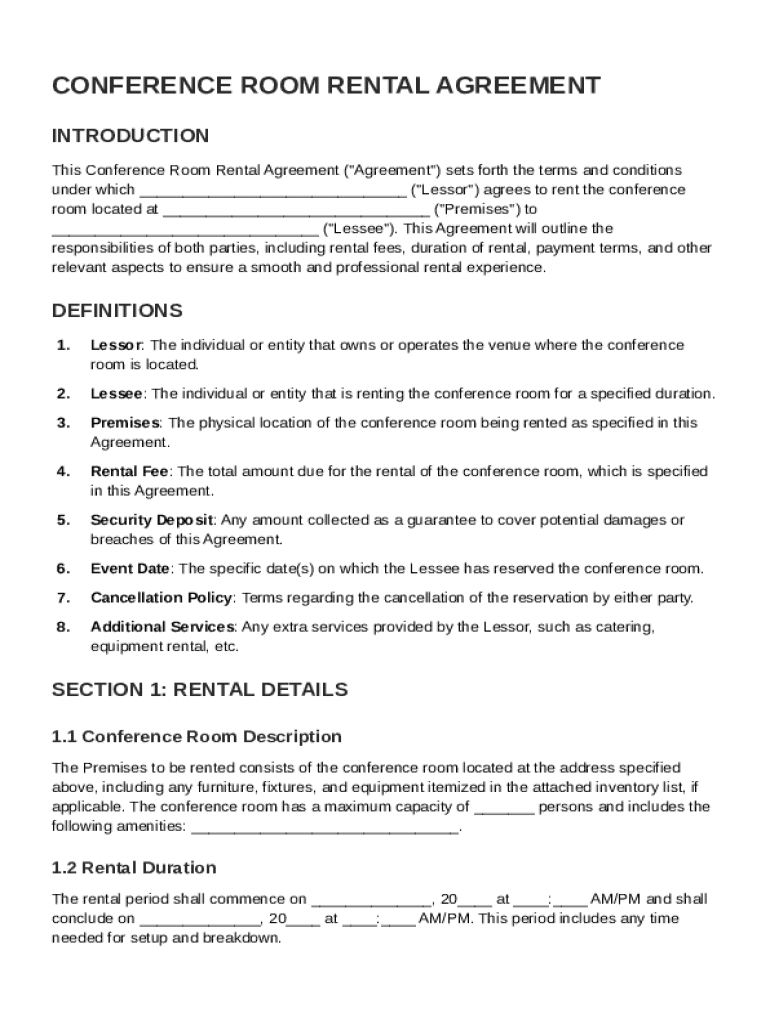







Definition and Purpose of a Conference Room Rental Agreement Template
A Conference Room Rental Agreement Template serves as a legally binding document between a Lessor (the owner of the conference room) and a Lessee (the party renting the room). The purpose of this agreement is to outline clearly defined terms and conditions under which the conference room is rented. Key components include rental duration, associated fees, and payment terms, which ensure both parties understand their obligations. This document is essential for preventing potential disputes by establishing responsibilities related to the use and maintenance of the premises, security deposits, and cancellation policies. By specifying these details, the agreement provides a structured framework that facilitates a smooth rental experience.
Steps to Complete the Conference Room Rental Agreement Template
-
Review the Agreement Content:
- Start by reading through the entire document to understand all terms and conditions.
- Ensure the details align with your expectations and the agreed-upon terms for the rental.
-
Fill Out Basic Information:
- Enter the names and contact information of both the Lessor and Lessee.
- Specify the location and a detailed description of the conference room being rented.
-
Define Rental Terms:
- Include the rental period, outlining the start and end dates.
- List the rental fees, deposit amounts, and payment methods.
-
Outline Responsibilities:
- Specify any rules and responsibilities related to the use of the facilities.
- Both parties should agree on security and maintenance duties.
-
Add Additional Clauses:
- Incorporate any unique terms or conditions that both parties have agreed upon.
- Include cancellation policy details and liability provisions.
-
Review and Sign:
- Both parties should review the completed agreement to confirm accuracy.
- The Lessor and Lessee should provide their signatures and dates, making the document legally binding.
Key Elements of the Conference Room Rental Agreement Template
-
Identification Details: Both parties involved in the transaction need to be clearly identified, along with the specifics of the conference room, such as size, location, and any special features.
-
Duration and Fees: Outline the exact rental period inclusive of any setup time, breakdown periods, and notify about any overtime charges. Clearly state the rental fee, any additional service fees, security deposits, and payment methods.
-
Payment Terms: Specify the payment schedule, deposit conditions, and accepted methods (e.g., wire transfer, check).
-
Maintenance and Usage: Clarify responsibilities regarding room maintenance, including any agreed-upon restrictions like no smoking or alcohol policies.
-
Liability and Indemnification: Discuss liability waivers for damages, indemnification clauses, and insurance requirements if applicable.
Important Terms Related to the Conference Room Rental Agreement Template
-
Lessor and Lessee: The legal terms used to identify the owner of the space and the individual or entity renting it.
-
Security Deposit: A refundable fee intended to cover potential damages or violations of the rental agreement.
-
Cancellation Policy: Terms outlining the requirements and penalties associated with terminating the agreement prior to the end of the rental period.
-
Indemnity Clauses: Provisions that protect one party from legal liability arising from the other party's actions.
Who Typically Uses the Conference Room Rental Agreement Template
Businesses often use conference room rental agreements when they need a space for meetings, seminars, or collaborative sessions. Event coordinators, training organizations, and corporate clients find these agreements indispensable for ensuring all parties involved understand the logistical and financial commitments made. Educational institutions, nonprofits, and community groups might also rent conference rooms for workshops, lectures, and community outreach events, utilizing the template to formalize the arrangement and protect their interests.


State-Specific Rules for Conference Room Rental Agreements
Conference room rental agreements can be subject to state-specific regulations that may impact terms such as security deposits, tax obligations, or specific use limitations. For instance, certain states have particular consumer protection laws that could affect cancellation policies and rental fee disclosures. Being aware of local landlord-tenant laws will help tailor the agreement to remain compliant. Consulting with a legal expert familiar with state-specific guidelines can aid in addressing any variations between different jurisdictions.
Examples of Using the Conference Room Rental Agreement Template
Businesses hosting corporate meetings or training sessions may use this template to ensure clear communication of rental terms. A marketing firm might rent a conference room to conduct a week-long campaign strategy session, using the agreement to set rental dates, security deposit terms, and allocate specific usage protocols like technology requirements. Similarly, a nonprofit organization could organize a community seminar series, utilizing the agreement to secure a venue while ensuring all parties agree to maintain the space properly.
Versions or Alternatives to the Conference Room Rental Agreement Template
While the Conference Room Rental Agreement is a standard option, various versions or alternative templates may better suit specific needs. For example, hourly rental agreements are ideal for short-term rentals, providing flexibility for businesses needing a room for a brief period. Alternatively, a comprehensive event space agreement might be more fitting for extended events requiring multiple amenities, providing a wider scope of term coverage. Adjust templates to match particular events or tenant needs, ensuring all aspects are covered effectively as per the unique requirements of the rental situation.




