






Definition and Meaning of the Booth Rental Agreement Template
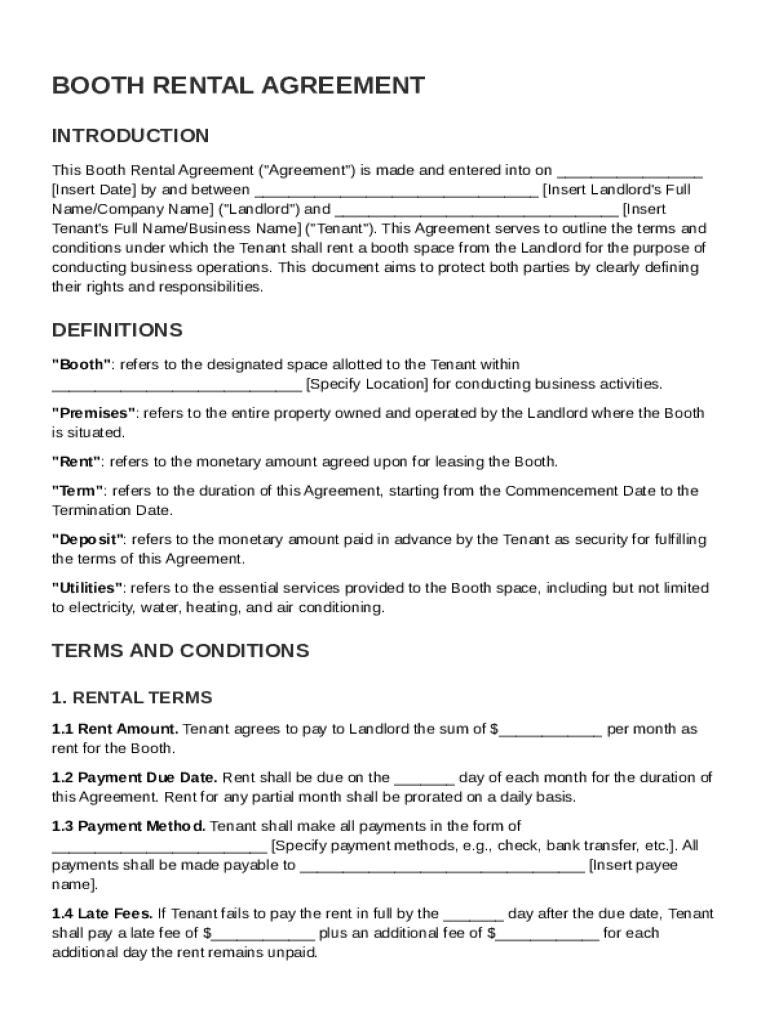
The Booth Rental Agreement Template is a legal document that outlines the terms and conditions under which a booth space is rented. It serves as a formal agreement between the landlord, who owns or manages the property, and the tenant, who intends to rent the booth. This document is crucial in defining the responsibilities and expectations of both parties. Key terms such as 'Booth', 'Rent', and 'Utilities' are clearly defined to avoid misunderstandings. By specifying payment obligations, maintenance duties, and legal compliance requirements, the template ensures a clear understanding of the contractual relationship.
How to Use the Booth Rental Agreement Template
Step-by-Step Instructions
- Review: Carefully read through the entire template to ensure you understand each section.
- Customize: Fill in the specific details, such as the names of the parties involved, the location of the booth, and the duration of the rental agreement.
- Specify Terms: Clearly list the rental amount, payment schedule, and any additional costs, such as security deposits or utility fees.
- Outline Responsibilities: Define the responsibilities of both the landlord and tenant, including maintenance and repair duties.
- Include Legal Clauses: Add necessary legal clauses such as indemnification, governing law, and termination conditions.
- Review with Legal Counsel: If necessary, consult with a legal professional to ensure the agreement meets all legal requirements.
- Finalize and Sign: Once all parties are satisfied with the document, sign the agreement.
Key Elements of the Booth Rental Agreement Template
The Booth Rental Agreement Template typically includes several important sections:
- Rental Terms: Details about the booth location, rental duration, and lease start date.
- Payment Information: Specifies the rent amount, due date, late fee penalties, and payment methods.
- Security Deposit: Outlines the amount, usage, and conditions for the return of the deposit.
- Maintenance and Repairs: Clarifies who is responsible for maintaining the booth space.
- Compliance and Regulations: Requires adherence to local laws and property rules.
- Termination Conditions: Conditions under which the lease can be terminated by either party.
- Indemnification Clause: Protects parties from specific liabilities and potential legal claims.
- Governing Law: Specifies the legal jurisdiction that will oversee any disputes.
Legal Use of the Booth Rental Agreement Template
The Booth Rental Agreement Template is a legally binding contract once signed by both parties. It must comply with federal, state, and local laws. Utilizing this agreement ensures that both the landlord and tenant are protected, as it clarifies all terms and expectations in writing. It's essential to ensure that the document is drafted in accordance with the applicable laws in the jurisdiction where the booth is located. Any modifications to the template should be documented and signed by both parties to maintain legal integrity.
State-Specific Rules for the Booth Rental Agreement Template
State laws can significantly affect the terms and enforcement of booth rental agreements. For example:
- California: Requires clear disclosure of tenant rights and obligations.
- New York: May have specific rules regarding rent control and increases.
- Texas: Might impose requirements for notice periods before termination.
- Florida: Could have unique environmental and safety standards for booths.
It's critical for both landlords and tenants to be aware of these variations. Consulting with a local attorney can help tailor the agreement to meet state-specific legal requirements.
Examples of Using the Booth Rental Agreement Template
- Trade Shows: A temporary booth rental for exhibiting products.
- Hair Salons: Renting a booth to independent stylists.
- Farmers Markets: Leasing a stall to sell produce.
- Art Galleries: Providing space for artists to display their work.
These scenarios demonstrate the flexibility of the Booth Rental Agreement Template in various industries, ensuring both practical use and protection legally.
Important Terms Related to the Booth Rental Agreement Template
Understanding the terminology used in a Booth Rental Agreement Template is essential:
- Landlord: The owner or manager of the premises leasing the booth.
- Tenant: The individual or entity leasing the booth space.
- Lease Term: The duration for which the booth is rented.
- Utilities: Services such as electricity or water provided to the booth.
- Default: The failure of a party to meet the agreement's terms.
Knowing these terms helps both parties understand their respective rights and obligations, leading to smoother transactions and reduced disputes.
Variations or Alternatives to the Booth Rental Agreement Template
While the Booth Rental Agreement Template is versatile, there may be alternatives depending on specific needs:
- Short-Term Pop-Up Agreements: Suitable for temporary events lasting a few days.
- Permanent Lease Agreements: For long-term, continuous booth use.
- Shared Booth Agreements: Where multiple tenants share a single booth space.
- Kiosk Agreements: Specifically structured for kiosk-style rentals in malls or large venues.
Each alternative caters to different business models and lease durations, offering flexibility to landlords and tenants.