






Definition and Meaning
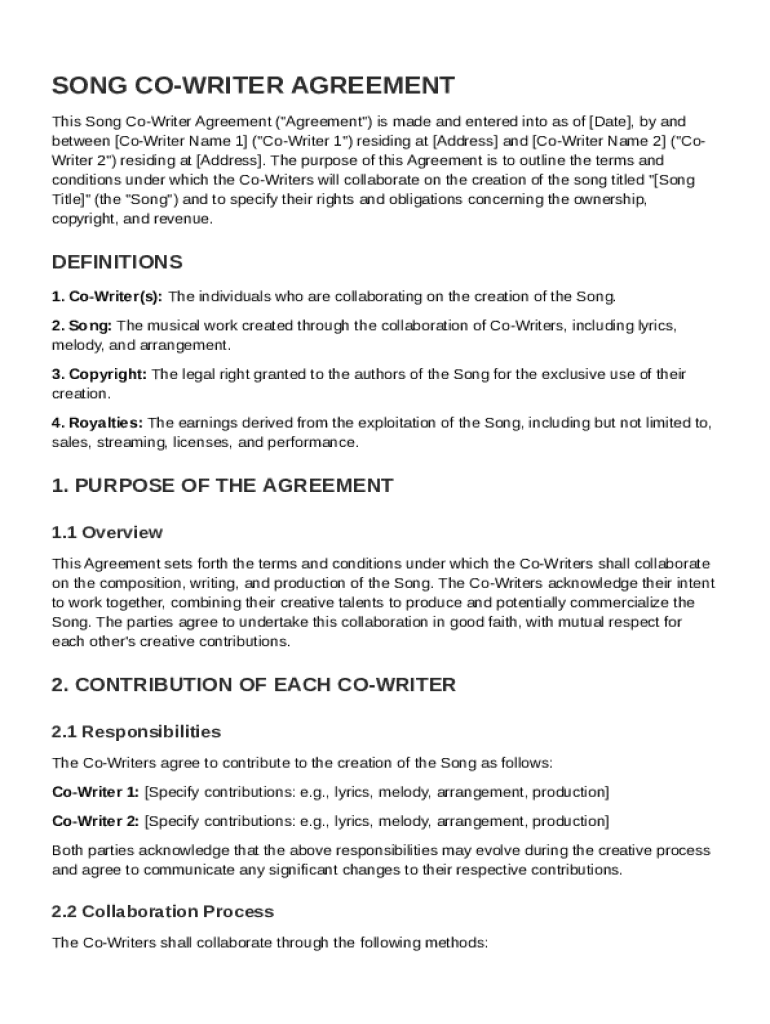
The Song Co-Writer Agreement Template is a legal document that outlines the terms of collaboration between two or more individuals involved in the songwriting process. This agreement addresses various elements such as the division of responsibilities, ownership rights, copyright details, revenue sharing, and avenues for resolving disputes. Recognizing the nuances of a creative partnership, this template aims to provide a framework of mutual respect and good faith to ensure a smooth and efficient collaboration. It serves as a critical tool for protecting the collaborators' legal and financial interests while fostering a harmonious working relationship.
How to Use the Song Co-Writer Agreement Template
To effectively utilize the Song Co-Writer Agreement Template, follow these steps:
-
Download the Template:
- Obtain a digital copy of the template from DocHub or a similar service.
-
Define Contributions:
- Clearly outline each party's role and contribution to the songwriting process. This ensures clarity on who is responsible for lyrics, melody, and other creative aspects.
-
Set Ownership Rights:
- Specify the percentage of ownership each co-writer holds for the final work. This detail is crucial for future earnings and rights management.
-
Address Copyright Issues:
- Discuss and document how the copyright will be registered and which parties will be credited.
-
Revenue Sharing Provisions:
- Establish how income from the song (e.g., sales, royalties) will be split among the collaborators.
-
Include Dispute Resolution:
- Outline a method for resolving disagreements, whether through mediation, arbitration, or another agreed-upon method.
Key Elements of the Song Co-Writer Agreement Template
The template comprises several essential components that ensure all aspects of the collaboration are addressed:
-
Identification of Parties:
- Full names and contact details of all co-writers.
-
Scope of Collaboration:
- Define the scope and nature of the work being created.
-
Ownership and Rights:
- Details about how rights and ownership are allocated among co-writers.
-
Payment and Revenue Sharing:
- Terms related to income distribution, including advance payments or royalties.
-
Copyright Registration:
- Responsibilities concerning the registration and administration of copyrights.
-
Confidentiality Clause:
- Ensures that proprietary ideas and unfinished works are protected between the parties.
-
Termination Conditions:
- Conditions under which the agreement can be terminated by either party.
Steps to Complete the Song Co-Writer Agreement Template
Completing the template involves several steps:
-
Fill in the Personal Details:
- Start by adding the full names and addresses of all parties involved.
-
Define Contributions:
- Clearly state the roles and expected contributions of each co-writer.
-
Assign Ownership Percentages:
- Agree on and document the percentage ownership each party has in the final song.
-
Detail Revenue Arrangements:
- Outline specifics of financial arrangements, including how and when payments will be made.
-
Copyright and Registration:
- Specify who is responsible for handling copyright registration and costs.
-
Secure Signatures:
- Have all parties sign the document to ensure mutual agreement and legal validity.
Who Typically Uses the Song Co-Writer Agreement Template
The Song Co-Writer Agreement Template is typically used by:
-
Songwriters and Lyricists:
- Individuals collaborating on producing songs for albums, commercials, or other musical projects.
-
Music Producers:
- Those who manage and produce songs and need clear terms laid out with co-writers.
-
Music Publishing Companies:
- Organizations that deal with multiple creators and need structured agreements to manage contributions and rights.


Legal Use of the Song Co-Writer Agreement Template
The Song Co-Writer Agreement acts as a legally binding document once all parties involved have signed. It must adhere to copyright laws and any other relevant legislation applicable within the U.S. It helps prevent future legal disputes by documenting agreed-upon terms. Legal counsel is often recommended to ensure all sections align with current laws, protecting the interests of the co-writers while ensuring clarity in legal obligations.
Examples of Using the Song Co-Writer Agreement Template
There are many scenarios where this template proves invaluable:
-
Collaboration for a Hit Single:
- Several writers contributing to a song intended for commercial release can detail their efforts and intentions openly.
-
Creating Music for a Film:
- When multiple songwriters work on a movie soundtrack, clear terms with the director, music producer, and film studio are established using this template.
-
Joint Projects for Marketing Campaigns:
- Musicians brought together to create jingles or themed songs for advertising need clear agreements to manage contributions and earnings.
State-Specific Rules for the Song Co-Writer Agreement Template
Different states may have specific regulations affecting contracts, including co-writer agreements. For example:
-
California:
- Known for more stringent labor laws, which may necessitate additional clauses regarding employment rights.
-
New York:
- Emphasizes clear articulation on revenue sharing and conflict resolution mechanisms in creative contracts.
It is advisable for parties to consult legal professionals familiar with state-specific regulations to ensure the agreement complies with local laws, providing extra protection and clarity.
Important Terms Related to the Song Co-Writer Agreement Template
Understanding key terms is essential for ensuring the agreement effectively serves its purpose:
-
Copyright:
- A legal right granting the creator of original work exclusive rights to its use and distribution.
-
Royalty:
- Payments made to rights holders, typically calculated as a percentage of sales or revenues generated by the work.
-
Advance:
- An upfront payment against future royalties earnings.
-
Intellectual Property:
- Creations of the mind that are legally protected, encompassing musical compositions among other forms.
Clarity on these aspects ensures all parties are aligned regarding their rights and responsibilities, facilitating a smoother collaboration.