Definition and Purpose of the Photography Non-Compete Agreement
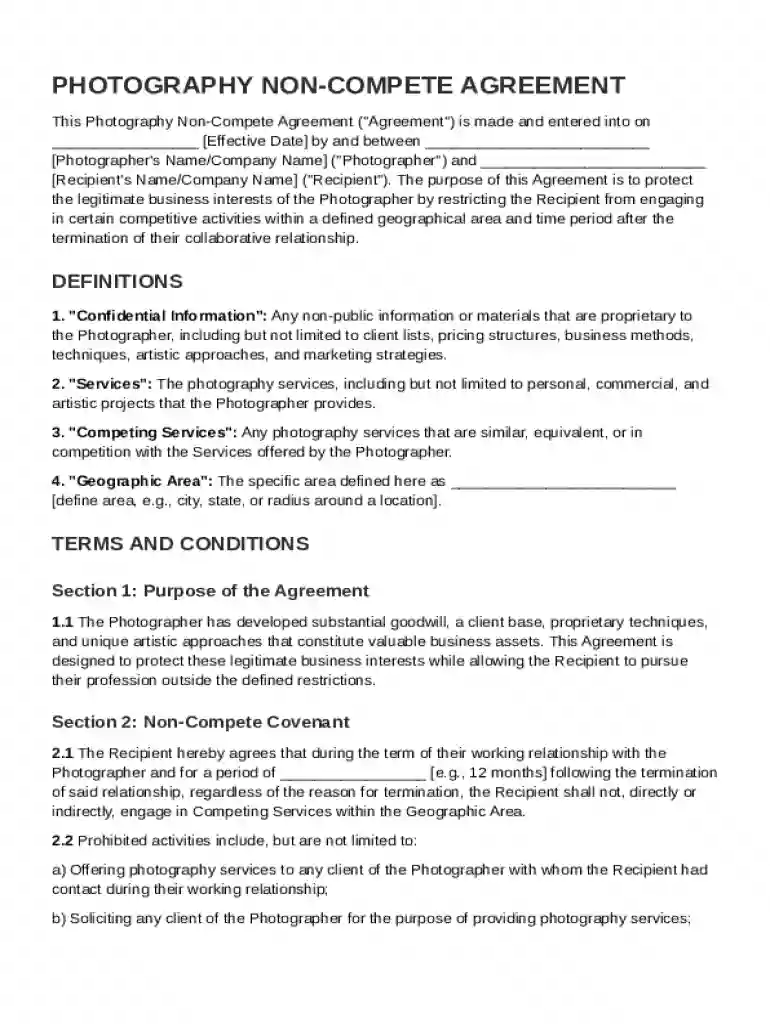
The Photography Non-Compete Agreement is a legal contract that restricts a photographer or recipient from engaging in competitive photography services within a defined geographic area and for a specified period after their professional relationship ends. This agreement is crucial for safeguarding the business interests of photographers, ensuring that proprietary information and client relationships are protected.
Key Elements
- Geographic Limitations: The agreement outlines specific regions where the recipient cannot offer photography services.
- Duration: It specifies the time frame during which the restrictions apply post-employment or collaboration.
- Confidentiality Obligations: Ensures that sensitive business information remains private.
- Enforcement Measures: Describes the actions that may be taken in case of a breach.
How to Use the Photography Non-Compete Agreement Template
The template is a structured guide for drafting a legally-binding agreement. Here’s how it can be tailored to your needs:
- Customize the Geographic Scope: Define where the non-compete clauses apply.
- Set Time Constraints: Decide on the length of the non-compete obligation.
- Include Business-Specific Terms: Adjust confidentiality and enforcement clauses.
Practical Application
- Individual Photographers: Protect client lists and unique methodologies.
- Photography Firms: Ensure employees do not transfer to competitors immediately after leaving.
Important Terms Related to the Non-Compete Agreement
Understanding the terminology used in a non-compete agreement is vital for both parties involved:
- Non-Disclosure: Ensures that proprietary business information is not shared outside the organization.
- Restrictive Covenant: Refers to clauses that limit the recipient’s future business activities.
- Injunction: A legal order that may be implemented to enforce the agreement.
Case Studies
- Freelancers: Often face strict non-compete terms to prevent client poaching.
- Corporate Photographers: Use comprehensive agreements to safeguard business models.
Steps to Complete the Photography Non-Compete Agreement Template
Completing the template requires careful attention to detail and understanding your legal obligations:
- Gather Relevant Information: Include the names, contact details, and roles of all parties.
- Define Non-Compete Terms: Set the specific time frames and geographical limits.
- Consult Legal Advisors: Seek professional assistance to ensure compliance with applicable laws.
Detailed Process
- Draft Preliminary Terms: Base initial versions on industry standards.
- Review and Revise: Adjust terms based on negotiation feedback.
Legal Use of the Photography Non-Compete Agreement
Ensure that the agreement is legally enforceable by adhering to federal and state-specific regulations:
- Compliance: Each clause should align with legal standards in the U.S., acknowledging local variances.
- Legitimacy of Terms: Avoid overly broad or indefinite restrictions that might be considered unreasonable in court.
Legal Scenarios
- Dispute Resolution: Outlines how disagreements will be addressed, including mediation or arbitration options.
State-Specific Rules for Non-Compete Agreements
Non-compete agreements must conform to varying rules across different states:
- California: Typically restricts non-compete clauses, requiring specific legal justifications.
- Texas: Requires them to be reasonable in scope and duration.
Differences Across States
- Enforcement: Some states demand tangible proof of competitive threat to enforce a non-compete.
- Judicial Interpretation: Varies significantly by jurisdiction and must be reviewed for compliance.
Real-Life Examples
- Boutique Studios: Often draft comprehensive agreements to cover high-profile clients.
- Commercial Photographers: Use them to prevent knowledge transfer to direct competitors.
Examples of Using the Photography Non-Compete Agreement Template
Through different scenarios, the use of this template showcases its flexibility:
- Exit Agreements: A photographer leaving a studio still bound by protection terms.
- New Hires: Integrating clauses into employment contracts at the time of onboarding.
Implementation Strategies
- Client Retention: Ensures departing staff do not take clients with them.
- Knowledge Protection: Prevents unique techniques from being used elsewhere immediately.
Versions or Alternatives to the Photography Non-Compete Agreement Template
While this template is comprehensive, certain scenarios may require different forms or additional documents:
- Non-Disclosure Agreement (NDA): Focuses purely on confidentiality without business restrictions.
- Employment Contracts: May include non-compete clauses within broader employment terms.
Alternative Applications
- Freelance Contracts: May benefit from less restrictive NDAs.
- Consultant Agreements: Often separate confidentiality from non-compete terms.