






Definition and Meaning
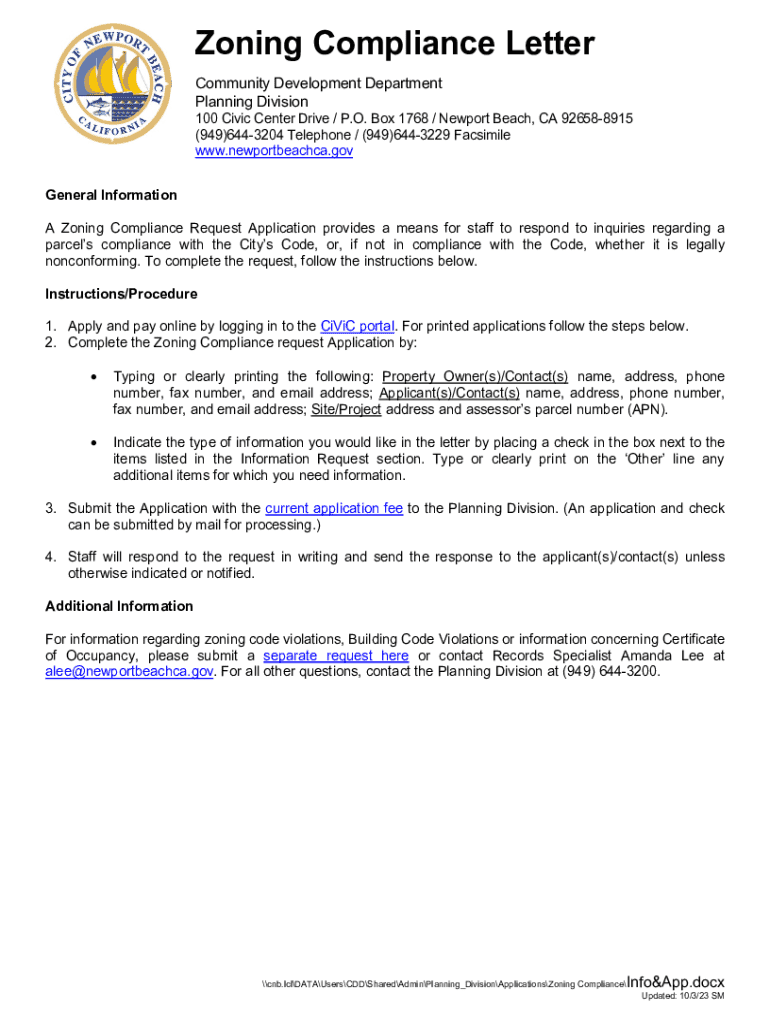
A Zoning Compliance Letter is an official document issued by a local government authority, such as a city or county's Community Development Department. It serves to verify that a particular property complies with the current zoning codes or is legally nonconforming. This letter is an essential tool for property buyers, sellers, lenders, and developers as it provides confirmation of a property's zoning status. Understanding the zoning status is crucial as it affects how the property can be used and developed. For example, a business may need to ensure that a property is zoned for commercial use before purchasing or leasing it.
Primary Functions
- Verification: Confirms compliance with local zoning ordinances.
- Documentation: Provides written proof of zoning compliance.
- Guidance: Informs property owners about permissible land use.
Role in Transactions
In real estate transactions, zoning compliance letters are often required by lenders to approve financing. Buyers use them to understand any limitations on property use, whereas sellers can assure potential purchasers of the legitimacy of their property's zoning status. Developers rely on these letters to ensure that their proposed projects meet zoning requirements before proceeding with construction.
Steps to Complete the Zoning Compliance Letter
Completing a Zoning Compliance Letter involves several steps that ensure accuracy and thoroughness. This process varies by location due to differing local government requirements but generally follows a similar structure. Here's a detailed look at the typical procedure:
- Contact the Appropriate Department: Reach out to the local Community Development or Planning Department.
- Obtain the Application Form: Access the Zoning Compliance Request Application online or in person.
- Provide Necessary Details: Include information such as property address, parcel number, current use, and contact details.
- Submit Supporting Documents: Enclose any additional documents, like site plans or previous zoning maps, if required.
- Payment of Fees: Pay any associated fees as specified by the local authority.
- Submission: Submit the completed application and wait for processing and review by the department.
Common Requirements
- Property Identification: Accurate address and parcel information.
- Contact Information: Applicant's full name, phone number, and address.
- Current Zoning Information: Existing use and zoning code.
How to Obtain the Zoning Compliance Letter
Obtaining a Zoning Compliance Letter involves understanding the specific requirements of the local municipality. The process usually includes:
- Visiting the Local Government Website: Most Community Development Departments offer comprehensive guides online.
- Contacting the Department: For questions or assistance, contact the department via phone or email.
- Submitting the Application: Choose between online submission through a government portal or a physical drop-off/mail-in method at the department office.
Who Typically Uses the Zoning Compliance Letter
The Zoning Compliance Letter is useful for several stakeholders in the land and property sector:
- Property Buyers: To verify zoning compliance before purchase.
- Real Estate Developers: To ensure project plans align with zoning laws.
- Financial Institutions: To confirm zoning status before mortgage approval.
- Homeowners and Community Residents: To understand potential changes or developments in neighborhood properties.

Key Elements of the Zoning Compliance Letter
Understanding the critical elements included in a zoning compliance letter can provide clarity to users and stakeholders:
- Property Description: Includes lot details, size, and existing structures.
- Zoning Designation: Current zoning classification of the property.
- Compliance Statement: Official confirmation of compliance or non-compliance.
- Relevant Conditions or Restrictions: Any specific conditions that apply to the property's use.
Must-Have Information
- Official Seal or Signature: Authenticates the document.
- Date of Issuance: Indicates the letter's validity period.
- Reference to Applicable Codes: Provides legal backing and references applicable local zoning ordinances.
State-Specific Rules for the Zoning Compliance Letter
Zoning regulations can differ significantly from state to state, impacting how zoning compliance letters are issued and structured:
- Variation in Definitions: What constitutes commercial, residential, or mixed-use zoning can change across state lines.
- Application Procedures: Some states require additional environmental or historical reviews before issuing a zoning letter.
- Processing Time: The average time to receive a zoning compliance letter can vary based on regional administrative processes.
Legal Use of the Zoning Compliance Letter
The Zoning Compliance Letter is not just a formality; it holds significant legal implications:
- Enforcement Tool: Local governments can use it to enforce zoning laws.
- Evidence in Disputes: It can serve as evidence in legal disputes regarding land use.
- Modification of Use: Necessary for legal approvals required when modifying property use or structure.
Legal Implications for Non-Compliance
- Penalties: In cases of non-compliance, property owners may face fines or orders to cease operations.
- Zoning Adjustments: Legal pathways, such as applications for variances or rezoning, may be required for compliance.
Examples of Using the Zoning Compliance Letter
Real-world applications of a Zoning Compliance Letter include various scenarios that showcase its importance:
- New Construction Projects: Developers ensure compliance with zoning laws before beginning construction to avoid costly redesigns.
- Property Purchase Evaluations: Potential homeowners use the letter to confirm that intended property uses are permissible.
- Commercial Leasing: Businesses check zoning status to ensure that operations such as manufacturing or retail are allowed.