






Definition and Purpose of a Working Agreement Template
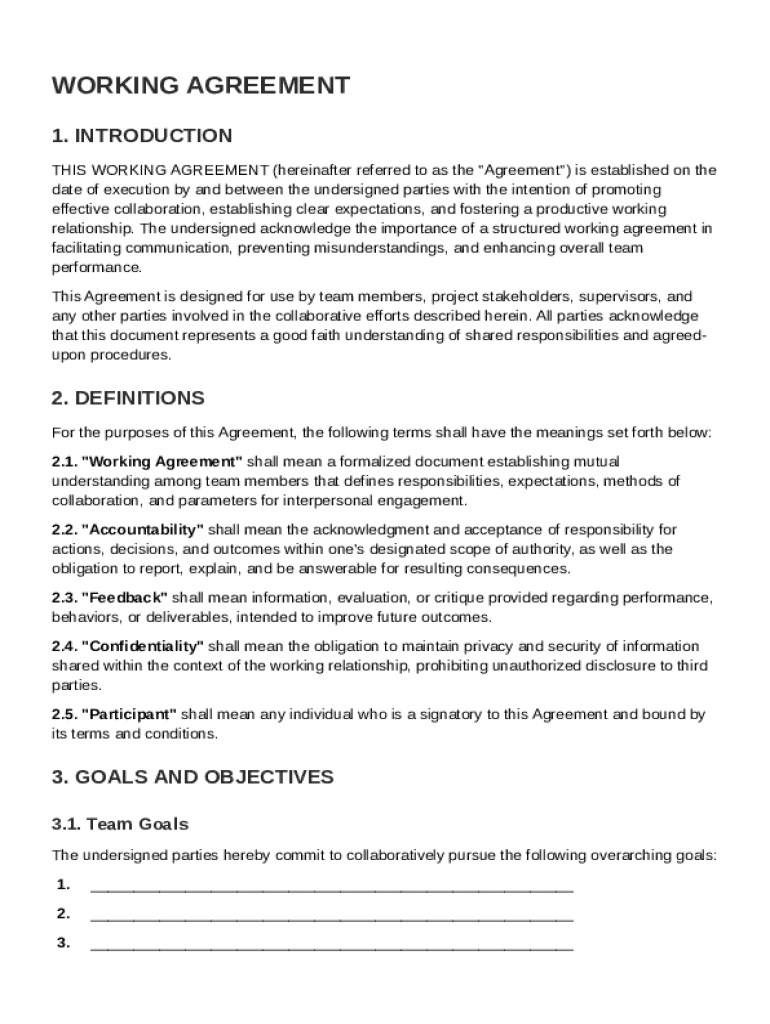
A Working Agreement Template is a structured document designed to outline the framework for collaboration among team members, project stakeholders, and supervisors. It sets clear expectations and defines roles, communication guidelines, and accountability practices. This template is crucial in establishing mutual understanding and ensuring effective teamwork by providing mechanisms for conflict resolution, regular feedback, and confidentiality policies. In essence, it serves as a roadmap for how a team will operate, emphasizing shared responsibilities and mutual understanding to prevent misunderstandings.
How to Use the Working Agreement Template
Using a Working Agreement Template involves several steps to ensure it effectively meets the needs of the team:
-
Identify Team Goals: Clearly outline the objectives that the team aims to achieve. Understanding these goals helps in setting relevant expectations.
-
Define Roles and Responsibilities: Assign specific roles to each team member to utilize their strengths and ensure accountability.
-
Set Communication Guidelines: Establish how and when communication will occur, including the channels used for updates, meetings, and feedback.
-
Outline Conflict Resolution Procedures: Define clear steps for addressing conflicts to maintain a harmonious work environment.
-
Regular Review and Feedback: Agree on a schedule for regular reviews of the agreement to ensure it remains relevant and effective.
Each of these steps should be tailored to the specific needs of the team, ensuring the template acts as a live document that can evolve as the team progresses.
Key Elements of the Working Agreement Template
A comprehensive Working Agreement Template includes several critical components that facilitate effective team collaboration:
-
Objectives: A clear articulation of what the team intends to accomplish.
-
Roles and Responsibilities: Detailed descriptions of each participant’s duties to ensure clarity and accountability.
-
Communication Plan: Guidelines on how information will be shared within the team.
-
Decision-Making Process: A framework for making and documenting decisions.
-
Conflict Resolution: Established procedures for managing disputes fairly and efficiently.
-
Feedback Mechanisms: Structured opportunities for team members to provide input and suggestions.
-
Confidentiality Policies: Standards for handling sensitive information to maintain trust and integrity.
These elements are essential in creating a robust template that ensures all team members are aligned and committed to the project’s success.
Steps to Complete the Working Agreement Template
Completing a Working Agreement Template involves a series of strategic steps:
-
Gather Input: Collect insights and suggestions from all team members to ensure inclusivity.
-
Draft the Agreement: Based on collected input, draft the initial version covering all key elements.
-
Review and Revise: Share the draft with the team, allowing room for feedback and necessary adjustments.
-
Finalize the Document: Integrate the feedback, agree on the terms, and finalize the agreement.
-
Implement and Monitor: Put the agreement into action and monitor its effectiveness, making revisions as needed.
Following these steps ensures that the working agreement is comprehensive, practical, and tailored to the team’s unique dynamics.
Legal Use of the Working Agreement Template
In the U.S., a Working Agreement Template can have legal implications, particularly when it includes terms related to confidentiality and accountability. While it is not a legally binding contract, it can serve as an informal agreement that guides team operations. It is important to:
-
Ensure that terms do not conflict with existing company policies or employee contracts.
-
Include clauses related to intellectual property ownership if relevant.
-
Consult a legal advisor if any doubts arise regarding specific clauses, especially those related to confidentiality and proprietary information.
By adhering to these considerations, teams can ensure that their working agreement complies with legal standards and organizational policies.
Examples of Using the Working Agreement Template
There are various scenarios where a Working Agreement Template proves beneficial:
-
Product Development Teams: Utilized to coordinate roles between developers, designers, and product managers, ensuring clarity in responsibilities and timelines.
-
Remote Work Settings: Used to establish norms for communication and collaboration across different time zones.
-
Cross-Functional Projects: Helps integrate diverse teams, such as marketing, sales, and customer service, by setting clear protocols for collaboration.
These examples highlight how different teams can leverage working agreements to enhance their operational efficiency and teamwork.
Software Compatibility and Digital Usage
Working Agreement Templates can be effectively managed using digital tools to maximize accessibility and ease of use:
-
Templates in DocHub: Edit and customize directly within the platform for seamless integration with existing workflows.
-
Compatibility with Google Workspace: Allows teams to import, edit, and share their working agreements using Google Drive and Google Docs.
-
Mobile Accessibility: Utilize mobile devices to view and edit the template remotely, supporting flexible work environments.
With these digital solutions, teams can easily adapt their working agreements as projects evolve, ensuring continuous alignment and collaboration.