01. Edit your form online
Type text, add images, blackout confidential details, add comments, highlights and more.

Type text, add images, blackout confidential details, add comments, highlights and more.

Draw your signature, type it, upload its image, or use your mobile device as a signature pad.

Send it via email, link, or fax. You can also download it, export it or print it out.
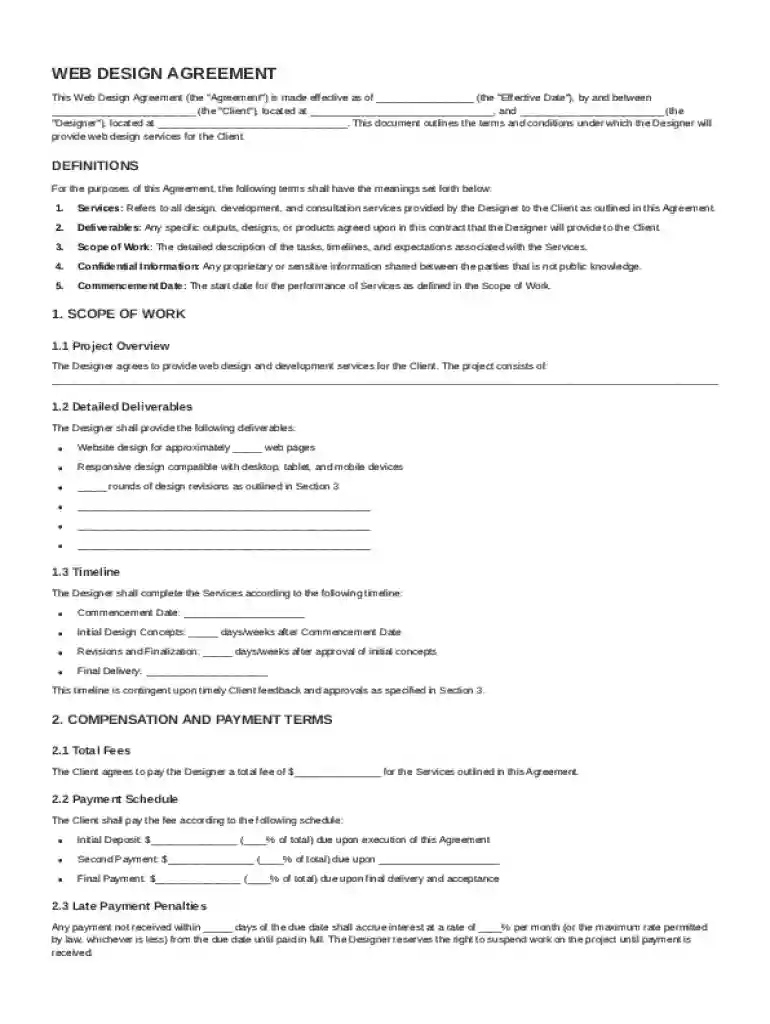
The Web Design Agreement Template is a legal document that outlines the terms and conditions between a client and designer for web design services. This template establishes the framework for the project, detailing deliverables, timelines, payment terms, and more. By clarifying expectations, it helps prevent misunderstandings and promotes a smooth working relationship.
To use the Web Design Agreement Template effectively, begin by thoroughly reviewing each section to ensure it covers all necessary aspects of the project. Customize the template to suit the specific needs of your project, including details about project scope, deliverables, and deadlines. Ensure all legal clauses are appropriately tailored, and both parties agree to the terms before commencement.
Accessing a Web Design Agreement Template is straightforward. It can be downloaded from various online legal resources or professional platforms specializing in contractual templates. Some platforms offer customizable templates that can be adjusted according to your business requirements.
Filling out the Web Design Agreement Template correctly ensures both clarity and legality. Here’s a step-by-step guide to completing it:
The Web Design Agreement Template should comply with U.S. laws to ensure its enforceability. The agreement must include standard legal clauses, such as indemnification and liability limitations. It is advisable to consult with a legal professional to verify compliance and tailor the template to meet specific jurisdictional requirements.
Various professionals and businesses rely on the Web Design Agreement Template to define the terms of their web design services:


To illustrate its application, consider a freelance web designer hired by a startup to develop an e-commerce platform. The agreement would outline milestones, expected functionality, and payment terms. If the client requests additional features midway, a well-drafted agreement would include clauses for handling such changes, ensuring the designer is adequately compensated for extra work.
These examples demonstrate how the Web Design Agreement Template provides a structured approach to managing web design projects, benefiting both the service provider and client.
At DocHub, your data security is our priority. We follow HIPAA, SOC2, GDPR, and other standards, so you can work on your documents with confidence.