Definition & Meaning
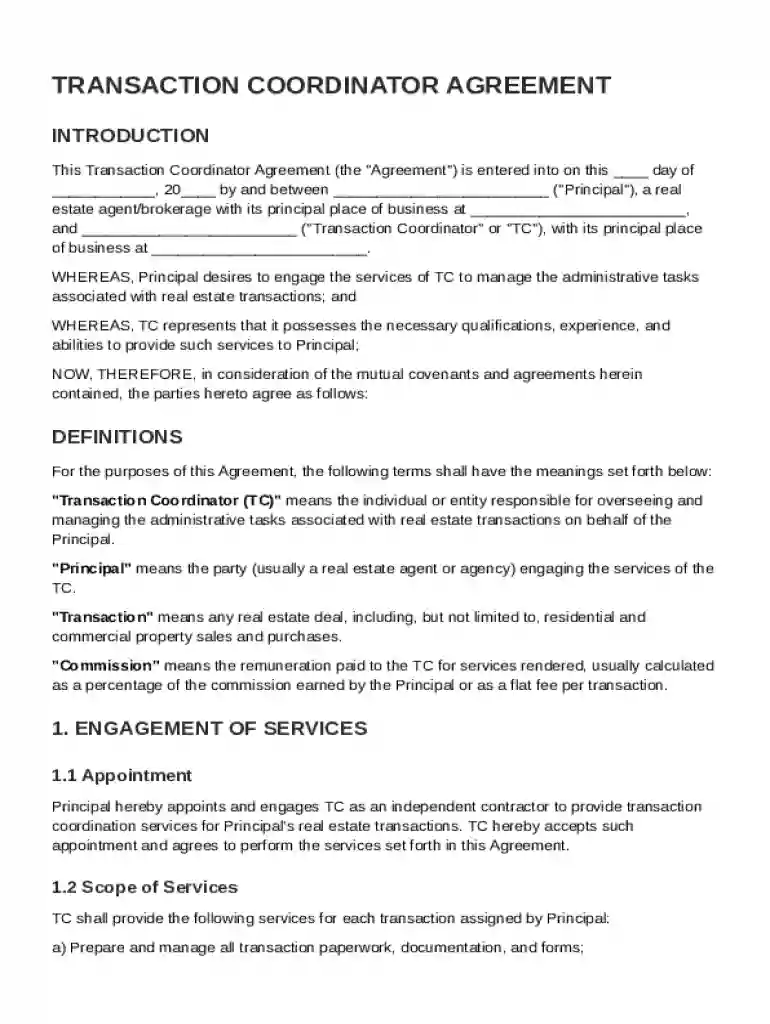
The Transaction Coordinator Agreement Template is a legally binding document that delineates the working relationship between a real estate agent, known as the Principal, and a Transaction Coordinator (TC). This template is essential in laying out the expectations and obligations of each party. It details the specific administrative tasks that the TC will manage, which can include organizing paperwork, scheduling appointments, and ensuring smooth transaction processes within real estate dealings. By clearly defining roles and responsibilities, this agreement mitigates misunderstandings and fosters an efficient operational environment. The template emphasizes the independent contractor relationship between the Principal and the TC, distinguishing it from an employer-employee dynamic.
Key Elements of the Transaction Coordinator Agreement Template
The Transaction Coordinator Agreement Template comprises several pivotal components that ensure clarity and functionality in the agreement. These include:
- Roles and Responsibilities: This section outlines the duties of the TC, which may include managing transaction timelines, coordinating document submissions, and liaising with involved parties.
- Compensation Structure: Specifics on how the TC will be compensated for their services, including payment schedules and methods.
- Confidentiality Obligations: A clause ensuring that all parties involved maintain discretion regarding sensitive transaction information.
- Termination Conditions: Guidelines on how the agreement can be terminated by either party and the necessary notice or conditions required.
- Indemnification and Liability: This provides legal protection for both parties, detailing responsibility for potential legal issues or disputes.
Steps to Complete the Transaction Coordinator Agreement Template
Completing the Transaction Coordinator Agreement Template involves several steps to ensure legal and functional accuracy:
- Review Template Components: Thoroughly read through the entire template to understand the commitments and clauses included.
- Customize for Specific Needs: Modify sections such as roles, compensation, and scope of work to reflect the specific needs of the transaction.
- Include All Parties' Information: Accurately fill in the details of all parties involved, including contact information and function.
- Negotiate Terms: Discuss and agree on any negotiable terms with the other party to ensure mutual satisfaction.
- Consult a Legal Advisor: If necessary, seek assistance from a legal professional to review the document for compliance with relevant legal standards.
- Final Review and Signatures: Once finalized, have both the Principal and TC sign the document to make it legally binding.
Who Typically Uses the Transaction Coordinator Agreement Template
The Transaction Coordinator Agreement Template is widely utilized within the real estate industry. The primary users include:
- Real Estate Agents: Agents who outsource administrative transaction tasks to maintain focus on sales activities.
- Transaction Coordinators: Professionals offering specialized services in managing the logistical elements of real estate transactions.
- Real Estate Agencies: Agencies that need to formalize relationships between their agents and contracted TCs for internal consistency.
- Independent TCs: Freelance transaction coordinators who collaborate with multiple agents or agencies.
The template is crucial for defining expectations and ensuring smooth operations in professional relationships involving real estate transactions.

Important Terms Related to Transaction Coordinator Agreement Template
Understanding key terminology is vital in navigating and implementing the Transaction Coordinator Agreement Template effectively:
- Independent Contractor: Refers to the self-employed status of the TC, distinguishing their services from those of an employee.
- Principal: A term used for the main party, typically the real estate agent, hiring the TC.
- Scope of Work: Defines the range of duties that the TC is responsible for under the agreement.
- Administrative Tasks: Activities such as document management, scheduling, and coordination that support transaction logistics.
- Compensation: Terms regarding the monetary payment provided to the TC for services rendered.
Legal Use of the Transaction Coordinator Agreement Template
The legal enforceability of the Transaction Coordinator Agreement Template relies on compliance with federal and state laws. Key considerations include:
- Adherence to Contract Laws: The agreement must meet the conditions set out in the relevant state’s contract laws to be enforceable.
- Fair Labor Standards Act: Terms concerning compensation and working conditions must align with the Fair Labor Standards Act to avoid legal issues.
- Indemnity and Liability Protections: Clearly outline indemnity clauses to protect the interests of both parties.
- Compliance with Confidentiality Regulations: Any clauses related to data protection or confidentiality must comply with applicable privacy laws.
Examples of Using the Transaction Coordinator Agreement Template
Practical scenarios illustrate the application of the Transaction Coordinator Agreement Template in real estate transactions:
- Agency Utilizing Multiple TCs: A large real estate agency employs several TCs, streamlining their agreements using standardized templates to maintain uniform service levels across branches.
- Independent Coordinator Supporting Small Firms: A freelance TC works with different small agencies, using the template to outline bespoke terms each time.
- Complex Transaction Sets: For high-value transactions requiring additional coordination, agents use the template to extend roles and compensate TCs accordingly.
Software Compatibility
DocHub facilitates seamless integration with various software and platforms, enhancing the accessibility of the Transaction Coordinator Agreement Template:
- Google Workspace: Users can import and export documents through Google Drive and Gmail, promoting fluidity in document management.
- Cloud Storage Services: Supports Dropbox and OneDrive for flexible document handling and collaboration.
- Editing Software: Compatibility with formats such as DOC, PPT, and XLS allows users to modify templates using their preferred tools, without conversion hassles.
These interoperability features support users in adapting the template for diverse operational environments in real estate management.