






Definition and Meaning
The Maryland Attorney General - End of Life Care document primarily serves as a legal directive that conveys an individual's preferences regarding medical treatment during the final stages of life. This form allows patients to articulate their choices concerning life-sustaining procedures, including but not limited to resuscitation, mechanical ventilation, and other interventions. By completing this form, individuals ensure that their healthcare preferences are respected and followed, particularly when they are unable to communicate their decisions themselves.
Purpose of the Document
- Advance Directives: The form acts as an advance directive, guiding healthcare providers and family members in executing the patient's wishes.
- Legal Framework: It establishes a legally binding framework under Maryland state law, ensuring compliance and recognition by medical personnel.
- Patient Empowerment: Empowers individuals by providing a platform to express their healthcare desires, fostering peace of mind and autonomy.
Key Elements of the Form
Understanding the essential components of this document is crucial for accurate completion and implementation. The form includes several critical sections that need precise attention.
Patient Information
- Personal Details: Standard fields for the patient's name, date of birth, and contact information.
- Identity Verification: Requires identification to ensure the form accurately reflects the patient's wishes.
Consent and Understanding
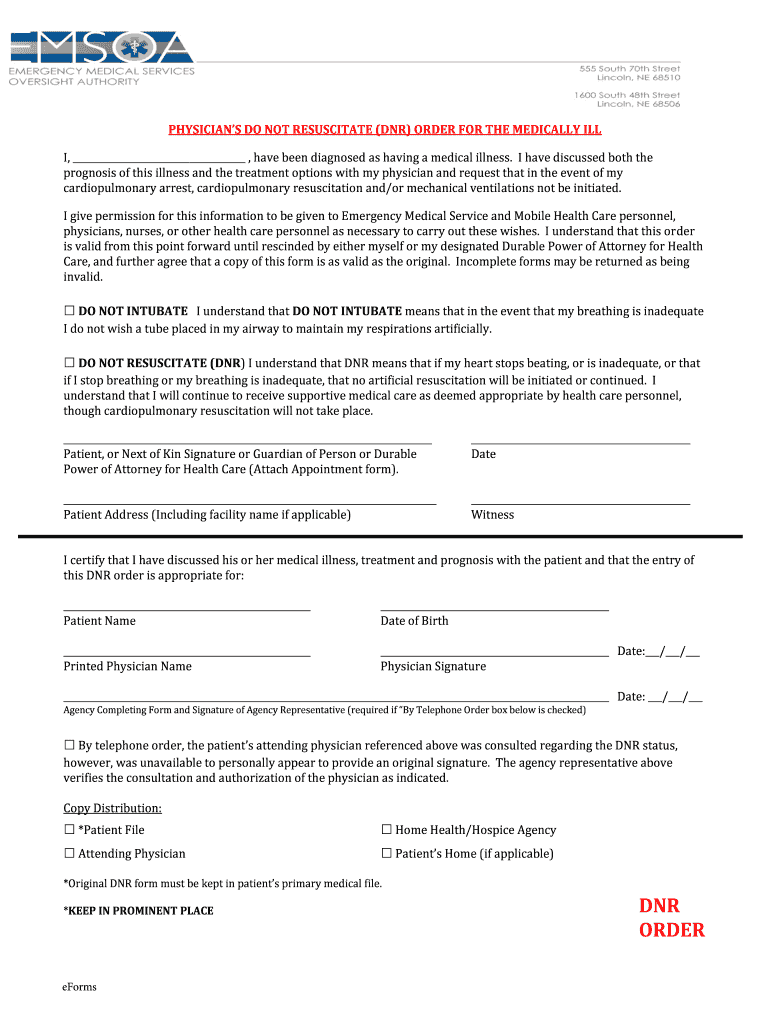
- DNR Directives: A section dedicated to Do Not Resuscitate orders, where patients can choose to decline CPR and related procedures.
- Signatures Required: Signatures from the patient and a witnessing healthcare professional validate the patient's understanding and agreement.
Legal Witnesses
- Witness Signatures: The form necessitates signatures from at least two witnesses, confirming the patient's decisions were made voluntarily.
How to Use the Maryland Attorney General - End of Life Care
Utilizing this form correctly involves understanding both the procedural and legal aspects.
Step-by-Step Completion Process
- Gather Necessary Information: Begin by collecting all personal and medical information required for the form.
- Consult Healthcare Professionals: Engage with medical providers to clarify any doubts regarding medical terminology or available options.
- Fill Out the Form: Complete each section carefully, ensuring that all preferences are clearly articulated.
- Obtain Required Signatures: Secure the necessary signatures from medical professionals and witnesses to ensure legal compliance.
Practical Scenarios
- Hospice Settings: Useful in hospice care environments where end-of-life decisions are frequently discussed.
- Chronic Illness Management: Applied in chronic illness cases, facilitating proactive control over potential medical emergencies.
Legal Use and Compliance
Adhering to Maryland's legal requirements enhances the form's validity and efficacy.
State-Specific Regulations
- Maryland Specificity: The document aligns with Maryland state laws, differing from end-of-life care forms in other states.
- Compliance Assurance: Ensures that healthcare providers comply with the legal stipulations set forth in Maryland’s Health Care Decision Act.
Potential Legal Challenges
- Disputes: Family disagreements about the decisions outlined in the form can arise.
- Judicial Intervention: Courts may become involved if the form’s validity is questioned.
Important Terms Related to End of Life Care
Familiarity with the key terms ensures better understanding and execution of the form's directives.
Medical Terminology
- Cardiopulmonary Resuscitation (CPR): A life-saving technique used in emergencies when someone's breathing or heartbeat has stopped.
- Mechanical Ventilation: A method to assist or replace spontaneous breathing using a machine called a ventilator.
Legal Terms
- Advance Directive: A legal document stating a person’s wishes regarding medical treatment in circumstances where they are no longer able to express informed consent.
- Surrogate Decision Maker: An individual authorized to make healthcare decisions on behalf of the patient if they become incapacitated.
Steps to Complete the Maryland Attorney General - End of Life Care
Completing the form accurately is essential for its intended legal and practical effect.
Detailed Instructions
- Read Thoroughly: Carefully review the entire form to understand all sections and questions.
- Clarify Doubts: Consult with legal counsel or healthcare providers if uncertain about specific terms or implications.
- Complete Personal Information: Enter all necessary personal details accurately.
- Express Medical Preferences: Clearly indicate your choices regarding life-sustaining treatments.
- Secure Witnesses and Signatures: Obtain the necessary signatures from a physician and witnesses to attest to the form’s validity.
- Review and Revise: Re-evaluate the form periodically or as circumstances change to ensure it reflects current wishes.
Recommendations
- Periodic Updates: Review and update the document regularly to accommodate any changes in health status or personal preferences.
- Legal Advice: Seek legal counsel for any complex medical or legal considerations regarding the form’s completion and use.
Who Typically Uses the Maryland Attorney General - End of Life Care
Identification of the typical users of this form helps in understanding its context and applicability.


Targeted Users
- Elderly Individuals: Particularly those receiving long-term care or residing in assisted living facilities.
- Patients with Terminal Illnesses: Individuals diagnosed with incurable diseases who wish to outline their end-of-life care preferences.
- Healthcare Providers: Use the form to guide medical decisions aligning with state law and patient wishes.
Use Cases
- Family Involvement: Families use these directives to guide them during emotionally challenging times, when they need to make decisions on behalf of the patient.
- Medical Record Keeping: Incorporated into a patient’s medical records for easy reference during emergencies.
State-Specific Rules for the Maryland Attorney General - End of Life Care
Understanding how state-specific regulations affect this form can clarify its application and significance.
Maryland-Specific Considerations
- Legal Framework: Operates under the Maryland Health Care Decisions Act, providing a statutory framework for advance directives and end-of-life care.
- Recognized by State Hospitals: Maryland hospitals and healthcare facilities are required to respect and follow the directives outlined in this form.
Comparison with Other States
- Differentiating Factors: Unlike some states, Maryland has specific witnessing requirements and necessary components that must be included in the directive to ensure its enforceability.