






Definition & Meaning
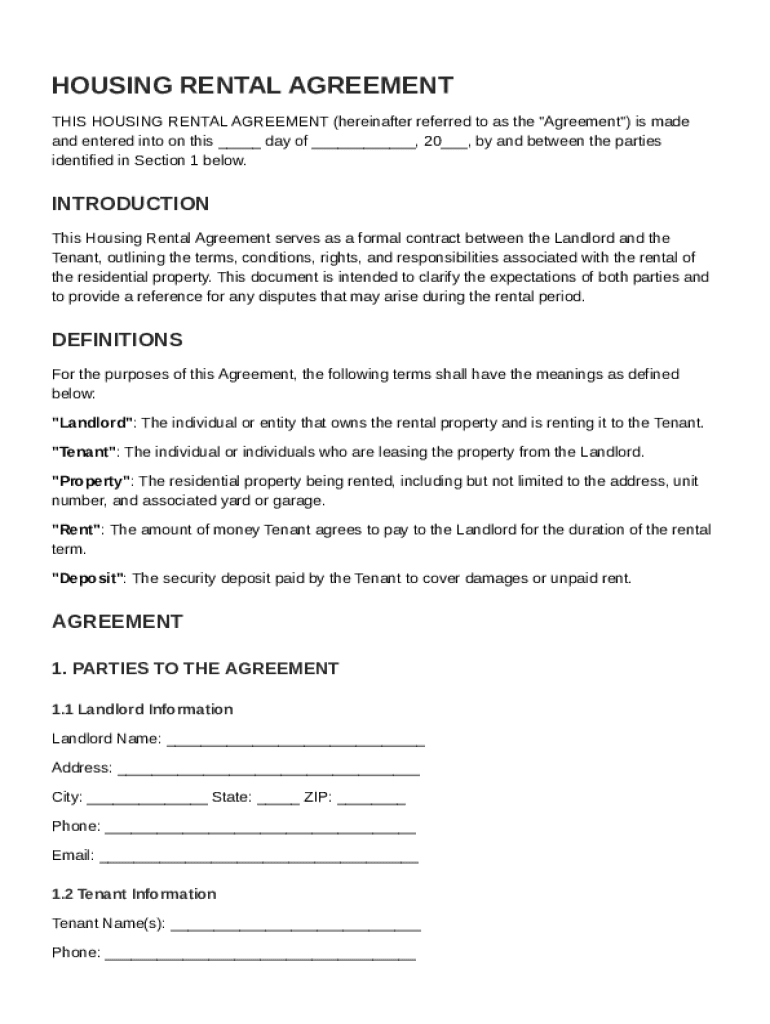
A Housing Rental Agreement is a formal contract between a landlord and tenant that delineates the terms and conditions of renting a residential property. It functions as a legally binding document detailing the rights and responsibilities of both parties. Key components include the lease duration, rent amount, payment schedule, and rules regarding property usage. The agreement aims to provide a clear reference point to prevent disputes and ensure both parties meet their obligations. Terms such as "lease" and "tenancy agreement" are sometimes used interchangeably, reflecting local legal customs and preferences.
Key Elements of the Housing Rental Agreement Template
The Housing Rental Agreement Template typically encompasses several crucial elements. These include:
- Lease Duration: Specifies the length of the rental period, whether it is a month-to-month lease or a fixed term, like one year.
- Rent Details: Outlines the monthly rent amount, payment method, and due dates.
- Security Deposit: Details the amount required for a security deposit, its purpose, and conditions for its return.
- Maintenance Responsibilities: States who is responsible for maintenance and repairs, with common responsibilities outlined for both the landlord and tenant.
- Property Usage Rules: Addresses permissible alterations, use of common areas, and limitations on behaviors or modifications.
- Termination Procedures: Defines the process for ending the agreement, including notice periods required by either party.
- Governing Law: Indicates the jurisdiction or state laws applicable to the rental agreement.
Steps to Complete the Housing Rental Agreement Template
Completing the Housing Rental Agreement involves several steps to ensure its accuracy and compliance:
- Gather Information: Collect all necessary information, including tenant names, property address, and landlord contact details.
- Specify Terms and Conditions: Clearly define rent amount, payment schedule, and lease duration.
- Detail Responsibilities: Outline maintenance roles and any specific obligations of the tenant and landlord.
- Review Specific Clauses: Include any additional clauses relevant to the property or the parties involved.
- Legal Review: If possible, have a legal professional review the document to ensure conformity with local laws.
- Sign and Date: Both parties sign and date the agreement to formalize the contract.
- Distribute Copies: Provide copies to both the landlord and tenant for their records.
Legal Use of the Housing Rental Agreement Template
The Housing Rental Agreement Template is intended for legal use in managing residential rentals. It must adhere to state-specific laws, which may vary significantly. Landlords and tenants should ensure compliance with local regulations, such as rent control ordinances or tenant protection laws. Utilizing this template helps formalize the rental arrangement, providing a legal framework to address any future disputes. It’s advisable to consider consultation with a legal expert to tailor the agreement to specific legal requirements and avoid unforeseen legal complications.
Who Typically Uses the Housing Rental Agreement Template
The template is commonly used by:
- Private Landlords: Individuals who own and rent out one or more properties.
- Property Management Companies: Firms acting on behalf of property owners to manage rental properties.
- Tenants: Individuals or families entering into lease agreements for residential living quarters.
- Realtors and Real Estate Agents: Professionals facilitating rental agreements as part of their service offerings.
- Legal Advisors: Professionals who may draft or review agreements to ensure legal compliance.

Important Terms Related to Housing Rental Agreement Template
Understanding specific terminology is pivotal to using a Housing Rental Agreement Template effectively:
- Lease: Refers to a contract granting use or occupation of property during a specified period in exchange for a specified rent.
- Deposit: A sum of money paid to the landlord to ensure tenant compliance with lease terms.
- Premises: The part of the property leased to the tenant, often described by its boundaries and features.
- Assignee/Subtenant: A party legally permitted by the landlord to occupy the rental property under terms similar to or within the original tenant's lease.
- Eviction: The legal process by which a landlord may remove a tenant from the rental property.
State-Specific Rules for the Housing Rental Agreement Template
State laws heavily influence rental agreements, and the template must be adjusted accordingly:
- Rent Control: Applicable in states like California and New York, indicating specific limitations on rent increases.
- Security Deposit Limits: Varies by state; some have specific guidelines regarding the maximum deposit amount and conditions for its return.
- Tenant Protection Regulations: States such as Oregon and Washington have enacted laws that provide additional rights and protections for tenants, impacting lease agreements.
- Notice Requirements for Termination: Distinct regulations regarding the notice period landlords must give tenants before terminating a lease.
Software Compatibility for Managing the Agreement
DocHub and similar platforms provide comprehensive tools for managing Housing Rental Agreements. They support:
- Document Editing: Allows for the addition of information, annotations, and necessary customizations within the agreement.
- Cloud Integration: Enables seamless storage and sharing via services such as Google Drive, Dropbox, and OneDrive.
- Electronic Signatures: Facilitates legally binding signatures, ensuring a streamlined signing process.
- Collaboration Tools: Supports multiple contributors to review and finalize agreements efficiently.
These tools ensure that agreements are accessible, editable, and securely managed, simplifying the rental agreement process for both landlords and tenants.