Definition & Meaning
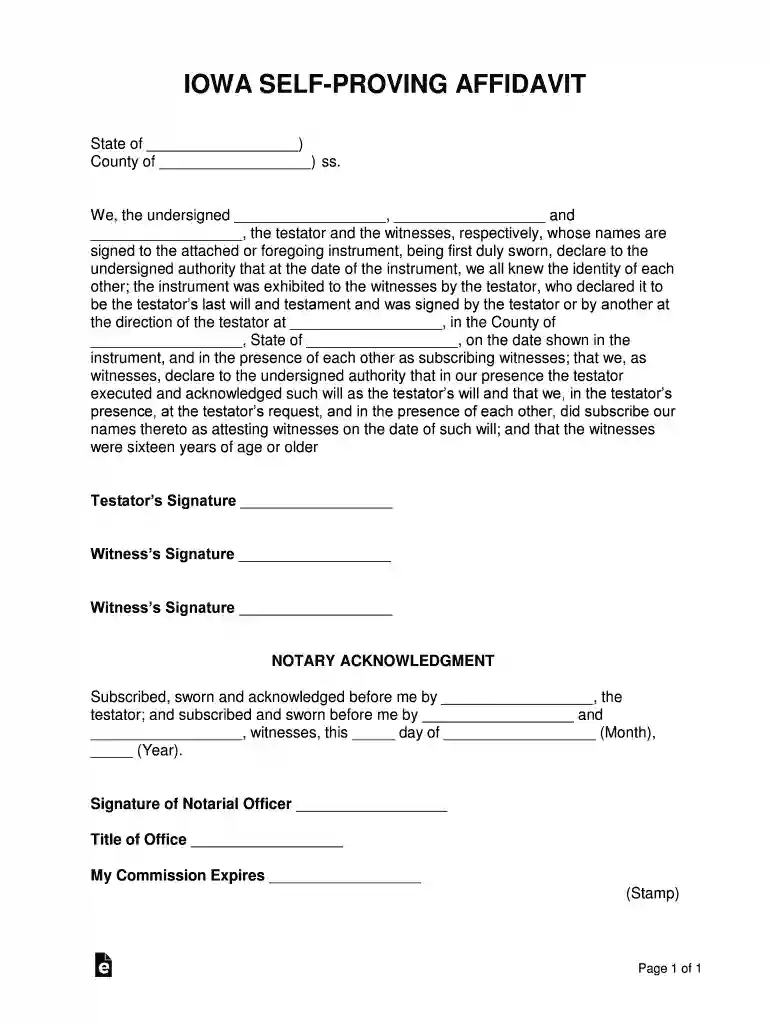
The "Iowa Self-Proving Affidavit Form" is a legal document designed to simplify the probate process for a last will and testament. This form acts as a sworn statement from the testator and witnesses confirming the authenticity of the will. By doing so, it eliminates the necessity of witnesses testifying in court, making the process more efficient. The affidavit contains declarations of identity verification and confirmation that the will was signed in the presence of all parties involved.
Composition of the Affidavit
- Testator's Statement: The individual who created the will swears that they are of sound mind and executed the will voluntarily.
- Witnesses’ Affirmation: Statements from at least two witnesses confirming they observed the testator signing the will without any coercion.
- Notary Acknowledgment: An official notarial seal and signature validate the document, providing legal authenticity.
How to Use the Iowa Self-Proving Affidavit Form
Utilizing the Iowa Self-Proving Affidavit Form can streamline the legal process after someone passes away, ensuring a smoother transfer of assets according to the deceased's wishes.
- Execute the Affidavit With the Will: The form should be signed at the same time as the will to ensure all parties involved are present.
- Involvement of a Notary: Arrange for a notary public to witness the signing and affix a notarial stamp, legitimizing the document.
- Retain the Affidavit with Legal Documents: Store the affidavit securely with the will to ensure it is easily accessible during probate.
Best Practices
- Ensure Accuracy: Double-check personal information and ensure all signatures are appropriately placed.
- Consistent Witnesses: Use the same witnesses for both the will and the affidavit to ensure consistency.
Steps to Complete the Iowa Self-Proving Affidavit Form
Completing the Iowa Self-Proving Affidavit Form requires careful attention to detail and strict adherence to the procedural steps.
- Preparation: Gather personal identification and verify the identities of the testator and witnesses.
- Execution of the Will: Ensure the will is signed in the presence of the witnesses.
- Completing the Affidavit: Fill out the affidavit form, ensuring all statements accurately reflect the signing situation.
- Notarization: Present the completed form to a notary public who will oversee the signing and authenticate the document.
- Safe Storage: Store the affidavit in a secure location alongside the will.
Considerations
- Check for Validity: Confirm the notary's credentials are current and valid before the signing.
- Field Specifics: Each field should be filled precisely as required, avoiding any ambiguous terms.
Key Elements of the Iowa Self-Proving Affidavit Form
The form includes several critical components that must be completed and verified correctly for it to serve its purpose effectively.
Critical Sections
- Identification Information: Full legal names of the testator and witnesses.
- Affirmation Statements: Affirmations by the testator and witnesses regarding the signing.
- Dates and Signatures: Exact signing dates and corresponding signatures of all parties.
- Notary Public Endorsement: A notary stamp and signature confirming the document's authenticity.
Possible Pitfalls
- Incomplete Fields: Leaving any section incomplete may render the form invalid.
- Incorrect Witness Order: Witnesses must sign in the order stipulated by the form to prevent disputes.
Legal Use of the Iowa Self-Proving Affidavit Form
The affidavit is legally recognized as a document that proves the validity of a will without requiring additional witness testimony.
Benefits
- Efficiency: Streamlines probate proceedings by avoiding court testimony.
- Clarity and Assurance: Provides a clear, sworn record of the will's execution process.
Key Legal Aspects
- Binding Nature: Once signed and notarized, the affidavit provides a legally binding confirmation of the will’s legitimacy.
- Compliance with Iowa Law: Ensures the will conforms to state-specific probate regulations.
State-Specific Rules for the Iowa Self-Proving Affidavit Form
Iowa's legal requirements for self-proving affidavits reflect its commitment to upholding the integrity of wills while respecting state-specific legal norms.
Rules and Requirements
- Two Witness Requirement: Iowa law mandates two witnesses to observe the signing of both the will and the affidavit.
- Notary Requirement: A notary must authenticate the affidavit to fulfill legal standards.
Variations Across States
- Witness Options: Some states may allow only one witness, whereas Iowa insists on two.
- Notary Alternatives: In other jurisdictions, attorneys might authenticate such documents, unlike the Iowa mandate for a notarial seal.
Target Users
- Testators: Individuals drafting a will as part of their estate planning process.
- Estate Planning Attorneys: Legal professionals ensuring clients' documents meet statutory requirements.
Practical Contexts
- Probate Efficiency Seekers: Those who wish to minimize complications and expedite the probate process.
- Future-Proof Planners: Individuals prioritizing security and legal clarity for their heirs.
Examples of Using the Iowa Self-Proving Affidavit Form
Real-world scenarios illustrate the practical applications and benefits of incorporating a self-proving affidavit with a will.
Case Studies
- Simplified Probate: An individual in Des Moines was able to expedite probate for their father's estate by including a self-proving affidavit, reducing court involvement.
- Legal Assurance: A Cedar Rapids resident found peace of mind knowing their will could not be easily contested, thanks to the affidavit's legal strength.
Real-World Applications
- Estate Litigation Prevention: By precluding the need for witness testimony, the affidavit helps avoid potential conflicts in court.
- Legal Peace of Mind: The affidavit provides certainty, ensuring heirs face fewer bureaucratic hurdles.
Incorporating these detailed insights ensures that users of the "Iowa Self-Proving Affidavit Form" are well equipped with the knowledge and guidance to effectively employ this document to secure their estates.