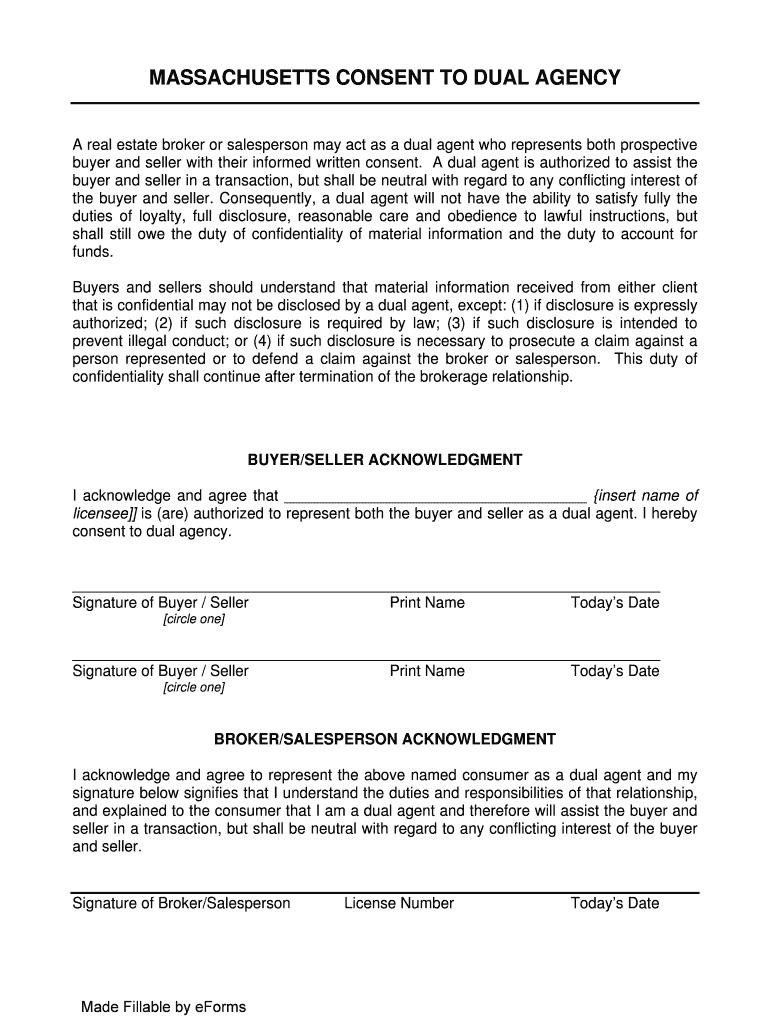







Definition and Meaning of the Massachusetts Consent to Dual Agency - Tesla Realty Group
The Massachusetts Consent to Dual Agency form is a legal document used in real estate transactions to secure informed written consent from both parties when a broker or salesperson represents the buyer and seller simultaneously. In Massachusetts, this form is crucial for ensuring both parties are aware of and agree to the broker's neutral role, which is limited regarding loyalty and full disclosure. The form typically includes consent sections and outlines the dual agent's confidentiality obligations, aiming to protect the interests of all involved.
Key Concepts Within the Form
- Informed Consent: This refers to the understanding and agreement from both parties acknowledging that the agent will not favor one side over the other.
- Neutral Role: The dual agent must maintain impartiality and cannot advocate for the interests of one party over the other.
- Confidentiality: Obligations related to the protection of sensitive information from being disclosed to the opposing party.
Steps to Complete the Massachusetts Consent to Dual Agency
- Reviewing the Document: Begin by thoroughly reading the consent form to understand all sections and clauses. This ensures that all parties are clear on the terms of the dual agency.
- Discussing with the Agent: Schedule a meeting with your real estate agent to walk through each section of the form. This discussion should cover the agent's role, confidentiality obligations, and the rights of the buyers and sellers.
- Filling Out the Consent Sections: Both the buyer and seller should fill out their respective acknowledgment and consent areas, ensuring that all necessary information is accurately completed.
Examples of Completing the Form
- A scenario where a buyer and a seller are both represented by a Tesla Realty agent in a property sale requiring them to sign the dual agency consent form.
- A buyer entering a purchase agreement with Tesla Realty Group, where the consent to dual agency ensures transparency and balanced negotiation.
Why You Should Use the Massachusetts Consent to Dual Agency
Using the Massachusetts Consent to Dual Agency form is vital for ensuring transparent and legally compliant real estate transactions. It provides a clear framework for buyers and sellers to understand the limitations of a dual agent's role. This form protects both parties by making them aware of the neutrality and confidentiality obligations involved, reducing potential conflicts of interest.
Benefits of Using the Form
- Legal Compliance: Ensures that both parties comply with Massachusetts real estate laws.
- Enhanced Trust: By clarifying the agent's neutral position, it builds trust between the buyers and sellers.
- Conflict Reduction: Helps mitigate misunderstandings or conflicts by clearly outlining the agent's role.
Important Terms Related to Massachusetts Consent to Dual Agency
- Dual Agency: When a single real estate agent represents both the buyer and seller in a transaction.
- Informed Written Consent: Written agreement from involved parties acknowledging acceptance of dual agency terms.
- Confidentiality Obligation: Requirement for the dual agent not to disclose sensitive information between the buyer and seller.
Key Elements of the Massachusetts Consent to Dual Agency
The Massachusetts Consent to Dual Agency form includes several critical components to effectively communicate the breadth of a dual agency arrangement.
- Agent's Neutral Role: All parties must acknowledge that the agent will not act in favor of one party over the other.
- Written Acknowledgment: Both the buyer and the seller provide written acknowledgment of understanding the dual agency arrangement.
- Confidentiality Clauses: Sections detailing how the agent will handle sensitive information to prevent conflict of interest.
State-Specific Rules for Massachusetts Consent to Dual Agency
Massachusetts requires specific regulations to be followed when establishing a dual agency agreement:
- Mandatory Consent: Dual agency is not permitted without the written consent of both parties involved.
- Agent Obligations: The agent must explicitly inform and educate both parties about their rights and what dual agency entails.
- Documentation Requirements: A legally binding document, signed by all parties involved, must outline the agreed terms of the agency relationship.
Scenarios Illustrating State-Specific Rules
- A real estate transaction in which a failure to obtain written consent from both parties results in legal complications.
- A refresher for real estate agents on the dual agency requirements as mandated by state law, focusing on compliance and best practice adherence.
Legal Use of the Massachusetts Consent to Dual Agency
The legal use of this form is structured around informing and protecting the involved parties in a dual agency scenario. It outlines the agent's responsibility to remain neutral and mandates the disclosure of potential conflicts of interest as part of the fiduciary duty.
Real-World Applications
- A Tesla Realty agent facilitating a property sale where both parties need assurance of fair representation.
- Documentation of consent, which is crucial in preventing disputes over a misrepresented real estate transaction.
Examples of Using the Massachusetts Consent to Dual Agency
In practice, the use of the Massachusetts Consent to Dual Agency often involves real estate transactions where a single agency represents conflicting parties. For instance, an agent from Tesla Realty Group dealing with a buyer interested in purchasing a property listed by the same firm, wherein they must sign the consent to dual agency form. Another example could include a broker acting on behalf of both a buyer and seller, necessitating clear terms and protected interests outlined within the document.
Situations Demonstrating Effective Use
- A successful negotiation facilitated by a dual agent where both parties expressed satisfaction with the transaction's fairness.
- A case study wherein early confusion about agent obligations was resolved through the dual agency consent process, leading to smooth transaction execution.