
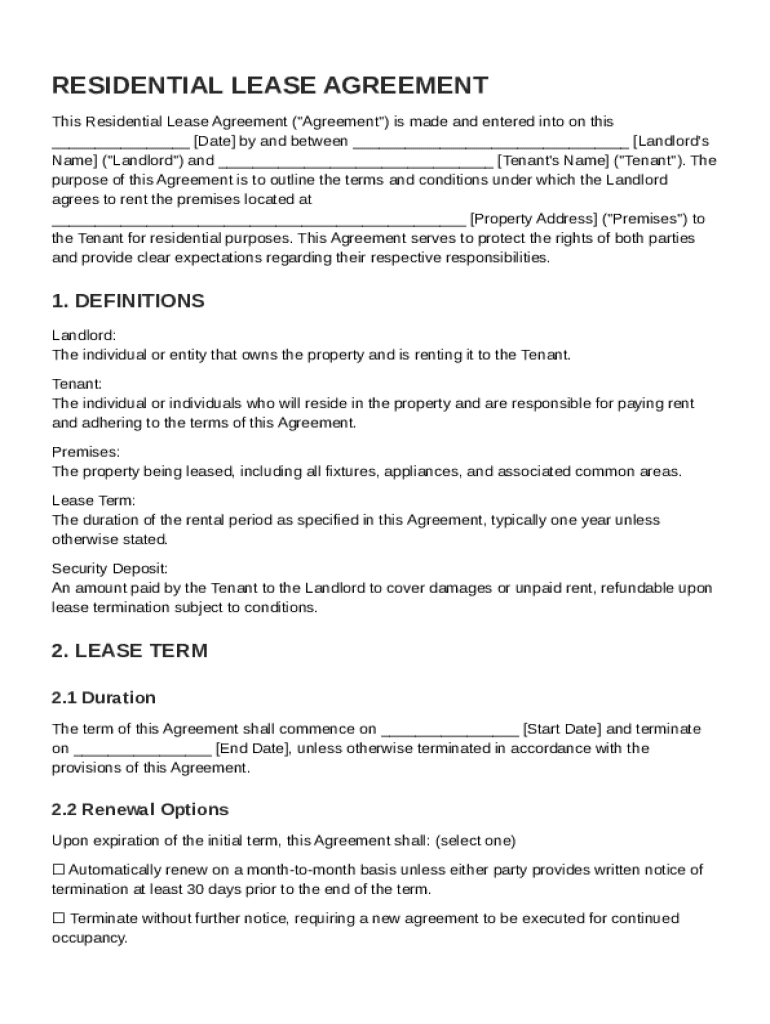







Definition and Purpose of a Landlord Contract Template
A Landlord Contract Template, often referred to as a Residential Lease Agreement, serves as a legal document establishing the terms and conditions under which a landlord rents real estate property to a tenant. This template is essential for protecting the rights of both parties involved in the rental agreement and sets clear expectations regarding their respective responsibilities.
Key Elements
-
Identification of Parties: The contract clearly identifies the landlord and tenant, ensuring that both parties are legally recognized.
-
Property Description: Details regarding the property being rented, including address and type of unit, are specified.
-
Lease Term: The duration of the lease, including start and end dates, along with conditions for renewal or termination, are outlined.
-
Rent Details: Includes the amount of rent, due date, and accepted payment methods. It may also cover late payment penalties.
-
Security Deposit: Specifies the amount, conditions for its return, and circumstances under which deductions are permissible.
-
Maintenance and Repairs: Outlines who is responsible for certain types of maintenance and repairs to avoid disputes.
-
Use of Premises: Defines acceptable uses of the premises and any restrictions, such as pet policies or smoking prohibitions.
How to Use the Landlord Contract Template
Step-by-Step Guide
-
Review the Template: Thoroughly examine the template to understand each section and its implications.
-
Customize the Template: Adjust the template sections to fit specific landlord and tenant needs, ensuring all relevant details are included.
-
Consult Legal Advice: It is advisable to have an attorney or legal expert review the contract to ensure compliance with local laws.
-
Present to Tenant: Share the customized agreement with the prospective tenant for their review and agreement.
-
Sign the Agreement: Once both parties are satisfied, sign the document. Consider using a platform like DocHub for legally binding electronic signatures.
-
Distribute Copies: Provide copies of the signed agreement to all parties involved for their records.
Key Terms and Conditions
Critical Terminologies
-
Governing Law: Determines which state's laws will be used to interpret the contract.
-
Termination Clause: Conditions under which the lease can be terminated early, either by the landlord or tenant.
-
Amendments: Process and conditions under which the lease terms can be altered during the tenancy.
Legal Implications and Guidelines
Legal Considerations
-
Security Compliance: Ensure the contract aligns with applicable state security deposit laws and practices.
-
Disclosure Requirements: The landlord must provide any disclosures required by state or local laws, such as lead-based paint disclosure for older properties.
-
Default and Remedies: Clearly define the consequences for default by either party, including eviction procedures and penalty payments.
Variations by State
State-Specific Modifications
-
Rent Control Laws: Reflect any rent control or stabilization laws specific to the state or locality.
-
Eviction Notices: Customize the duration and format of eviction notices according to state regulations.
-
Habitability Standards: Ensure the premises meet the habitability requirements outlined by state law before renting.
Examples of Using a Landlord Contract Template
Practical Scenarios
-
Single-Family Homes: Adjust the template to include clauses pertinent to standalone properties, such as landscaping responsibilities.
-
Multi-Family Units: Include more detailed noise control or shared utility billing agreements.
-
Pet Owners: Incorporate specific clauses regarding pet deposits and responsibilities for pet-related damages.
Digital Versus Paper Versions
Implementation Considerations
-
Efficiency: Using digital platforms like DocHub allows for easy updates and instant distribution of the contract.
-
Tracking and Audit Trails: Digital forms provide an audit trail that can track changes and signatures, offering enhanced accountability.
Alternatives and Compatibility
Exploring Alternatives
-
Software Tools: Lease management software or templates from legal advisory services can complement traditional templates.
-
System Integration: Ensure compatibility with software such as DocHub, which allows for editing, signing, and sharing documents seamlessly across devices.
Conclusion
This comprehensive coverage of a Landlord Contract Template illuminates its critical role in defining the landlord-tenant relationship. By understanding and customizing these templates, landlords can secure their rights and ensure a smooth tenancy process, while tenants gain clarity on their occupancy terms.




