01. Edit your form online
Type text, add images, blackout confidential details, add comments, highlights and more.

Type text, add images, blackout confidential details, add comments, highlights and more.

Draw your signature, type it, upload its image, or use your mobile device as a signature pad.

Send it via email, link, or fax. You can also download it, export it or print it out.
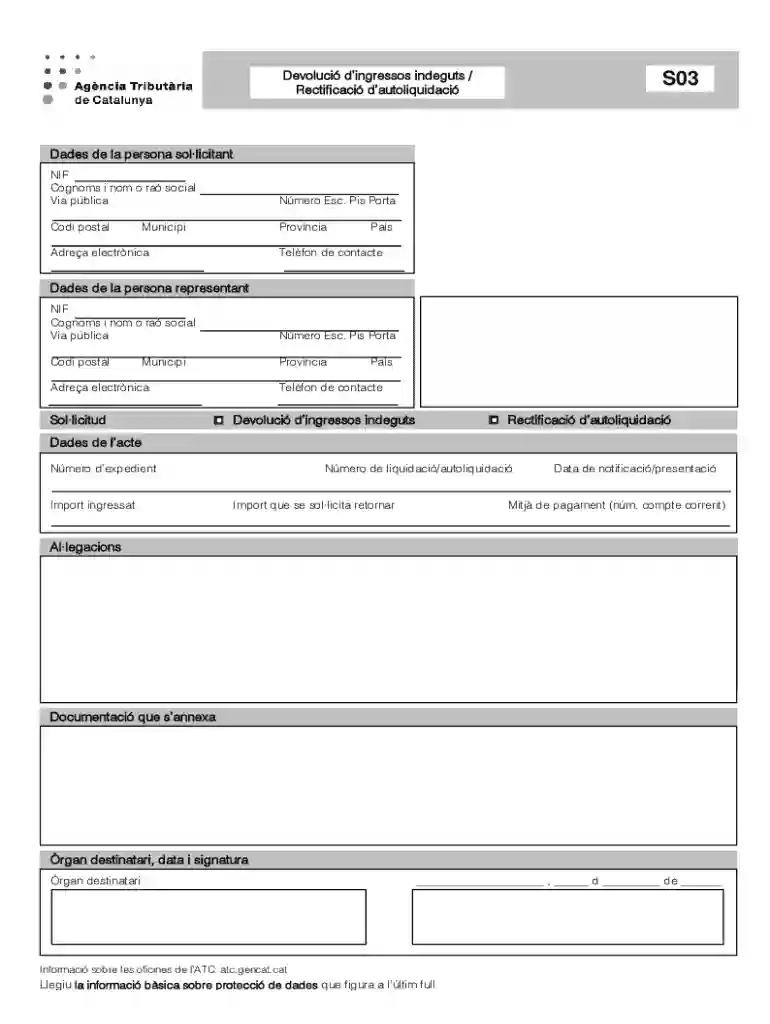
The S03 form serves as an essential document in tax processing, facilitating the request for refunds concerning undue payments and adjustments to self-assessments. It is structured to ensure users render precise data for tax rectifications while providing sections dedicated to personal and representative information. This form is primarily used within the United States tax context, ensuring compliance with local tax laws and data protection standards.
The S03 form requires users to follow specific steps for efficient processing. Initially, individuals need to gather all required information, including personal identifiers and relevant documentation that supports the refund claim. Once all necessary data is compiled, fill out the corresponding sections accurately, focusing on the specific areas for the tax matter in question. Consistent verification of information is crucial to minimize errors and ensure the form meets IRS regulations before submission.
The S03 form's legal utilization falls under the jurisdiction of U.S. tax law. It is designed to ensure compliance with federal requirements, particularly when processing claims related to tax assessments and refunds. Practitioners should ensure its use aligns with the ESIGN Act, further bolstered by securely handling any sensitive information associated with completing the form.
While the S03 form maintains a standardized structure, certain states may have particular requirements or variations in the processing of tax adjustments and refunds. For instance, states with unique tax codes may demand additional documentation or impose specific submission deadlines. Applicants are advised to familiarize themselves with these state-specific mandates to ensure comprehensive compliance.
The S03 can be submitted through various channels, offering flexibility and convenience:
Following these guidelines ensures a detailed and efficient approach to the S03 form, streamlining the tax adjustment process while ensuring compliance with all relevant legal requirements.
At DocHub, your data security is our priority. We follow HIPAA, SOC2, GDPR, and other standards, so you can work on your documents with confidence.