






Definition & Meaning
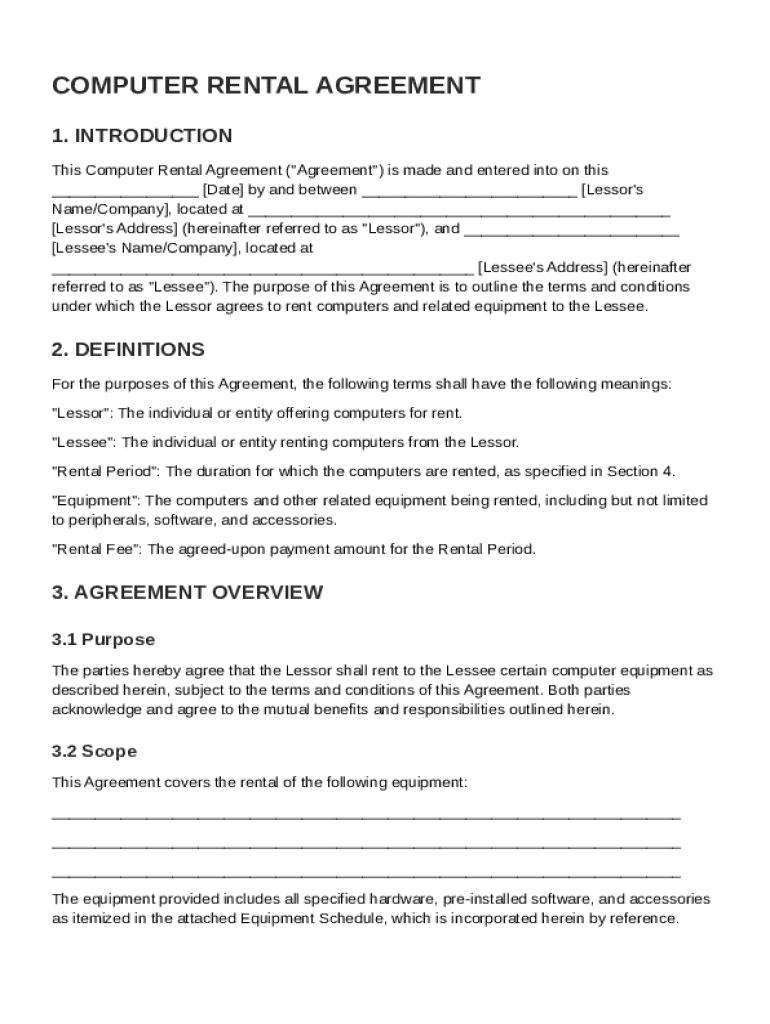
The Computer Rental Agreement Template serves as a legal document outlining the terms and conditions for renting computer equipment from one party (the Lessor) to another (the Lessee). This agreement sets the groundwork for the rental by detailing each party's obligations, thereby reducing potential conflicts or misunderstandings. The template establishes a clear understanding of the responsibilities concerning the care, maintenance, and return of the computer equipment. It often includes essential sections, such as definitions, rental durations, and penalty clauses, ensuring that all parties understand the expectations and commitments.
Key Elements of the Computer Rental Agreement Template
The key components of a Computer Rental Agreement Template typically include:
- Definitions: Clearly defines the terms used throughout the agreement, such as "Lessor," "Lessee," and "Equipment."
- Rental Terms: Specifies the rental duration, fees, payment schedules, and renewal conditions.
- Responsibilities: Outlines the duties of both parties concerning equipment care, maintenance, and handling.
- Liability and Insurance: Details insurance requirements and responsibilities related to equipment damage, loss, or theft.
- Termination Clauses: Explains how the agreement can be terminated, including notice periods and penalties for breach.
- Governing Law: Indicates the jurisdiction's laws governing the agreement.
- Miscellaneous Provisions: Includes clauses on amendments, indemnification, and dispute resolution.
These elements help ensure comprehensive coverage of all aspects related to the rental and use of computer equipment.
How to Use the Computer Rental Agreement Template
Using a Computer Rental Agreement Template effectively involves several steps:
- Download the Template: Obtain the template from a reputable legal form provider or software platform like DocHub.
- Review the Terms: Carefully review all clauses within the template to ensure they align with your specific needs and circumstances.
- Complete the Details: Fill in all required fields, including names, addresses, equipment descriptions, and rental terms.
- Negotiate Terms if Necessary: Discuss with the other party to negotiate any necessary changes or additional terms to suit both parties' requirements.
- Final Review: Conduct a thorough review with legal counsel to ensure compliance with applicable laws and regulations.
- Sign the Agreement: Both parties should sign the agreement, making it legally binding.
Following these steps ensures that the agreement is tailored to the parties' expectations and legal requirements.
Legal Use of the Computer Rental Agreement Template
Legally, a Computer Rental Agreement Template offers several benefits:
- Ensures Legal Compliance: The template outlines compliance with local, state, and federal regulations regarding rental agreements.
- Reduces Risk of Disputes: By clearly specifying the rights and duties of both parties, the agreement minimizes the potential for misunderstandings and disputes.
- Provides Legal Recourse: If any party breaches the terms, having a documented agreement offers a basis for legal action.
- Protects Both Parties: By addressing liability and insurance, the agreement protects both lessor and lessee from unforeseen damages or losses.
These legal safeguards make the template an invaluable tool in not only structuring rental transactions but also in preemptively addressing potential legal issues.
State-Specific Rules for the Computer Rental Agreement Template
The enforceability and specifics of a Computer Rental Agreement Template may vary based on the state:
- State Jurisdiction: The governing law section should specify which state laws apply, ensuring consistency with local legal standards.
- Insurance Requirements: Different states might have specific insurance mandates for rental agreements.
- Tax Implications: Some states apply specific sales tax rules to rental transactions, which should be detailed in the agreement.
- Notice Periods: Requirements for notice periods related to termination or renewals might differ from state to state.
Awareness of these state-specific rules is crucial to ensure the agreement remains legally valid and enforceable.
Important Terms Related to Computer Rental Agreement Template
Understanding specific terms within the Computer Rental Agreement Template is vital for its successful implementation:
- Lessor and Lessee: Refer to the owner of the equipment and the party renting the equipment, respectively.
- Indemnification Clause: Protects one party from legal claims or actions related to the use or misuse of the equipment.
- Sublease Clause: Addresses whether the lessee can rent the equipment to a third party.
- Default and Remedies: Outlines what constitutes a breach of the agreement and available remedies for non-compliance.
These terms and clauses ensure clear comprehension of each party’s responsibilities and the agreement’s legal boundaries.
Steps to Complete the Computer Rental Agreement Template
- Initial Consultation: Discuss the rental arrangement and agree on the preliminary terms.
- Download the Template: Access a trusted, detailed template from a digital platform like DocHub.
- Input Specifics: Fill in all relevant details specific to the rental agreement such as parties involved and equipment specifications.
- Review and Edit: Carefully review the document for accuracy and amend sections as necessary.
- Legal Review: Engage a legal professional to ensure the contract complies with applicable laws.
- Sign and Execute: Upon final agreement, both parties should sign the document, officially executing the contract.
This process ensures the rental agreement is both effective and compliant with all applicable legal standards.
Business Types That Benefit Most from Computer Rental Agreement Template
Certain businesses more commonly engage in computer rental agreements:
- IT Service Providers: May offer computer equipment rental to clients as part of solutions or temporary setups.
- Event Management Companies: Frequently rent computer equipment for events and exhibitions needing temporary setups.
- Educational Institutions: May use rental agreements to manage technology resources for students or temporary projects.
These types of businesses find significant value in using detailed rental agreements, ensuring operational continuity and legal security in their equipment rentals.