






Definition and Purpose of the Tennessee IRP Application
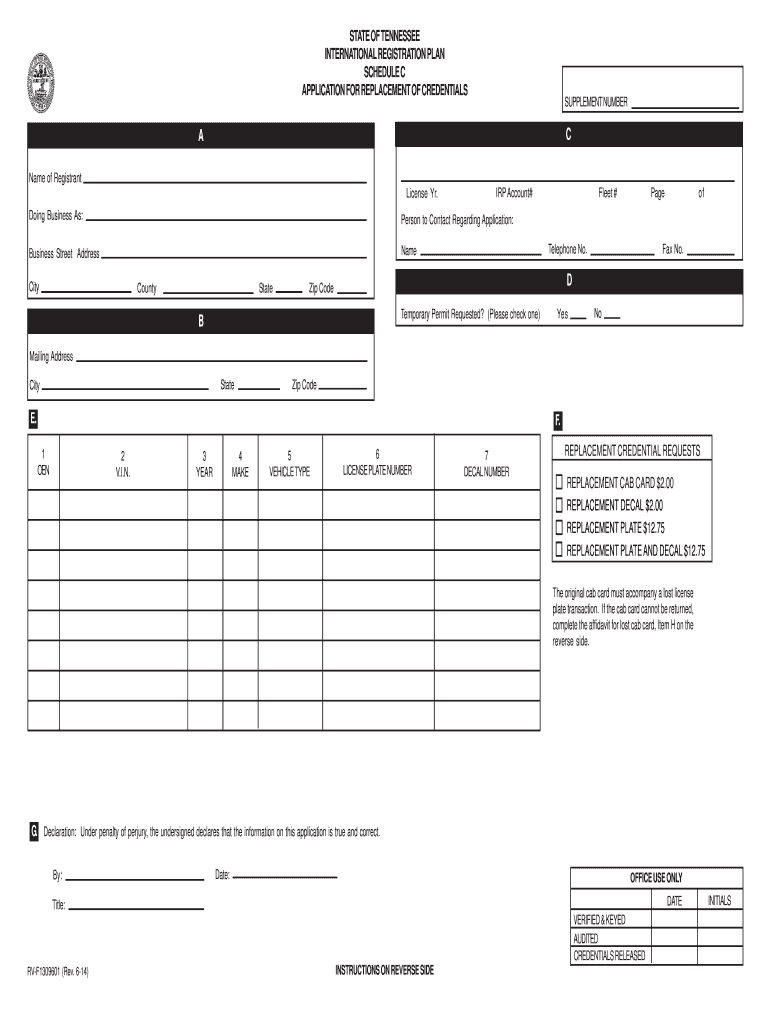
The Tennessee IRP application is a crucial form for individuals and businesses involved in interstate transportation. It is used to register commercial vehicles under the International Registration Plan (IRP), which is a cooperative agreement among the 48 contiguous United States and Canadian provinces. The primary purpose of this application is to facilitate the apportioned registration, which allows commercial motor vehicles to operate across jurisdictional boundaries with a single registration plate and one cab card that lists the member jurisdictions.
Key Components of the IRP Agreement
- Apportioned Registration: This allows vehicles to be registered in all participating jurisdictions through a single process.
- Cab Card: Each registered vehicle receives a cab card identifying the jurisdictions for which registration fees have been paid.
- Proportional Payments: Fees are calculated based on the mileage driven in each jurisdiction.
- Jurisdictions Included: Covers 48 U.S. states and provinces of Canada.
How to Use the Tennessee IRP Application
Using the Tennessee IRP application involves understanding both its structure and how to accurately complete it to avoid delays or rejections.
Step-by-Step Usage Guide
- Gather Necessary Information: Before starting, ensure you have all relevant details including business information, vehicle specifics, and previous mileage data.
- Complete Registrant Information: Provide detailed information about the business or individual registering the vehicle.
- Fill in Vehicle Details: Include vehicle identification numbers (VIN), gross vehicle weight, and type.
- Specify Jurisdiction Data: Indicate the intended operating jurisdictions and the corresponding mileage.
- Sign the Declaration: Certify the accuracy of the information provided and agree to the terms of the registration.
Important Considerations
- Accuracy: Double-check all information for accuracy to prevent processing delays.
- Mileage Records: Keep detailed records to ensure fee calculations align with actual usage in each jurisdiction.
- Submission Options: Submit completed applications either online, by mail, or in person.
Steps to Complete the Tennessee IRP Application
Completing the Tennessee IRP application requires careful attention to detail and adherence to specific steps to ensure compliance.
Detailed Completion Steps
- Begin with Basic Registrant Information: This includes the name, address, and contact details of the registrant.
- Enter Vehicle Details: Accurate vehicle information like VIN, make, year, and weight.
- Mileage Reporting: Provide documented mileage for the previous year in each jurisdiction.
- Payment Calculation: Understand and calculate fees based on mileage and jurisdiction requirements.
- Certification and Signature: A final step involving signing off on the truthfulness of provided data.
Tips for a Successful Application
- Consult the Glossary: Familiarize yourself with terms such as base jurisdiction and registrant.
- Review Instructions Carefully: Ensure compliance with documentation and signature requirements.
- Use Available Tools: Online tools and calculators can assist in fee estimation and form completion.
Key Elements of the Tennessee IRP Application
Understanding the critical elements of the Tennessee IRP application aids in accurate completion and compliance.
Critical Sections and Their Importance
- Registrant Information: Identifies the legal entity responsible for registration.
- Vehicle Information: Ensures the correct vehicle is registered for interstate travel.
- Mileage Details: Critical for fee distribution across jurisdictions.
- Decal Requests: Specifies the need for additional identifiers, like license plates or decals.
- Fee Payment Section: Outlines the payment processes based on apportioned fees.
Best Practices for Form Completion
- Verify VIN Numbers: Ensure the accuracy of vehicle identification numbers.
- Consistent Data: Use consistent data across all jurisdictions to avoid discrepancies.
- Regular Updates: Keep vehicle and mileage information up-to-date to reflect accurate usage.
Legal Use and Compliance Considerations
Legal compliance is essential when completing the Tennessee IRP application, ensuring that your operations under the IRP agreement are legitimate and recognized.
Legal Responsibilities
- Adherence to the IRP Guidelines: Ensure all entries comply with IRP rules and jurisdiction-specific requirements.
- Report Mileage: Maintain accurate records of miles driven in each jurisdiction for proper fee allocation.
- Ensure Jurisdictional Recognition: Have a clear understanding of which states and provinces participate in the IRP agreement.
Consequences of Non-Compliance
- Penalties: Possible fines or revocation of registration if false information is provided.
- Operational Restrictions: Failure to properly register can result in operational limitations across jurisdictions.
- Increased Audit Risk: Non-compliance can trigger audits or other regulatory scrutiny.
How to Obtain the Tennessee IRP Application
The process for obtaining the Tennessee IRP application can be straightforward if handled correctly.
Steps to Acquire the Application
- Online Access: Applications can be downloaded from the Tennessee Department of Revenue's website.
- In-Person Requests: Visit local motor vehicle offices to get a physical copy.
- Request By Mail: Contact the Department of Revenue to have a form mailed to you.
Supporting Documentation
- Proof of Ownership: Required documents showing legal ownership of the vehicle.
- Previous Registrations: Copies of previous registration documents if applicable.
- Mileage Logs: Detailed logs may be needed to substantiate historical usage.
Who Typically Uses the Tennessee IRP Application
The Tennessee IRP application serves a distinct user base, primarily those engaged in the interstate transportation industry.


Common User Profiles
- Commercial Trucking Companies: Businesses with fleets operating across state lines.
- Owner-Operators: Independent drivers managing their own vehicles.
- Leased Fleet Users: Companies using leased vehicles for interstate commerce.
Practical Examples and Scenarios
- Large Logistics Firms: Firms needing efficient registrations systems for nationwide operations.
- Individual Transport Companies: Small businesses looking to expand their service reach.
- Cross-Border Freight Carriers: Companies conducting regular routes to Canada and U.S. states.
State-Specific Rules and Regulations
Understanding the state-specific nuances of the IRP application ensures complete and accurate submissions.
Tennessee-Specific Requirements
- Document Submission Deadlines: Specific dates by which applications and renewals must be submitted.
- Weight Regulations: Adhere to state-specific vehicle weight classifications.
- Additional Tennessee Requirements: State-required inspections or additional documentation.
Differences Compared to Other States
- Unique Fee Structures: Fee calculations unique to Tennessee versus other states.
- Additional Documentation: Specific forms or supporting documents that may not be applicable in other jurisdictions.
- State-Imposed Limitations: Rules or caps on the number of vehicles that can be registered per applicant.
In-depth knowledge of the Tennessee IRP application process is essential for maintaining compliance and ensuring seamless operations across state lines.