






Definition and Meaning
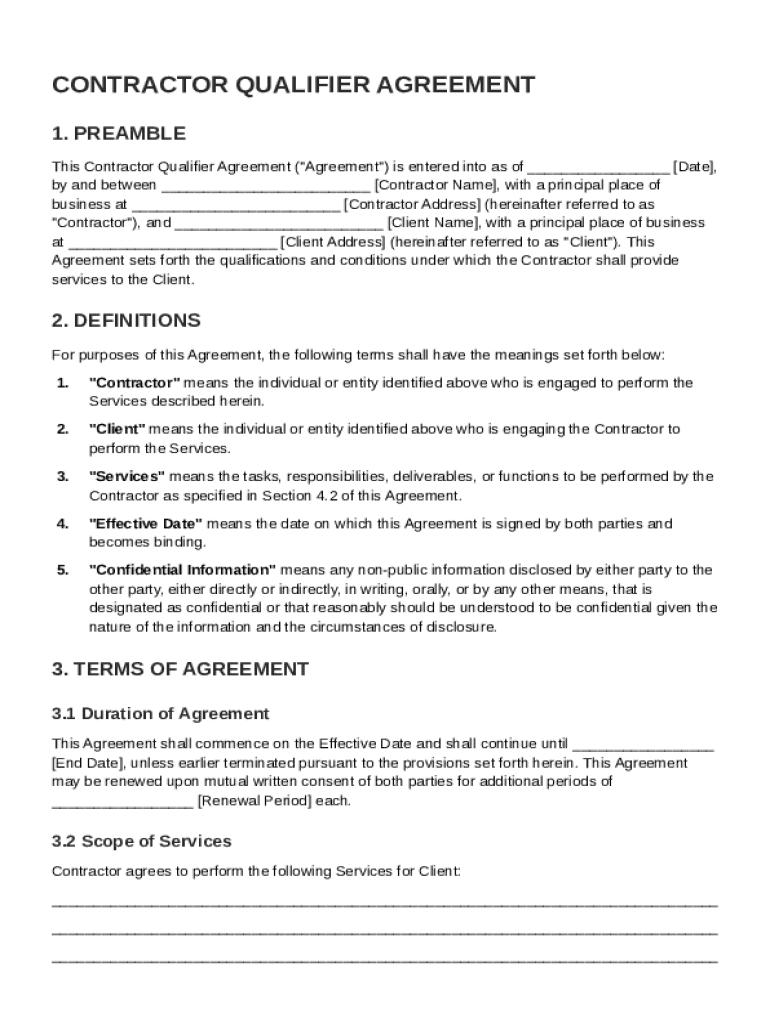
The Contractor Qualifier Agreement Template is a standardized document used to outline the terms and conditions under which a contractor offers their services to a client. This agreement serves as a formal arrangement that defines various critical aspects of the working relationship, such as the scope of services, duration, and responsibilities of each party. The primary aim is to ensure a mutual understanding and legally binding framework that guarantees all parties meet their obligations. For example, the agreement covers qualifications required by contractors, ensuring they possess the necessary licenses and certifications to perform their duties effectively. Its legal language also spells out confidentiality obligations, compensation agreements, and termination provisions, protecting the interests of both the client and the contractor.
Key Elements of the Contractor Qualifier Agreement Template
The Contractor Qualifier Agreement Template encompasses several crucial components that define the parameters within which the contractor will operate. These elements include:
- Definitions and Key Terms: Clarifies terminology used throughout the document.
- Scope of Services: Details the specific tasks, projects, or services the contractor is expected to provide.
- Duration of Agreement: Specifies the time frame of the contractor's engagement, including start and end dates.
- Compensation Terms: Outlines payment schedules, rates, and any additional financial terms aligned with the services rendered.
- Confidentiality Obligations: Establishes nondisclosure agreements to protect sensitive information shared during the contractual period.
- Termination Clause: Defines the circumstances under which the contract may be terminated by either party, including notice requirements.
- Liability and Indemnification: Allocates responsibility for potential liabilities and includes indemnification provisions.
Each of these components is crafted to prevent disputes and maintain a smooth working relationship, providing a balanced structure that safeguards the interests of both parties involved.
How to Use the Contractor Qualifier Agreement Template
Using the Contractor Qualifier Agreement Template involves a series of well-defined steps to ensure comprehensive coverage and legal compliance:
-
Review and Customize the Template: Analyze the template to understand each section, and tailor it to fit the specific requirements of the contractor-client relationship.
-
Define Roles and Responsibilities: Clearly articulate the duties and expectations of both the contractor and the client, ensuring all parties have a clear understanding of their obligations.
-
Specify the Scope of Work: Detail the work to be performed, including deliverables, quality standards, and timelines.
-
Draft Payment Terms: Establish clear payment terms, including how and when payments will be made, and address contingencies such as payment delays or changes in project scope.
-
Address Legalities and Compliance: Ensure that the contract complies with relevant state and federal laws, including specific industry regulations if applicable.
-
Signatures and Execution: Collect signatures from all involved parties to signify consent and final approval of the contractual terms.
These steps must be executed with precision, ensuring clarity and legal soundness in the final agreement.
Steps to Complete the Contractor Qualifier Agreement Template
Completing the Contractor Qualifier Agreement Template requires a detailed approach to capture all necessary information and secure buy-in from all parties:
-
Gather Required Information: Obtain relevant information from both the contractor and client, including legal names, addresses, and any other pertinent details.
-
Detail the Scope and Limits of Services: Clearly specify what the contractor is expected to deliver and any limitations or exclusions to avoid misunderstandings.
-
Agree on Terms and Compensation: Negotiate and finalize the terms, including payment methods, frequency, and penalties for non-compliance.
-
Review the Legal Framework: Confirm that all contractual terms adhere to applicable legal requirements, consulting a legal expert if necessary.
-
Finalize the Agreement: Have both parties review the completed template for accuracy and completeness before signing.
-
Archive and Distribute Copies: Ensure both parties retain signed copies for future reference.
Following these steps helps in creating a clear, enforceable agreement that accurately reflects the intended collaboration.
Who Typically Uses the Contractor Qualifier Agreement Template
This template is widely used across various industries by numerous stakeholders:
- Independent Contractors: Professionals offering specialized services independently, such as consultants, marketing experts, and software developers.
- Companies and Corporations: Businesses hiring external talent for specific projects or temporary engagements to leverage specialized expertise.
- Legal and Consultancy Firms: Lawyers and consultants helping clients formalize working relationships with independent contractors.
- Project Managers: Individuals responsible for overseeing project execution, ensuring compliance with pre-established conditions.
Each of these users relies on the template to formalize agreements and safeguard their legal and financial interests within professional collaborations.


Legal Use of the Contractor Qualifier Agreement Template
The legal use of the Contractor Qualifier Agreement Template hinges on compliance with U.S. laws governing contractor-client relationships. For contractors and clients alike, it's essential to ensure:
- Compliance with the ESIGN Act: When signed electronically, the document must comply with the Electronic Signatures in Global and National Commerce Act, making electronic signatures legally binding.
- Adherence to State-Specific Regulations: Different states may have unique requirements or restrictions regarding contractors, which should be accurately reflected in the agreement.
- Contractual Validity: Confirmation that all parties have the legal authority to enter into the contract, protecting it from potential invalidation due to false representation or undue influence.
Establishing a solid legal foundation ensures that the agreement will withstand potential legal scrutiny and deliver the intended protections for both parties involved.
State-Specific Rules for the Contractor Qualifier Agreement Template
State-specific regulations play a vital role in shaping the legality and compliance of the Contractor Qualifier Agreement. Key considerations include:
- Licensing and Certification Requirements: Certain professions and projects may require specific licenses or certifications based on the state’s regulations.
- Contractor Classification: Definitions of independent contractors vs. employees vary by state; proper classification is critical to avoid legal repercussions.
- Tax Obligations: States may have different tax filing obligations for contractors, impacting payment structures and net compensation.
Awareness and adherence to these state-specific requirements ensure the agreement's enforceability and prevent unintended legal issues.
Examples of Using the Contractor Qualifier Agreement Template
Several scenarios illustrate the practical application of the Contractor Qualifier Agreement Template:
- A marketing firm engages a freelance graphic designer to develop a branding campaign. The agreement outlines deliverables, payment terms, and confidentiality clauses, safeguarding sensitive business strategies.
- A software company hires an independent consultant to implement a new software system. The agreement ensures compliance with industry standards and legal frameworks for intellectual property protection.
- A construction company contracts a licensed electrician for a new project. The agreement clarifies responsibilities, schedules, and indemnification to manage potential risks onsite.
Each example emphasizes the importance of clearly defined terms and consistent application of contractual obligations across diverse industries and services.