
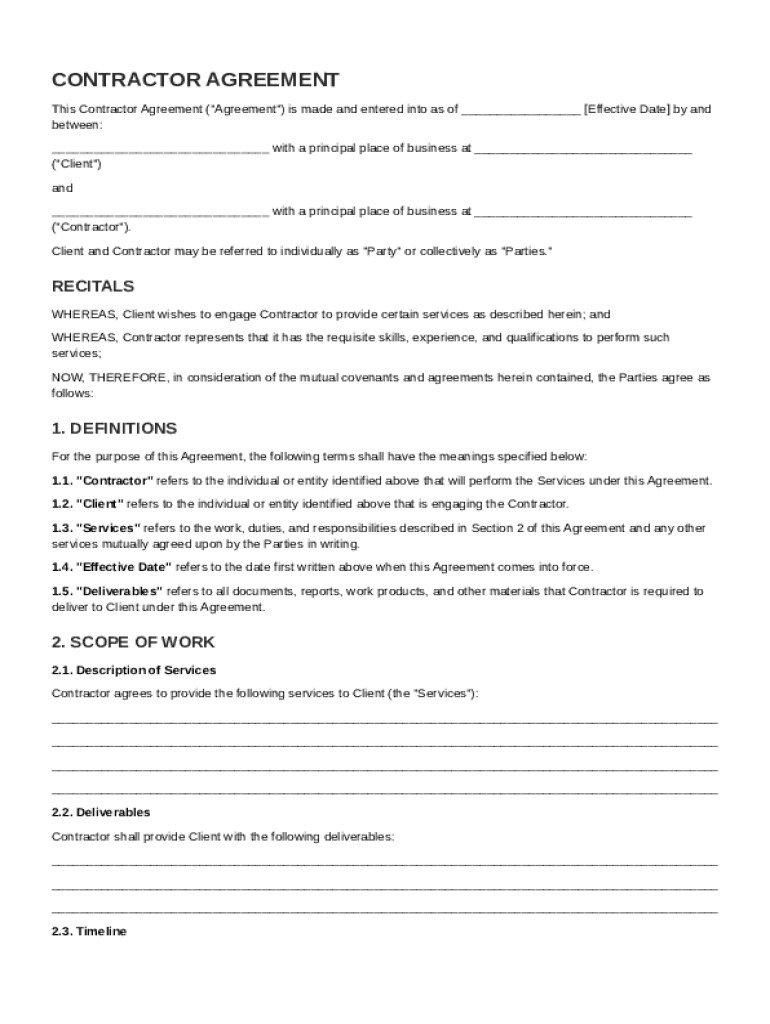







Definition & Meaning
A Contractor Agreement, often formalized through a Contractor Agreement Template, is a legal document that delineates the roles, responsibilities, and expectations between a client and a contractor. It serves as the contract foundation, outlining key specifics such as the agreed-upon services, payment terms, and confidentiality obligations. The document helps ensure that both parties have a mutual understanding of the terms and can refer back to it in case of disputes or clarifications. This template typically formulates an independent contractor status, essential for distinction from an employee, affecting tax and legal implications.
Key Elements of the Contractor Contractor Agreement Template
The Contractor Agreement Template is crafted to cater to various essential elements, ensuring comprehensive coverage of the contractual relationship. Key components include:
- Scope of Work: Clearly defines the services the contractor is expected to deliver, including deadlines, project milestones, and deliverables.
- Compensation: Details the payment structure, including amounts, frequency, and any contingencies tied to performance.
- Responsibilities of Both Parties: Outlines obligations and roles to prevent misunderstandings and ensure smooth cooperation.
- Confidentiality Clause: Secures sensitive information shared within the agreement, protecting both parties' interests.
- Governing Law: Specifies which jurisdiction's laws apply to the contractual obligations, essential for resolving potential legal disputes.
How to Use the Contractor Contractor Agreement Template
Utilizing the Contractor Agreement Template effectively requires a strategic approach:
- Review Template: Begin by thoroughly going through the template to ensure it addresses all necessary terms relevant to the specific assignment.
- Customize Details: Personalize the template by inserting specific project details, including scope, deadlines, and payment terms.
- Consult Legal Counsel: For added assurance, it's advisable to have a legal expert review the draft to identify potential legal loopholes.
- Both Parties Approval: Ensure both client and contractor agree on the terms, reflected by their signatures.
Steps to Complete the Contractor Contractor Agreement Template
To finalize the Contractor Agreement Template successfully, follow these steps:
- Gather Information: Collect all necessary details, such as contractor information, work scope, and payment terms.
- Input Data: Fill in each section of the template meticulously, ensuring accuracy.
- Review for Completeness: Double-check all entries for accuracy and coherence.
- Seek Feedback: Run the draft by all involved parties for additional input or corrections.
- Finalize: Upon agreement, proceed with signatures from both parties, which formalizes the document as a legally binding contract.
Who Typically Uses the Contractor Contractor Agreement Template
Different stakeholders within the business domain typically employ the Contractor Contractor Agreement Template, such as:
- Business Owners: Entrepreneurs looking to contract services without employing full-time staff.
- Freelancers and Independent Contractors: Individuals offering specialized services to clients while maintaining their independent status.
- Project Managers: Professionals overseeing specific projects requiring the services of external contractors.
- Legal and HR Departments: Staffing and compliance teams ensuring proper documentation to mitigate legal disputes.


Legal Use of the Contractor Contractor Agreement Template
The legal application of the Contractor Agreement Template revolves around:
- Defining Relationships: Establishes the clear delineation of roles and responsibilities, particularly differentiating between employee and contractor.
- Enforcing Terms: Outlines each party's obligations, preserving the rights and enforcing the duties stipulated within.
- Legal Protection: Offers a legal basis for recourse in any disputes, supported by the document's compliance with contract laws.
State-Specific Rules for the Contractor Contractor Agreement Template
Contractor agreements may vary by state, depending on local laws:
- Worker Classification: States like California apply rigorous tests such as the ABC test to determine independent contractor status.
- Tax Obligations: Some states have specific withholding tax requirements for contractors, which affect agreement terms.
- Enforceability: Variations in states' stance on indemnity and non-compete clauses can impact how agreements are drafted.
Business Types That Benefit Most From Contractor Contractor Agreement Template
Certain business entities are more inclined to benefit from using this template:
- Startup Companies: Need flexible staffing solutions without committing to full-time employees.
- Digital and Creative Agencies: Frequently engage with freelance talent for specialized projects.
- Construction Firms: Regularly hire contractors for project-based assignments, requiring clear terms of service delivery.
- Consulting Firms: Work with independent consultants to provide expertise for specific client needs.




