






Definition & Meaning
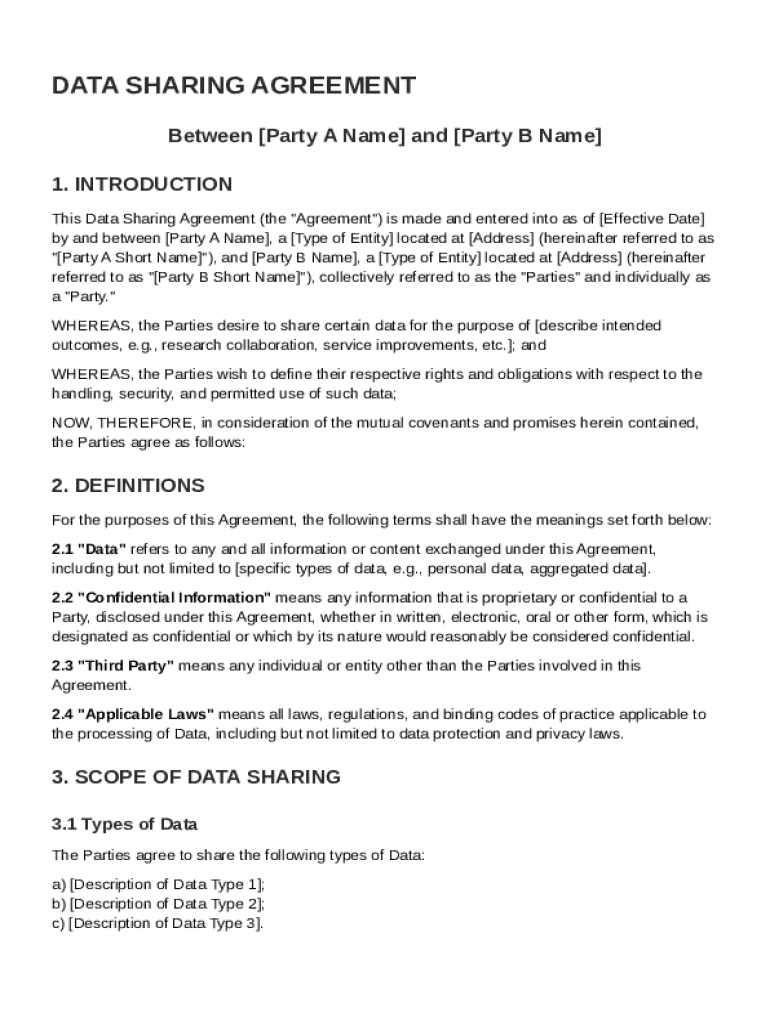
A Data Agreement Template is a standardized document used to outline the terms under which two parties agree to share data for specific purposes. It serves as a legal framework to ensure that data exchange is conducted securely and lawfully. The template typically details the responsibilities of both parties, such as data handling, confidentiality, and compliance with relevant laws. It also defines key terms and establishes intellectual property rights. By formalizing these elements, the template helps mitigate risks associated with data sharing.
Key Components
- Parties Involved: Clearly identify the entities or individuals entering into the agreement.
- Data Description: Specify the data type and format to be shared.
- Purpose: Outline the reasons for data sharing and its intended use.
- Duration: Define how long the agreement will remain in effect.
Real-world applications of a Data Agreement Template include collaborations between businesses, research partnerships, or any scenario where data sharing is necessary.
How to Use the Data Agreement Template
Using a Data Agreement Template involves several critical steps to ensure compliance and seamless data exchange. Here’s a step-by-step guide:
- Customization: Tailor the template to include specific details about the data, parties, and terms of agreement.
- Review Legal Requirements: Consult with legal advisors to ensure the template complies with all applicable laws and regulations.
- Collaborate with Parties: Share the draft with all involved parties and encourage feedback.
Final Steps
- Finalize and Sign: Once changes are accepted, have all parties sign the document.
- Distribute Copies: Provide copies to all parties for their records.
By following these steps, you ensure the agreement is legally binding and understood by all parties.
Key Elements of the Data Agreement Template
The effectiveness of a Data Agreement Template lies in its comprehensive coverage of all necessary elements.
Essential Components
- Confidentiality Clause: Protects shared data from unauthorized disclosure.
- Data Security Measures: Describes measures to keep data secure.
- Compliance with Laws: Ensures adherence to data protection laws, like GDPR or CCPA.
Each section should be detailed to prevent ambiguity and clearly allocate responsibilities. This protects both parties and fosters trust.
Important Terms Related to Data Agreement Template
Understanding specific terms within a Data Agreement Template is crucial to avoid misinterpretations.
- Data Controller: Party responsible for determining data processing methods.
- Data Processor: Party that processes the data on behalf of the controller.
- Data Breach: Unauthorized access or disclosure of confidential data.
Examples
- Personal Data: Information relating to an identifiable individual.
- Anonymization: Process of removing personal identifiers from data.
Familiarity with these terms enhances clarity and compliance during data sharing.
Who Typically Uses the Data Agreement Template
Data Agreement Templates are commonly used across various sectors where data sharing is integral for operations.


Typical Users
- Businesses: Engage in data sharing for partnerships and collaborations.
- Research Institutions: Share data for joint studies and projects.
- Government Agencies: Exchange data for public welfare purposes.
Each user type benefits from the template’s structured approach, ensuring all shared data is handled responsibly and legally.
Legal Use of the Data Agreement Template
Ensuring legal use of a Data Agreement Template involves adherence to several regulations and laws.
Compliance Requirements
- Data Protection Laws: Ensure the agreement complies with laws like the GDPR or CCPA.
- Intellectual Property Rights: Protects the original creator's data rights.
- Dispute Resolution: Includes mechanisms for resolving disagreements, such as mediation or arbitration.
These legal elements safeguard against potential legal issues arising from data misuse or breaches.
Steps to Complete the Data Agreement Template
Completing a Data Agreement Template involves several methodical steps to ensure accuracy and completeness.
- Draft the Agreement: Begin by entering basic information about the parties and data involved.
- Insert Specific Terms: Include clauses on confidentiality, usage limits, and data security.
- Legal Review: Have a legal expert review the draft to ensure compliance.
Completion Procedures
- Modify as Needed: Make any necessary adjustments following legal advice.
- Approval and Signatures: Gather signatures from all parties once finalized.
Following these steps guarantees that the agreement is sound and binding.
Examples of Using the Data Agreement Template
Practical examples illustrate how Data Agreement Templates can be applied across various scenarios.
Use Cases
- Business Collaborations: Companies entering a joint venture might use the template to facilitate the sharing of proprietary data.
- Academic Research: Universities sharing datasets with research partners can ensure compliance and data protection through the template.
In each scenario, the template provides a reliable structure to manage the complexities of data sharing, ensuring all parties are on the same page.