Definition & Meaning
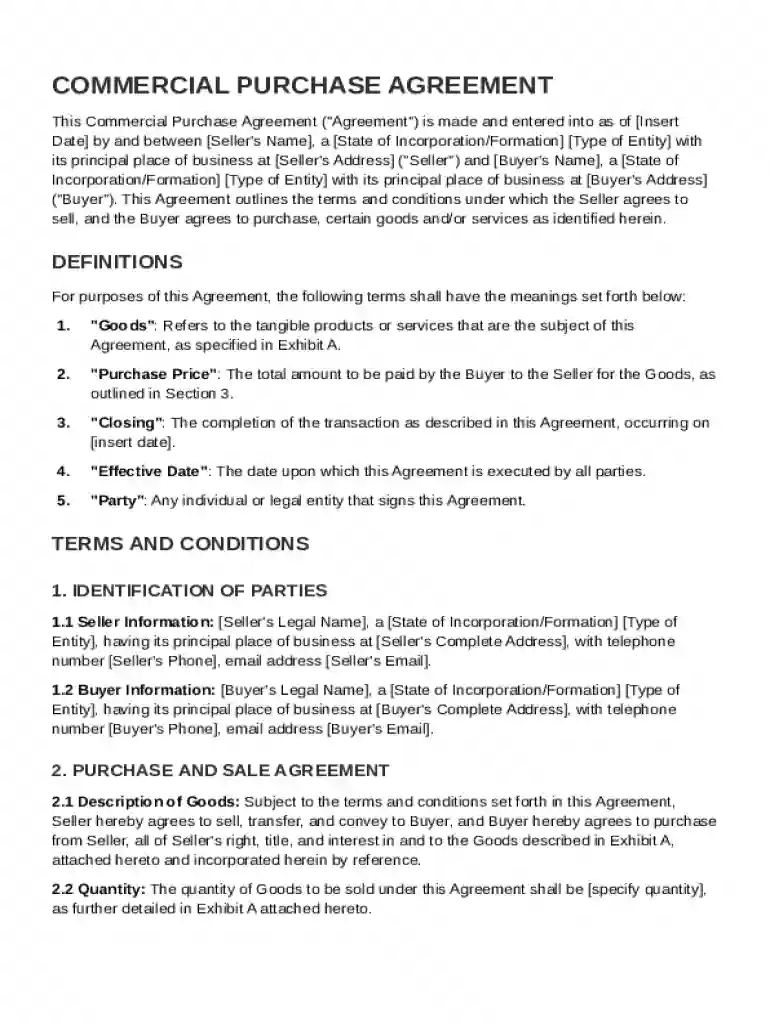
The Commercial Purchase Agreement Template is a legal document that outlines the terms and conditions regarding the sale of goods or services between two parties, typically a buyer and a seller. It serves as a formal record of the agreed-upon terms such as purchase details, payment obligations, and delivery conditions, all of which are crucial for establishing a clear understanding and protecting the interests of both parties involved.
Key Components
- Parties Involved: Identification of the buyer and seller, including their legal names and contact information.
- Purchase Details: Description of the goods or services being sold, including quantity, quality specifications, and price.
- Payment Terms: Conditions under which payment is to be made, including currency, method of payment, and deadlines.
- Delivery Conditions: Logistics of how and when the goods will be delivered, including risk transfer points.
- Legal Provisions: Including warranties, indemnifications, dispute resolution processes, and governing laws.
How to Use the Commercial Purchase Agreement Template
Using a Commercial Purchase Agreement Template involves adapting the document to reflect the specific transaction details of the sale. This process ensures the agreement is tailored to the unique needs of the parties involved.
Steps to Customize
- Identify Parties: Begin by correctly identifying and listing the names and details of both the buyer and seller.
- Describe Goods/Services: Clearly define the items being sold, including quantities and specific characteristics.
- Set Payment Terms: Outline the agreed-upon payment structure, including any deposits or installments.
- Define Delivery Terms: Specify the delivery method, expected timeline, and responsibilities for shipping or courier.
- Include Legal Clauses: Incorporate necessary clauses to cover warranties and how disputes will be resolved should they arise.
Practical Example
If a company is purchasing computer hardware from a tech supplier, the agreement should list each item's model, serial numbers (if applicable), contract price, and expected delivery dates. Payment terms might detail a percentage of the cost upfront, with the remainder due upon delivery.
Steps to Complete the Commercial Purchase Agreement Template
Completing the Commercial Purchase Agreement Template requires careful attention to ensure all elements of the transaction are accurately captured and legally enforceable.
Step-by-Step Process
- Initial Drafting: Fill out the template with the basic transaction information.
- Review for Accuracy: Check that all details are correct, including quantities and specifications.
- Negotiate Terms: Discuss any negotiable items such as delivery timelines or warranty terms with the other party.
- Legal Review: Have legal counsel review the document to ensure compliance with relevant laws.
- Final Agreement: Both parties should sign the finalized document, acknowledging understanding and acceptance of the terms.
Edge Cases
Be mindful of possible variations, such as unusual payment structures, multiple delivery locations, or conditional pricing, and ensure these are addressed in the agreement.
Key Elements of the Commercial Purchase Agreement Template
Several essential components form the backbone of a robust Commercial Purchase Agreement, ensuring clarity and mutual understanding.
Core Clauses
- Goods/Services: A comprehensive description to prevent discrepancies.
- Price and Payment: Clear figures and deadlines to avoid disputes over financial transactions.
- Delivery and Risk: Well-defined terms for timing, location, and risk transfer to prevent confusion regarding responsibilities.
Additional Clauses
- Warranties and Indemnities: Protects rights and limits liabilities for quality issues.
- Termination Conditions: Specific scenarios where the agreement may be terminated and under what conditions.
- Dispute Resolution: Procedures for resolving any conflicts through mediation, arbitration, or legal action.
Business Types that Benefit Most from the Commercial Purchase Agreement Template
Different business entities can leverage this template according to their organizational structure and transaction activities.
Beneficiary Business Types
- Corporate Entities: Especially those involved in regular supply chains, such as manufacturers or distributors.
- SMEs: Small and medium enterprises benefit from structured templates to ensure comprehensive documentation.
- Startups: Essential for startups needing to formalize relationships with suppliers and clients to safeguard interests.
Important Terms Related to the Commercial Purchase Agreement Template
Understanding specific legal and business terminologies can enhance the comprehension of the agreement’s terms.
Key Terms
- Consideration: This refers to what each party receives in exchange under the agreement, usually the goods versus payment.
- Default: The failure to meet an obligation, often resulting in penalties or termination.
- Force Majeure: A clause that excuses parties from liability for natural or unavoidable events that disrupt compliance with the agreement.
Understanding such terms ensures clear communication and effective transaction execution.
Legal Use of the Commercial Purchase Agreement Template
The legal standing of a Commercial Purchase Agreement Template is central to enforceability and protection.
Compliance Requirements
- ESIGN Act: Ensures that signatures are legally binding when executed electronically within the U.S.
- State-Specific Laws: Compliance with specific state regulations to avoid any legal conflicts.
Real-World Application
For instance, securing a transaction between a U.S. retailer and an overseas supplier, this template can ensure clarity on international shipping responsibilities and payment under American sales law.
State-Specific Rules for the Commercial Purchase Agreement Template
U.S. states may have unique legal requirements affecting how these agreements should be structured.
Examples of Variations
- Governing Law Clauses: Specify which state's law is applicable, which can impact dispute resolution.
- Sales Tax Requirements: Different states apply differing sales tax responsibilities on transactions.
Being aware of these nuances helps tailor the agreement to meet specific legal criteria, ensuring compliance and enforceability.