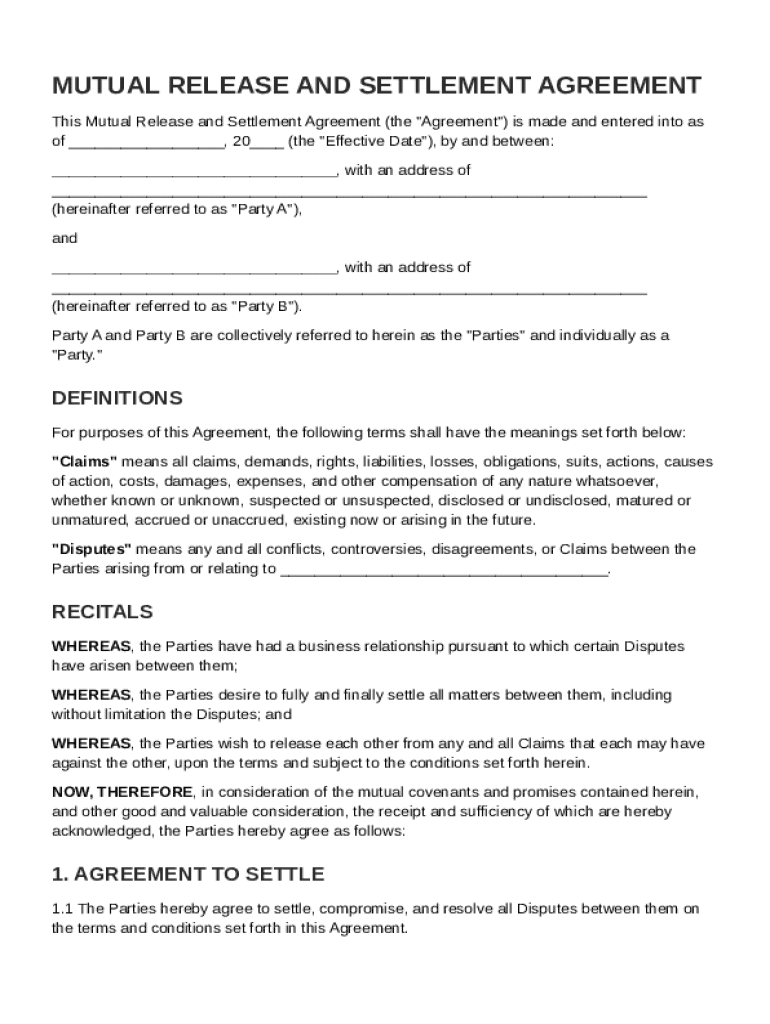







Definition & Meaning
A Mutual Release and Settlement Agreement is a legal document that formally resolves a dispute between two parties, Party A and Party B, through agreed-upon terms and conditions. This agreement typically involves the mutual release of claims, meaning both parties waive any legal rights to pursue further action regarding the dispute. Additionally, the agreement often includes a settlement payment, confidentiality provisions, and non-disparagement clauses. It is crucial to understand that entering into this agreement does not signify an admission of liability by either party; rather, it represents a mutual agreement to resolve the issue and move forward.
How to Use the Mutual Release and Settlement Agreement Template
Using the Mutual Release and Settlement Agreement Template can streamline the process of drafting a legal agreement by providing a structured framework. Begin by customizing the template with the specific details of your case, including the names of the parties involved and the nature of the dispute. Pay particular attention to sections requiring input, such as the description of claims being released and the terms of any settlement payments. Ensure every clause reflects the agreed-upon terms to avoid future misunderstandings. Once the document is prepared, review it carefully, preferably with legal counsel, to ensure accuracy and compliance with any relevant laws. Finally, both parties should sign the agreement to legally bind its terms.
Key Elements of the Mutual Release and Settlement Agreement Template
When drafting a Mutual Release and Settlement Agreement, certain key elements must be included to ensure its effectiveness and enforceability:
- Mutual Release of Claims: Clearly specify the claims each party is releasing against the other.
- Settlement Payment: Outline the amount and terms of any financial settlement.
- Confidentiality: Include provisions that restrict the disclosure of agreement details.
- Non-Disparagement: Protects parties from making negative statements about each other.
- Arbitration Clause: Define the process for resolving any future disputes without litigation.
- Entire Agreement Clause: Confirms that the written agreement is comprehensive and overrides prior understandings.
Steps to Complete the Mutual Release and Settlement Agreement Template
- Identify Parties: Begin by entering the full legal names of Party A and Party B.
- Draft the Terms: Collaborate to outline the terms of settlement and mutual releases.
- Include Essential Clauses: Add confidentiality, non-disparagement, and arbitration provisions.
- Review the Document: Conduct a thorough review for accuracy and legal compliance.
- Sign and Execute: Both parties must sign the agreement, and it may also require notarization.
Important Terms Related to Mutual Release and Settlement Agreement Template
Having a clear understanding of key legal terms is critical when working with this template:
- Release: The relinquishment of a right or claim.
- Settlement: An agreement reached by the parties to resolve a dispute.
- Confidentiality: Ensures that certain information remains private.
- Non-Disparagement: A promise not to make derogatory statements about the other party.
- Arbitration: An out-of-court process for resolving disputes through a neutral third party.
State-Specific Rules for the Mutual Release and Settlement Agreement Template
Legal requirements for settlement agreements can vary by state. It is important to ensure compliance with state-specific rules, which may impact:
- Enforceability: State laws may dictate certain conditions for an agreement to be enforceable.
- Notarization Requirements: Some states require notarization for legal agreements.
- Disclosure and Notification: Specific disclosures might be mandatory under state law.
Consulting with a legal professional familiar with state laws can ensure your agreement meets all necessary legal standards.
Who Typically Uses the Mutual Release and Settlement Agreement Template
This form is widely employed by various individuals and businesses:
- Individuals: To settle personal disputes without litigation.
- Small Businesses: Useful for resolving conflicts with clients, suppliers, or partners.
- Corporations: To formally settle employment disputes, contract disagreements, or consumer claims.
- Legal Professionals: As a tool for drafting settlements on behalf of clients.
Understanding the typical users can help tailor the agreement to suit the specific needs and contexts relevant to the parties involved.


Legal Use of the Mutual Release and Settlement Agreement Template
A Mutual Release and Settlement Agreement is a legally binding contract once signed by all involved parties. To ensure the agreement is enforceable:
- Consult Legal Counsel: Before finalizing the agreement, seek advice from a legal professional.
- Compliance with Laws: Ensure the agreement aligns with relevant federal and state laws.
- Clarity and Completeness: The document should clearly outline terms to avoid ambiguities.
Adhering to these best practices can prevent future disputes or challenges to the agreement's validity.
Examples of Using the Mutual Release and Settlement Agreement Template
Consider the following scenarios where this template is especially useful:
- Employment Disputes: An employer and employee agree to resolve a wrongful termination claim.
- Contract Breaches: Two businesses settle a disagreement over a service contract.
- Personal Injury: Individuals reach an agreement concerning compensation for an accident.
Each case illustrates how adapting the template to specific circumstances can facilitate efficient, legally sound resolutions.