






Definition and Meaning
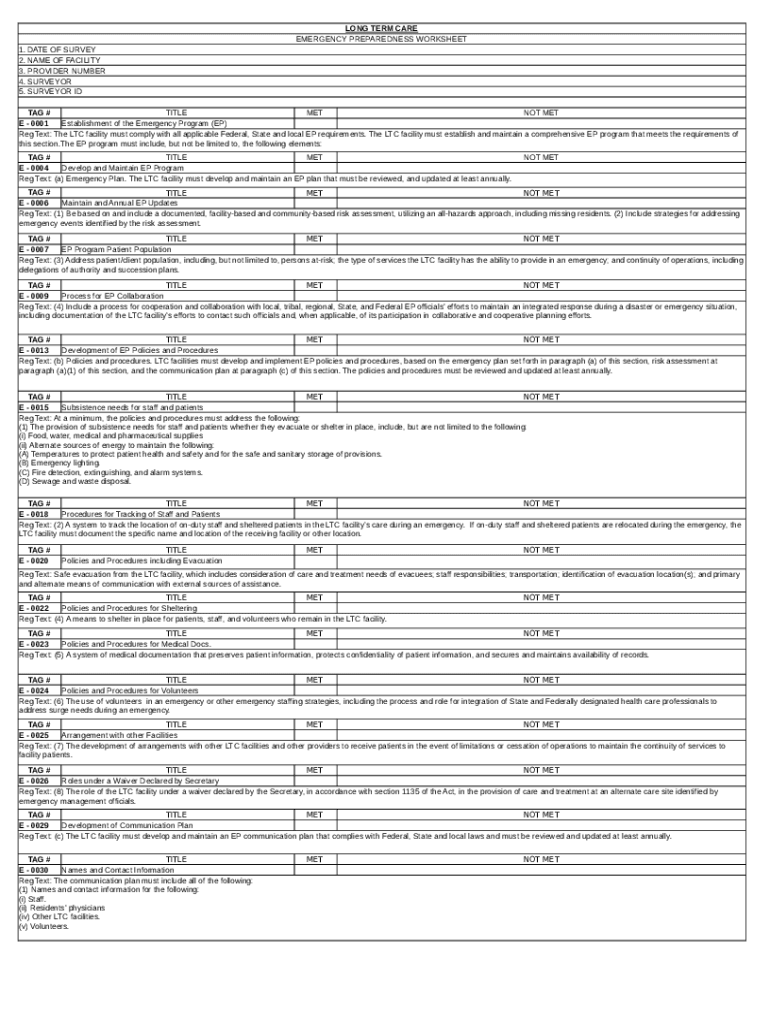
The "long term care emergency preparedness worksheet" is a critical tool designed to help long-term care facilities plan and prepare for emergencies effectively. It serves as a comprehensive guide to ensure these facilities can handle unforeseen events such as natural disasters, medical emergencies, or pandemics. This worksheet aids in developing a structured emergency preparedness plan by outlining key elements and necessary actions that need to be addressed. It assists facilities in fulfilling compliance with federal, state, and local regulations regarding emergency preparedness, ensuring that both patients and staff remain safe during emergencies.
Key Elements of the Long-Term Care Emergency Preparedness Worksheet
Facilities utilizing the worksheet need to focus on several core components:
- Risk Assessment: Identifying potential hazards and assessing their impact on the facility.
- Emergency Communication Plan: Establishing clear communication protocols during an emergency.
- Training and Testing Programs: Regularly training staff and conducting drills to ensure readiness.
- Subsistence Needs: Planning for resources like food, water, and medications necessary during extended emergencies.
- Collaboration with Local Officials: Integrating with local emergency services for a coordinated response.
Each element must be tailor-fit to the specific operations and capabilities of the facility to ensure an effective emergency response plan.
How to Use the Long-Term Care Emergency Preparedness Worksheet
- Initial Review: Start by reviewing all sections of the worksheet and familiarize yourself with its components.
- Gather Information: Collect relevant data pertaining to your facility's operations and local emergency protocols.
- Fill Out Each Section: Complete each part of the worksheet diligently, ensuring that all questions and data fields are addressed.
- Assessment and Planning: Use the worksheet to perform a risk assessment and formulate an emergency plan based on identified risks.
- Review and Update: After completing the initial plan, regularly review and update the worksheet to account for any changes in operations or new risk factors.
Steps to Complete the Long-Term Care Emergency Preparedness Worksheet
- Assign a Coordinator: Designate a team member to oversee the completion of the worksheet.
- Conduct a Facility Risk Assessment: Evaluate the facility's vulnerability to various emergency scenarios.
- Develop an Emergency Plan: Outline specific actions and responsibilities to be taken during different emergencies.
- Host Training Sessions: Train staff on the emergency procedures and conduct drills to rehearse the plan.
- Coordinate with External Agencies: Ensure alignment with local emergency services to improve the effectiveness of your response.
Who Typically Uses the Long-Term Care Emergency Preparedness Worksheet
Primarily, this worksheet is used by administrators and management teams within long-term care facilities, including:
- Nursing Homes: To protect elderly and disabled residents.
- Assisted Living Facilities: To ensure the safety of residents who require daily assistance.
- Rehabilitation Centers: To prepare for emergencies impacting their medical and support services.
It serves as a framework for staff, ensuring everyone understands their role during an emergency.


Legal Use and Compliance
The worksheet ensures compliance with regulatory standards such as those set by the Centers for Medicare & Medicaid Services (CMS). Compliance with these regulations is critical for all long-term care facilities to avoid legal repercussions and maintain operational licenses. Facilities must regularly update their emergency preparedness plans and training protocols to adhere to the latest legal and industry requirements.
Important Terms Related to Long-Term Care Emergency Preparedness
Understanding and using the correct terminology is crucial:
- Shelter-in-Place: Instructions for remaining safely indoors during a hazard.
- Evacuation Routes: Preplanned pathways for emergency exit from the facility.
- MOU (Memorandum of Understanding): Agreements with local agencies for mutual aid.
Mastery of these terms ensures clear communication during emergencies.
State-Specific Rules for the Long-Term Care Emergency Preparedness Worksheet
Emergency preparedness requirements can vary significantly between states due to differing regulations and risk factors. Facilities must ensure their plans are compliant with their specific state's guidelines, factoring in regional hazards such as hurricanes, earthquakes, or winter storms. Collaboration with state-level health departments and emergency agencies is advised to align preparedness worksheets with state mandates.
Examples of Using the Long-Term Care Emergency Preparedness Worksheet
In practice, a facility located in a hurricane-prone area might use the worksheet to develop a comprehensive evacuation plan. This includes coordinating with local transportation services, outlining routes, and ensuring each resident is accounted for. Another example is updating the worksheet to integrate lessons learned from past emergencies, ensuring better preparedness for future situations.