






Definition and Purpose of the DV-100
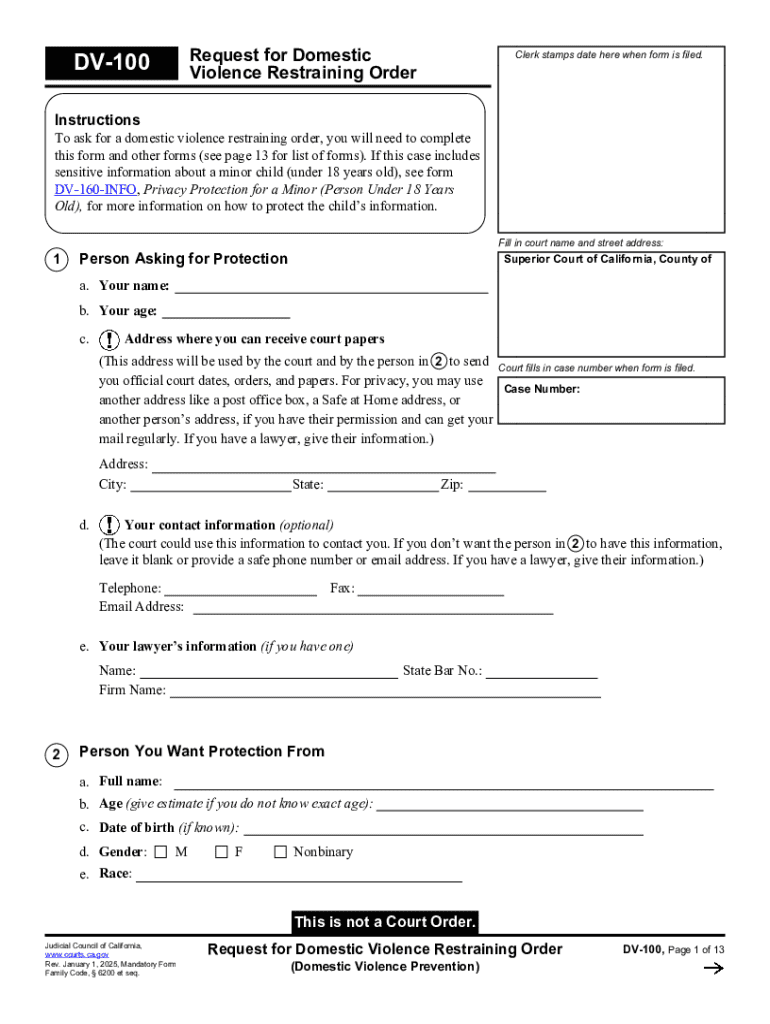
The DV-100, or Request for Domestic Violence Restraining Order, is a crucial legal document used in California to seek protection from an abuser. It serves as a formal request to the court to issue a restraining order aimed at preventing further harm or threatening behavior by a perpetrator. This form is particularly relevant in instances of domestic violence, where individuals need legal intervention to maintain safety and peace. A restraining order can provide various protections, including keeping the abuser away from the petitioner, their children, pets, and property. It is crucial for individuals facing such threats to understand the significance of this form in safeguarding their rights and well-being.
Step-by-Step Process to Complete the DV-100
Completing the DV-100 requires careful attention to detail to ensure all necessary information is accurately provided. Here is a step-by-step guide to assist individuals with this process:
- Gather Personal Information: Start by collecting personal details such as your name, address, and relationship to the abuser.
- Detail the Abuse Incidents: Describe specific instances of abuse, including dates, locations, and what occurred. These descriptions are critical for the court to understand the gravity of the situation.
- Specify Orders Requested: Clearly outline the specific protections you are seeking from the court. This may include orders for the abuser to stay away, surrender firearms, or limit contact.
- Include Additional Parties: If protection is also needed for minors, pets, or other family members, ensure their details are included.
- Attach Required Forms: Depending on your circumstances, additional forms may be needed. Ensure these are correctly filled out and submitted alongside the DV-100.
- Review and Submit: Once completed, review the form for accuracy and completeness before submission to the appropriate court.
Who Typically Uses the DV-100
The DV-100 is primarily used by individuals who are victims of domestic violence in California. This includes:
- Spouses or Former Spouses: Those seeking protection from a current or former spouse.
- Cohabitants: Individuals in a domestic partnership or living arrangement with the abuser.
- Parents and Children: Family members who need protection from a relative.
- Dating Partners: Individuals in a current or former dating relationship with the abuser.
Understanding who can leverage the DV-100 is essential, as it extends protection to various forms of domestic relationships, not just marital ones.


Legal Implications of the DV-100
Filing the DV-100 comes with significant legal implications. A restraining order is a powerful legal tool that not only restricts the abuser's actions but also impacts their legal standing. Violating a restraining order can result in severe penalties, including fines, arrest, and imprisonment. Therefore, both petitioners and respondents must understand the legal weight this form carries. A successful filing alters legal rights, offering both protection to victims and outlining specific prohibitions for the abuser.
Key Elements of the DV-100
Several key elements must be addressed when completing the DV-100:
- Personal and Abuser Information: Full names, contact information, and relationship details.
- Abuse Descriptions: Comprehensive and factual descriptions of abuse incidents.
- Court Orders Sought: Specific protective measures requested.
- Children and Dependents: Information about minors and other dependents requiring protection.
- Supporting Documents: Any evidence or documents supporting the claims made within the form.
Each element must be carefully considered to ensure the court has a complete understanding of the situation.
State-Specific Rules for the DV-100
As the DV-100 is specific to California, residents must follow the state’s unique legal procedures. The form follows guidelines set by California’s domestic violence statutes, ensuring consistency in how restraining orders are applied and enforced. This geographical specificity means individuals must file the form with the correct California court, abiding by state laws such as the California Family Code. Additionally, state legislation dictates how quickly a temporary restraining order can be obtained and the duration of such orders.
Examples of Using the DV-100
Understanding practical applications of the DV-100 can aid individuals in recognizing the form’s importance:
- Scenario 1: An individual seeking to protect her children and herself from an abusive ex-partner.
- Scenario 2: Cohabitants requiring legal protection due to escalating violent incidents.
- Scenario 3: A family member aiming to ensure safety from a threatening relative.
These real-world examples highlight the diverse situations the DV-100 can address, demonstrating its flexibility and necessity in providing legal protection.
Key Terms Related to the DV-100
Familiarity with key legal terms associated with the DV-100 is essential:
- Petitioner: The individual requesting the restraining order.
- Respondent: The individual against whom the restraining order is sought.
- Temporary Restraining Order (TRO): A short-term protective order issued until a full court hearing.
- Permanent Restraining Order: A longer-term order granted after a court hearing.
Understanding these terms aids in comprehending the process and expected outcomes associated with the DV-100.
Important Dates and Filing Deadlines
Timely filing of the DV-100 is crucial for the protection it offers. Key dates to remember include:
- Filing Deadline: No statutory deadline, but prompt filing is advised following an incident.
- Hearing Date: Usually set within a few weeks of submission.
- Temporary Order Duration: These typically last until the court hearing date.
Missing key deadlines can delay protection and potentially expose petitioners to further harm, emphasizing the importance of acting swiftly.