






Definition & Meaning of the Cloud Agreement Template
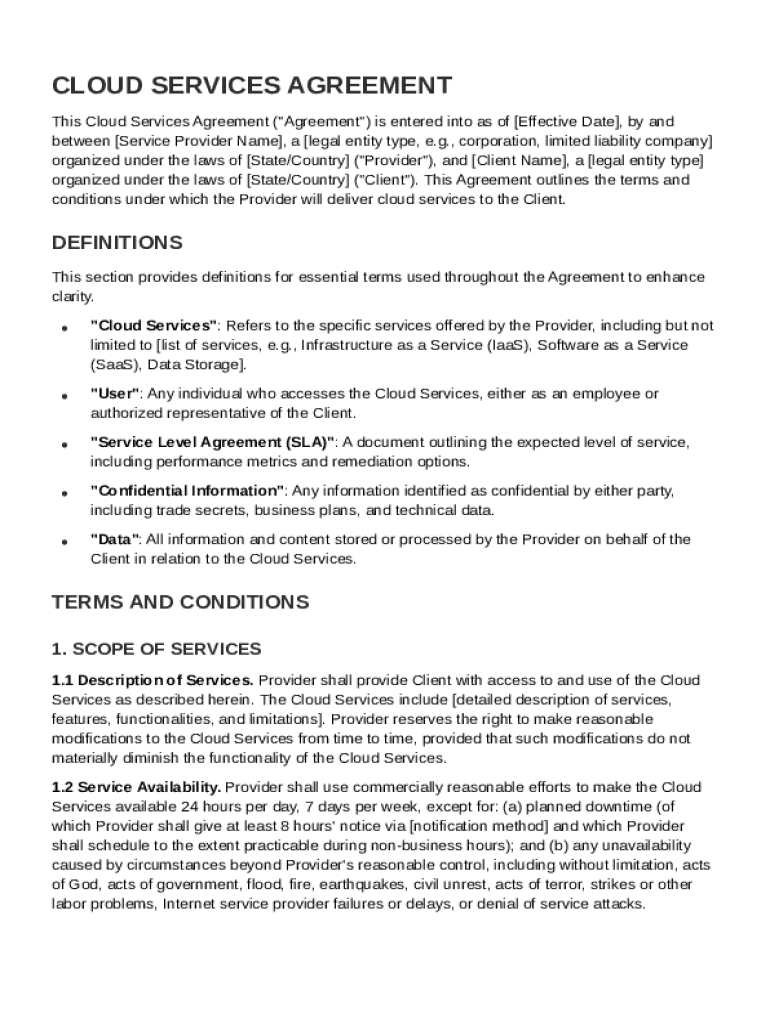
The Cloud Agreement Template serves as a structured framework for establishing contractual arrangements between a cloud service provider and a client. This template outlines the terms and conditions for the delivery and use of cloud services. By leveraging such templates, parties can ensure clarity on obligations, rights, and expectations. Common elements include definitions of key terms, descriptions of services provided, payment structures, confidentiality clauses, and more. This template is indispensable for preventing misunderstandings and ensuring smooth, compliant operations in cloud service delivery.
Key Elements of the Cloud Agreement Template
Understanding the core components of a Cloud Agreement Template is crucial in crafting a comprehensive and effective contract. These elements often include:
- Scope of Services: Clearly defines what services are included, such as computing power, storage, and support.
- Payment Structures: Details pricing models, billing cycles, and payment terms to prevent financial disputes.
- Confidentiality Clauses: Ensures sensitive information is protected and outlines non-disclosure agreements.
- Service Level Agreements (SLAs): Specifies the performance metrics, uptime guarantees, and remedies for service failures.
- Liability Limitations: Sets boundaries on the extent of potential damages or losses and outlines indemnification responsibilities.
- Dispute Resolution: Provides methods for addressing disagreements, including arbitration processes and choice of law clauses.
Steps to Complete the Cloud Agreement Template
Completing the Cloud Agreement Template involves several critical steps to ensure all aspects are thoroughly covered:
- Identify Parties: Clearly state the names and contact information of the involved parties.
- Define Services: Outline the specific services to be provided, including delivery methods and timelines.
- Establish Terms: Set payment terms, renewal options, and termination clauses.
- Set Performance Metrics: Incorporate SLAs with measurable criteria and remedies for non-compliance.
- Include Compliance Requirements: Ensure adherence to relevant laws, such as data protection and privacy regulations.
- Review and Amend: Allow room for negotiations and amendments, providing a clear process for modifications.
- Finalize and Sign: Upon agreement by both parties, finalize the document with signatures, making it legally binding.
How to Use the Cloud Agreement Template
Using a Cloud Agreement Template effectively involves customization and alignment with the specific needs of both parties. Here’s a general guide:
- Customize: Tailor the template to reflect the specific services and terms agreed upon by both parties. This can include modifying clauses related to data protection or specific SLAs.
- Consult Legal Experts: Engage with legal professionals to ensure the template meets legal standards and protects your interests.
- Negotiate Terms: Use the template as a starting point for negotiations and adjust as necessary to reach mutual agreement.
- Implement Monitoring Tools: Set up systems to monitor compliance with the terms agreed upon, especially in relation to SLAs and payment schedules.
Legal Use of the Cloud Agreement Template
The legal enforceability of a Cloud Agreement Template is contingent upon several factors:
- Compliance with Laws: The agreement must adhere to applicable laws and regulations, such as data protection laws in the U.S.
- Valid Signatures: All parties must sign the agreement, and electronic signatures must comply with the ESIGN Act.
- Complete and Clear Terms: Agreements should be comprehensive, with no ambiguous terms, to avoid potential disputes.
- Fair Terms: Ensure that terms are fair and do not overpoweringly favor one party over the other, or they risk being unenforceable in court.
Examples of Using the Cloud Agreement Template
Practical applications of the Cloud Agreement Template can be seen across various industries:
- SMEs using SaaS Platforms: A company outsourcing customer relationship management processes can use a Cloud Agreement Template to define terms of service with a SaaS provider.
- Healthcare Providers: Hospitals can secure patient data compliance by specifying data handling and storage protocols in their cloud service agreements.
- E-commerce Platforms: Online retail businesses ensure cloud hosting services meet traffic demands by including specific uptime guarantees in their agreements.
Important Terms Related to the Cloud Agreement Template
Understanding key terminology within a Cloud Agreement Template enhances comprehension and accuracy:
- Indemnification: A clause where one party agrees to cover any losses or damages incurred by another party.
- Force Majeure: Events outside the control of either party—such as natural disasters—that may exempt them from contractual obligations.
- Uptime: The period when the services are operational and accessible, often expressed as a percentage.
- Amendment Clause: Allows for changes to the agreement, provided all parties consent to the modifications.
Business Types that Benefit Most from Cloud Agreement Templates
Different business entities can significantly benefit from utilizing a Cloud Agreement Template:
- Startups: These businesses often rely heavily on cloud services for scalability and should ensure clear agreements to protect their operations.
- Enterprises: Large companies deal with vast amounts of data and require detailed agreements to manage security and compliance risks.
- Non-Profits: Organizations can leverage cloud services to minimize costs, necessitating clear terms to ensure effective resource utilization.
- Tech Companies: Firms that develop software or information systems benefit from structured agreements to manage service delivery and intellectual property rights efficiently.
By customizing a Cloud Agreement Template to fit these varied needs, businesses can ensure a strong legal foundation for their cloud service engagements.