







Definition & Meaning
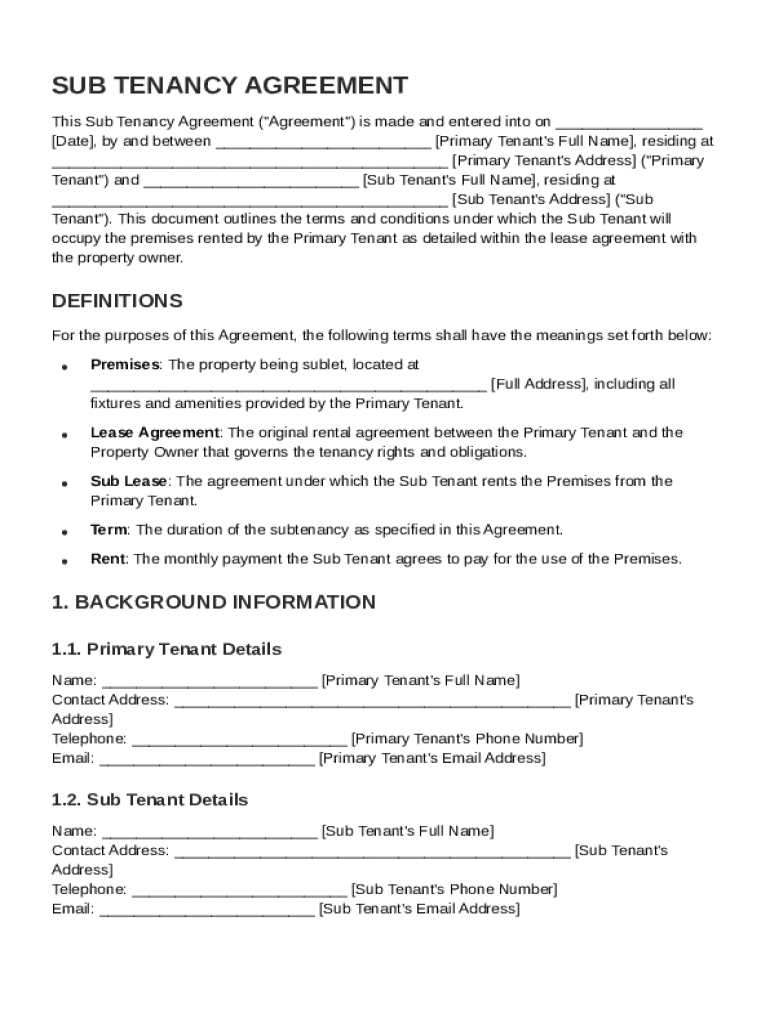
The Sub Tenancy Agreement Template is a legal tool used to outline the terms and conditions under which a subtenant occupies a property rented by a primary tenant. This document serves as a formal agreement, detailing the responsibilities and rights of both the subtenant and the primary tenant. Key elements include property details, rent payment arrangements, and termination conditions. Such agreements are particularly valuable for tenants who need to temporarily rent out their space, ensuring clarity and legal protection for both parties.
Practical Usage
A Sub Tenancy Agreement Template is essential when a primary tenant decides to lease part or all of their rented property to another individual. This might occur due to relocation, extended travel, or financial necessity. The template helps in documenting the subtenancy arrangement, providing a clear record that protects both parties. By comprehensively outlining terms, such as maintenance obligations and liability clauses, it minimizes potential disputes and legal complications.
How to Use the Sub Tenancy Agreement Template
To effectively utilize the Sub Tenancy Agreement Template, users should follow a structured process:
- Review the Terms: Examine all sections of the template to understand its contents fully.
- Customize the Template: Fill in specific details, such as the property address, rental amounts, and the duration of the sublease.
- Add Parties' Information: Include the identities and contact information of both the primary tenant and the subtenant.
- Specify Payment Guidelines: Clearly outline rent payment terms, including due dates and acceptable payment methods.
- Discuss Responsibilities: Clarify the maintenance duties and liability provisions to avoid future conflicts.
- Signatures and Dating: Ensure that both parties sign and date the agreement to formalize the sublease.
Tools and Steps for Completion
To complete the template, one will need access to a digital or printed copy of the document and might use document editing tools like DocHub. This platform allows users to easily fill out forms, add electronic signatures, and share documents securely.
Key Elements of the Sub Tenancy Agreement Template
A well-structured Sub Tenancy Agreement should include several critical elements:
- Premises Description: Identify the space being subleased, with detailed specifications of any shared or exclusive areas.
- Duration of Sublease: Clearly define the start and end dates of the sublease term.
- Payment Terms: Specify the rent amount, due dates, and methods of payment.
- Responsibilities and Maintenance: State each party's obligations regarding property maintenance, repairs, and utility payments.
- Termination Clause: Outline the conditions under which either party can terminate the agreement prematurely.
- Security Deposit: Detail any deposit requirements, including amounts and conditions for its return.
Practical Examples and Scenarios
Consider a primary tenant who accepts a job transfer requiring relocation. They could use this agreement to sublease their apartment, specifying shared areas like laundry facilities while retaining certain rights. This ensures ongoing rent coverage and compliance with the original lease terms.
Legal Use of the Sub Tenancy Agreement Template
The legality of sub-tenancy agreements hinges on compliance with state laws and the original lease agreement's terms. Tenants must seek landlord approval prior to subleasing to avoid breach of the lease. Once established:
- Adhere to State Laws: Each state has unique regulations governing subleases, influencing terms like notice requirements and permissible charges.
- Landlord Consent: Obtain and document the landlord's written consent to sublease.
- Fair Housing Compliance: Ensure that the subleasing decision does not discriminate based on race, gender, religion, or other protected classes.
Binding Legal Agreement
The signed template acts as a legally binding contract, offering recourse through legal channels in the event of disputes. It is advisable for both parties to retain a copy for their records.
Important Terms Related to Sub Tenancy Agreement Template
A few essential terms help clarify the agreement's conditions:
- Subtenant: The individual taking over partial or full occupancy from the primary tenant.
- Primary Tenant: Original renter who subleases the property they rented from the landlord.
- Premises: The specific location or part of the property being subleased.
- Security Deposit: A refundable amount held to cover potential damages or lease violations.
- Liability Clause: Specifies the extent of responsibility each party holds for property damage or personal injury.
Understanding These Terms
Understanding these terms ensures clarity, helping prevent misinterpretations or legal issues. They set clear expectations for both parties involved in the agreement.
State-Specific Rules for the Sub Tenancy Agreement Template
Sub-tenancy laws vary widely by state, affecting the regulations around permissible terms and legal enforceability:
- California: Requires notice and documentation compliance with state tenancy law.
- New York: Has specific rent control and stabilization guidelines that may impact subleasing terms.
- Texas: Demands explicit landlord approval for subleases and may have distinct notice periods for termination.
Navigating Different State Laws
Researching specific state requirements is critical to ensure compliance and the enforceability of the subleasing contract. This information can often be found on state government websites or through legal assistance.
Examples of Using the Sub Tenancy Agreement Template
A diverse range of scenarios can benefit from using a Sub Tenancy Agreement Template:
- Temporary Relocation: Primary tenants relocating for a short-term work assignment can maintain occupancy rights with minimal inconvenience.
- Shared Housing: Situations where a tenant lets part of their home, such as a bedroom, to help cover expenses.
- Student Housing: University students who study abroad for a semester might sublease their apartment to another student.
Real-World Case Studies
In a real-world example, a student subleasing to another student over a summer vacation prevented the need for multiple lease terminations, provided income continuity, and offered affordable housing.
Versions or Alternatives to the Sub Tenancy Agreement Template
While the basic Sub Tenancy Agreement suits most needs, alternative versions may cater to specific requirements:
- Roommate Agreements: Tailored for shared living arrangements with distinct rules on space and expense sharing.
- Corporate Housing Subleases: Designed for business-related temporary housing needs, often including additional privacy provisions.
- Vacation Subleases: When a property is rented out temporarily during peak travel seasons, often focusing on shorter terms.
Choosing the Right Template
Selecting the appropriate version depends on the specific circumstances and the nature of the sublease. Adjustments to the template might be necessary to align with individual requirements and legal statutes.
Conclusion
The comprehensive Sub Tenancy Agreement Template offers crucial benefits for tenants wishing to sublease their property while ensuring compliance with legal requirements and a clear understanding of responsibilities for all parties involved. This document serves as an essential tool for minimizing disputes and maintaining transparent and favorable lease terms.




