




01. Edit your form online
Type text, add images, blackout confidential details, add comments, highlights and more.

Type text, add images, blackout confidential details, add comments, highlights and more.

Draw your signature, type it, upload its image, or use your mobile device as a signature pad.

Send it via email, link, or fax. You can also download it, export it or print it out.
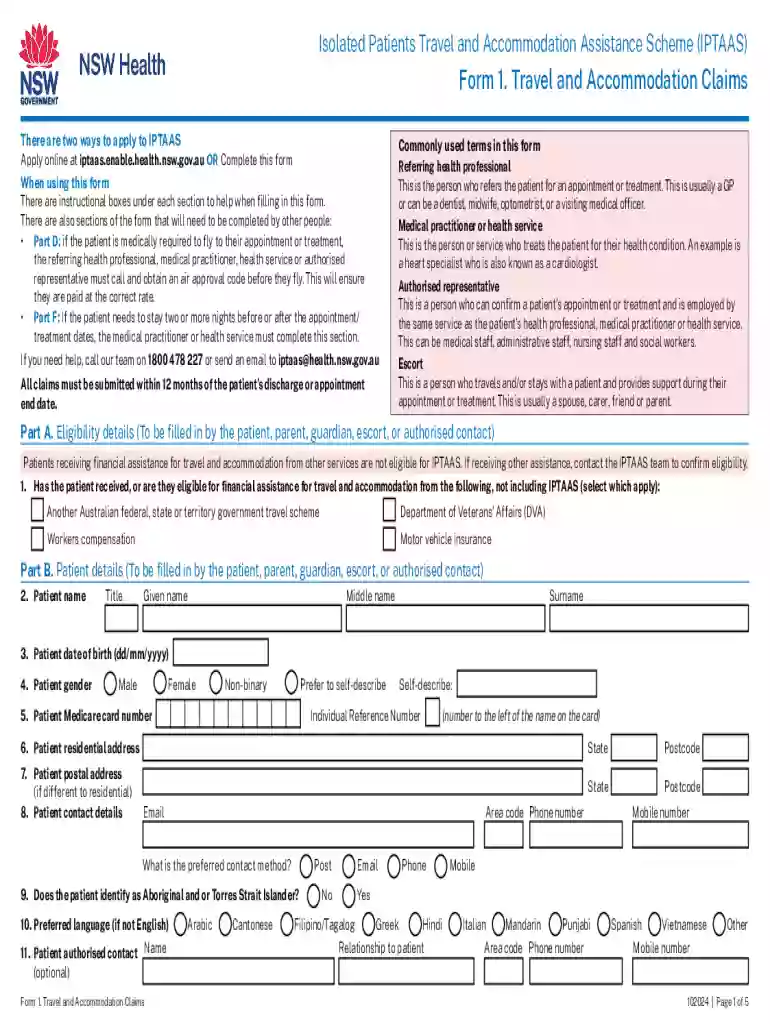
Travel and accommodation claims refer to the process by which individuals or entities request reimbursement for travel and lodging expenses incurred during work-related trips or medical appointments. These claims are typically submitted to employers, insurance companies, or government programs, and are often a crucial aspect of managing expenses related to professional duties or healthcare services. Understanding the intricacies of travel and accommodation claims is vital to ensure that reimbursements are processed efficiently and comply with relevant policies.
Travel and accommodation claims are commonly made in the context of business travel for meetings, conferences, or site visits. They are also pertinent for medical travel, where patients require reimbursement for expenses incurred to access necessary treatments, particularly in regions where specific medical specialists or facilities are not locally available.
To effectively use travel and accommodation claims, one must adhere to a series of steps to ensure all required information and documentation is submitted correctly:
Adherence to these steps ensures the efficient processing of travel and accommodation claims and minimizes delays or denials.
Completing travel and accommodation claims involves several key steps, each of which is essential to ensuring that the claim is processed and approved without unnecessary delays:
By following these steps, the travel and accommodation claims process becomes streamlined, fostering quicker approval and reimbursement.
Eligibility criteria for travel and accommodation claims can vary significantly depending on the policy or program under which the claims are being made. Generally, the following factors determine eligibility:


A thorough submission of required documents is crucial for the successful processing of travel and accommodation claims. Required documents typically include:
It is crucial to adhere to specific filing deadlines to ensure that travel and accommodation claims are processed in a timely manner. Deadlines can vary based on organizational policies but often include:
Missing these deadlines can result in denied claims or delayed processing, so it is advisable to keep track of important dates related to the claims process.
Different platforms offer varied submission methods for travel and accommodation claims. Available methods generally include:
The choice of submission method often depends on organizational resources, preferences, and the level of immediacy required for processing.
Understanding the legal use of travel and accommodation claims is essential to ensuring compliance and avoiding potential issues:
It is crucial to understand the terms and conditions of any reimbursement policy thoroughly to ensure its valid legal use and integrity in the claims process.
We've got more versions of the Travel and Accommodation Claims form. Select the right Travel and Accommodation Claims version from the list and start editing it straight away!
At DocHub, your data security is our priority. We follow HIPAA, SOC2, GDPR, and other standards, so you can work on your documents with confidence.




Travel expenses might include meals, lodging, transportation and other miscellaneous costs. You should require proof of attendance, such as airline boarding
A traveler may claim lodging reimbursement if lodging was required. Reimbursement must be for a single rate for all domestic lodging unless DocHub savingsRead more


