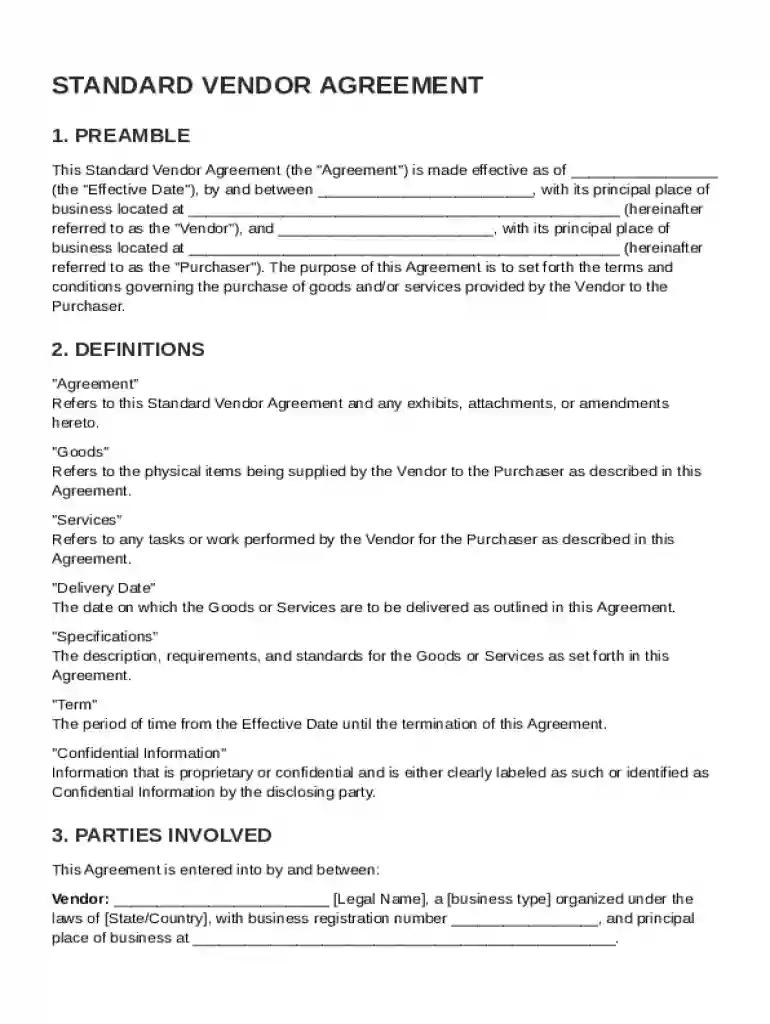
Definition and Meaning of the Standard Vendor Agreement Template
The Standard Vendor Agreement Template is a fundamental document crafted to formalize and delineate the rights and responsibilities between a vendor and a purchaser. This agreement serves as a blueprint for transactions involving the sale of goods and services, ensuring that both parties have a clear understanding of their obligations. Within this template, you will find comprehensive sections dedicated to defining key terms, setting expectations for delivery and payment, addressing warranties, and outlining procedures in the event of termination or a dispute. By providing a structured framework, this template is instrumental in safeguarding the interests of both the vendor and the purchaser, reducing the potential for misunderstandings and conflicts.
Key Elements of the Standard Vendor Agreement Template
An effective Standard Vendor Agreement Template covers several critical components, essential for its functionality and legal enforceability:
- Definitions: Clarifies specific terms used within the agreement to prevent ambiguities.
- Responsibilities: Enumerates the duties of both the vendor and the purchaser, ensuring clarity in roles.
- Payment Terms: Specifies the pricing, payment schedule, and methods accepted, reducing potential financial disputes.
- Delivery and Acceptance: Details the timeline and standards for delivery, including procedures for acceptance of goods or services.
- Warranties: Provides assurances regarding the quality and performance of products or services delivered.
- Confidentiality Obligations: Protects sensitive information shared between parties during the transaction.
- Termination Clauses: Outlines conditions under which the agreement can be prematurely ended.
- Dispute Resolution: Sets forth mechanisms for resolving conflicts without litigation.
- Governing Law: Identifies the jurisdiction's legal framework under which the agreement is interpreted.
Steps to Complete the Standard Vendor Agreement Template
Completing a Standard Vendor Agreement Template involves several steps to ensure the document meets both parties' needs:
- Identify Parties: Clearly list the names and addresses of both the vendor and purchaser.
- Outline Services or Goods: Describe the scope of goods or services in detail, including specifications.
- Establish Payment Details: Include price, currency, payment terms, and penalties for late payment.
- Set Delivery Terms: Define delivery timelines, locations, and acceptance criteria for goods or services.
- Draft Warranties: Specify any warranties, including duration and conditions.
- Include Confidentiality Clauses: Establish what constitutes confidential information and its handling.
- Detail Termination Conditions: Clearly state conditions that warrant agreement termination.
- Determine Dispute Resolution: Agree on steps for resolving disputes, potentially including mediation or arbitration.
- Review Governing Law: Ensure both parties are aware of which jurisdiction's laws will apply.
Importance of Using a Standard Vendor Agreement Template
Utilizing a Standard Vendor Agreement Template offers several benefits:
- Clarity: Provides a clear understanding of expectations and obligations, minimizing confusion.
- Risk Mitigation: Helps protect against disputes by clearly defining terms and conditions.
- Efficiency: Streamlines the contract creation process, allowing parties to focus on business operations.
- Legal Protection: Offers a basis for legal recourse in case of non-compliance by either party.
- Consistency: Ensures uniformity across multiple transactions, especially useful for businesses handling numerous vendors.
Legal Use of the Standard Vendor Agreement Template
Incorporating a Standard Vendor Agreement Template into your business practice ensures that transactions are carried out within a legal framework:
- Compliance with Law: Adheres to legal standards and practices, providing both parties legal security.
- E-Signature Compatibility: Using platforms like DocHub, electronic signatures on these agreements are legally binding under the ESIGN Act, ensuring compliance with U.S. law.
- Amendments and Addendums: Allows for legal amendments to the template, enabling updates reflecting current regulatory requirements.
Examples of Using the Standard Vendor Agreement Template
A Standard Vendor Agreement Template is applicable in various scenarios, such as:
- Retail Transactions: Used by retailers to formalize arrangements with suppliers for goods procurement.
- Service Contracts: Utilized by service providers detailing deliverables and expectations with clients.
- Manufacturing Agreements: Agreements between manufacturers and distributors specifying product delivery and payment schedules.
- Consultancy Services: Used by consultants to outline terms of service provision and client responsibilities.
State-Specific Rules for the Standard Vendor Agreement Template
Understanding state-specific regulations is crucial when drafting a Standard Vendor Agreement Template:
- State Laws: Certain provisions may vary according to state laws, particularly around clauses like termination and dispute resolution.
- Sales Tax Implications: Depending on the state, sales tax on goods or services may affect pricing and payment terms.
- Contractual Capacity: Some states have specific requirements regarding who can enter into binding contracts, particularly concerning business entities.