







Definition & Meaning
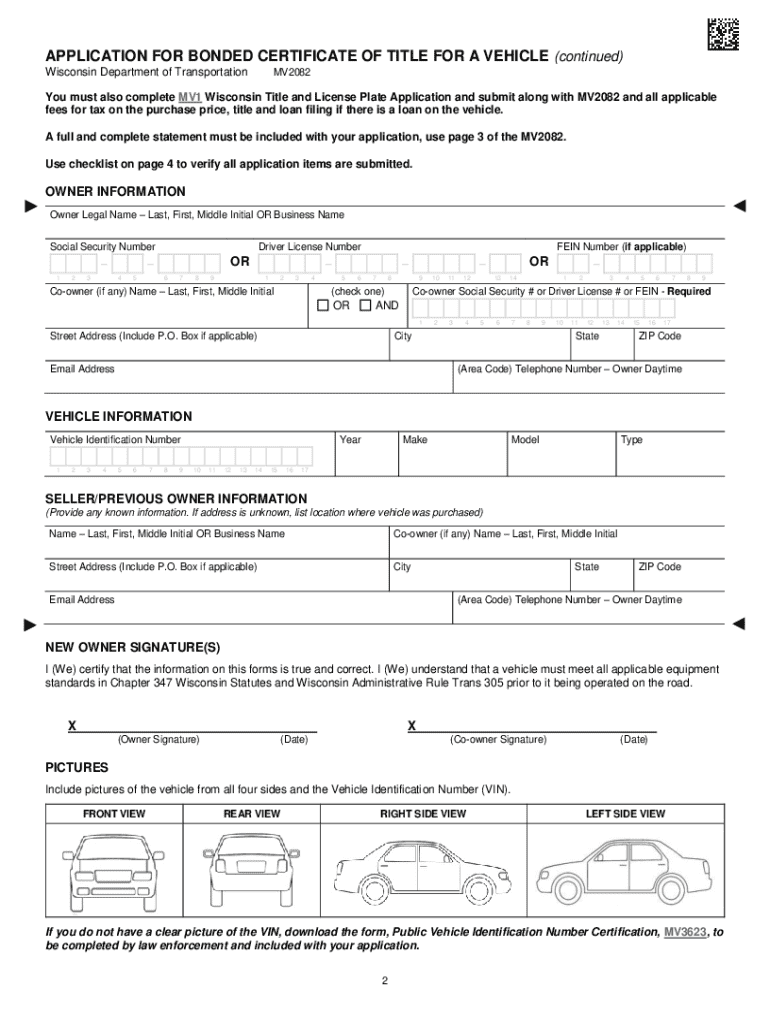
A Bonded Certificate of Title is a legal document provided by the state to affirm ownership of a vehicle when the standard title cannot be provided, perhaps due to it being lost or stolen. This document guarantees the holder legal possession, supported by a surety bond, ensuring that any legitimate claims by previous owners are covered financially. The application for a Bonded Certificate of Title involves a meticulous process to ensure compliance with state regulations and includes submitting various supporting documents and forms.
How to Use the Application for Bonded Certificate of Title
The application process for a Bonded Certificate of Title is a step-by-step procedure, crucial for acquiring the legal rights to your vehicle when the original title is missing. Applicants typically interact with their respective Department of Motor Vehicles (DMV) to initiate the application. This process might include verifying the vehicle's identification number, history check, and ensuring no liens are attached. After collecting all necessary documents and meeting state requirements, the application is submitted alongside a surety bond, which acts as financial protection against potential claims on the vehicle.
Steps to Complete the Application for Bonded Certificate of Title
- Verify Vehicle Records: Confirm ownership history and lien status with the DMV.
- Gather Documentation: Collect previous titles, bills of sale, and any evidence of ownership.
- Obtain a Surety Bond: This bond must match the DMV's valuation of the vehicle.
- Submit the Application: Fill out state-specific forms and submit them along with the surety bond and any required fees.
- Await Approval: The DMV will review your submission; this can take several weeks.
- Receive the Title: Once approved, the bonded title will be mailed to you, allowing for legal vehicle registration and use.
Required Documents
To apply for a Bonded Certificate of Title, specific documents are necessary to prove rightful ownership. These include any previous titles, a bill of sale if applicable, photos of the vehicle, and a clear vehicle identification number (VIN) check. The need for a surety bond underscores the importance of financial assurance against prior ownership claims. It is advisable to prepare a detailed history of the vehicle to preempt any issues during the verification phase by the DMV.
Eligibility Criteria
Eligibility to apply for a Bonded Certificate of Title largely depends on the state of residence and the unique circumstances surrounding the vehicle's ownership. Typically, applicants who cannot provide a traditional title but have sufficient evidence of ownership qualify for this process. States require specific conditions to be met, such as the absence of any liens or unresolved liability claims against the vehicle. Only vehicles older than a certain age or under a specific value threshold might necessitate a bonded title rather than conventional methods.


State-Specific Rules for Application for Bonded Certificate of Title
Different states mandate unique rules for obtaining a Bonded Certificate of Title. For example, requirements for vehicle inspection, documentation submission, and surety bond amounts can vary widely. Some states might necessitate a physical vehicle inspection to confirm the VIN, while others might require additional affidavits declaring the absence of liens. Understanding and complying with these state regulations is essential for a smooth application process. Prospective applicants should consult their local DMV for precise guidelines.
Legal Use of the Application for Bonded Certificate of Title
Once acquired, a Bonded Certificate of Title provides the same legal recognition as a regular title but with specific limitations. It is used primarily to register and legally operate the vehicle on public roads. However, the surety bond is present as a protective measure for three to five years, depending on state requirements, ensuring that any rightful ownership claims are financially covered. It is important for vehicle owners to understand that the bonded title is not a temporary solution but a legal document with certain restrictions until the bond period lapses.
Application Process & Approval Time
The application process for a Bonded Certificate of Title involves several steps, including document preparation, vehicle history checks, and obtaining a surety bond. Submission of the application to the DMV must be meticulous to avoid delays. The approval time can vary, generally taking between four to eight weeks, depending on the state's efficiency and the completeness of the application. An accurate and well-prepared submission can expedite the assessment, avoiding unnecessary delays or rejection.
Key Elements of the Application for Bonded Certificate of Title
Several key elements constitute the application for a Bonded Certificate of Title. These include comprehensive documentation of the vehicle's history, a surety bond in the state-specific amount, and completed application forms obtained from the DMV. An emphasis is placed on clear identification and verification of ownership to prevent fraudulent claims. Applicants must ensure all details are current and accurate to avoid discrepancies during the review process. Legal compliance with all stated requirements is critical for the application's success.


