




01. Edit your form online
Type text, add images, blackout confidential details, add comments, highlights and more.

Type text, add images, blackout confidential details, add comments, highlights and more.

Draw your signature, type it, upload its image, or use your mobile device as a signature pad.

Send it via email, link, or fax. You can also download it, export it or print it out.
The term "form online" refers to an electronic version of a document that can be accessed, completed, and submitted via the internet. This format eliminates the need for paper copies, enabling users to interact with forms through digital platforms. "Form online" typically encompasses a variety of applications, such as tax filings, employment applications, and legal documents. This term implies accessibility and ease of use, allowing users to manage their documentation needs efficiently without the constraints of physical paperwork.
Using a form online typically involves several key steps to ensure a smooth process. Users start by accessing the form through a specific website or portal, often requiring login credentials for security purposes. Once logged in, users can select the form they need. It's essential to understand the instructions provided with the online form, as these will guide users through the completion process. The form is usually interactive, enabling users to input data directly into the fields. After filling in all required information, users can review their entries for accuracy before submitting the form electronically. Submissions are often confirmed via email, providing a digital receipt of the transaction.
To obtain a form online, users typically visit the relevant official website or platform hosting the document. This could be a government site for tax forms or a company's portal for job applications. Users might need to create an account for document access. After logging in, they can search for the specific form using keywords or identification numbers. Once located, forms can often be filled out directly on the site or downloaded for offline completion. Some platforms provide additional resources, like instruction manuals or FAQs, to assist users throughout the process.
Completing an online form involves the following sequence of actions, each designed to facilitate an organized submission process:
Forming online presents numerous advantages over traditional paper-based methods. First and foremost, it significantly reduces processing time by allowing instantaneous submission and receipt. Users also benefit from greater convenience, as forms can be accessed from any location with internet connectivity. The digital format often includes built-in validation to ensure fields are completed correctly, minimizing mistakes that could delay processing. Online forms are environmentally friendly, reducing paper consumption and the need for physical storage. Security measures, such as encryption, ensure that sensitive information remains protected.
A wide range of individuals and entities utilize online forms for various purposes. Common users include:


Understanding specific terminology associated with online forms enhances users' ability to navigate digital documentation processes. Key terms include:
Several critical components make up an effective online form. These elements ensure usability and functionality while maintaining data integrity.
Understanding these elements can help users better navigate and complete online forms with confidence.
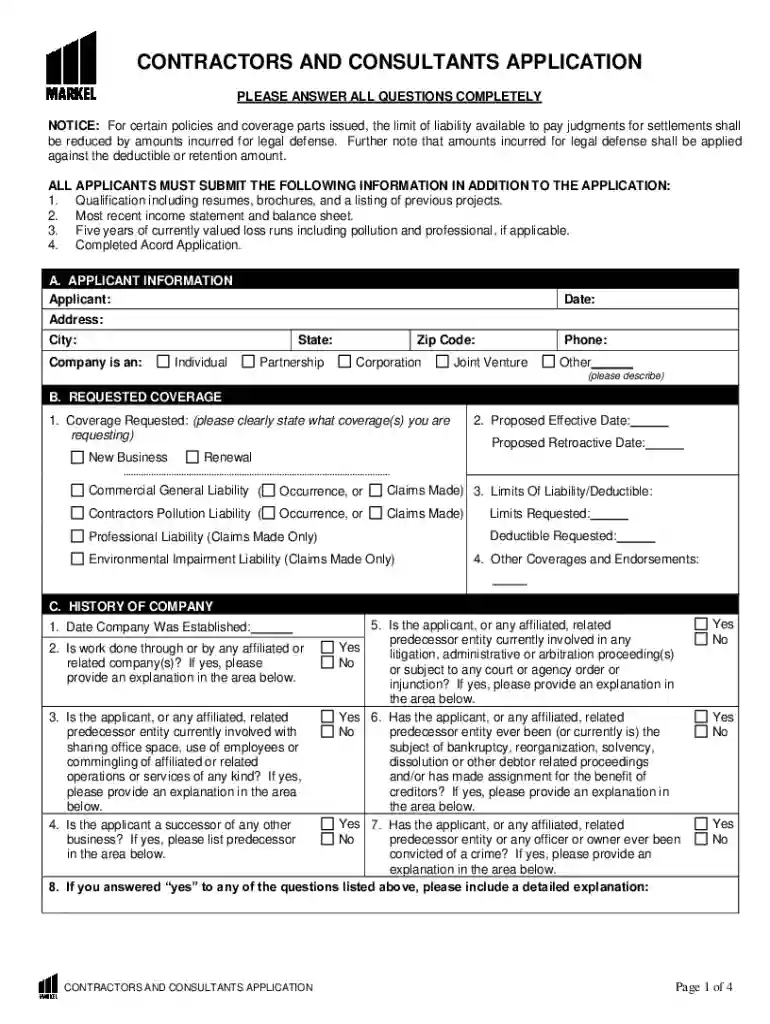
We've got more versions of the Contractors and Consultants Application form. Select the right Contractors and Consultants Application version from the list and start editing it straight away!
At DocHub, your data security is our priority. We follow HIPAA, SOC2, GDPR, and other standards, so you can work on your documents with confidence.


Is it always necessary to hire global consultants for global projects? How to involve the stakeholders in choosing the right consulting services? How to turn
Insurance companies: All insurance companies selected by contractor must be rated A- or above in the most recent edition of the A.M. Bests Key Rating Guide.Read more
Contractors Consultants. Contractors and Consultants. Requirements, and Approved Courses. Applications Utility Permit Online Application


