






Definition and Purpose of the Producer Shopping Agreement Template
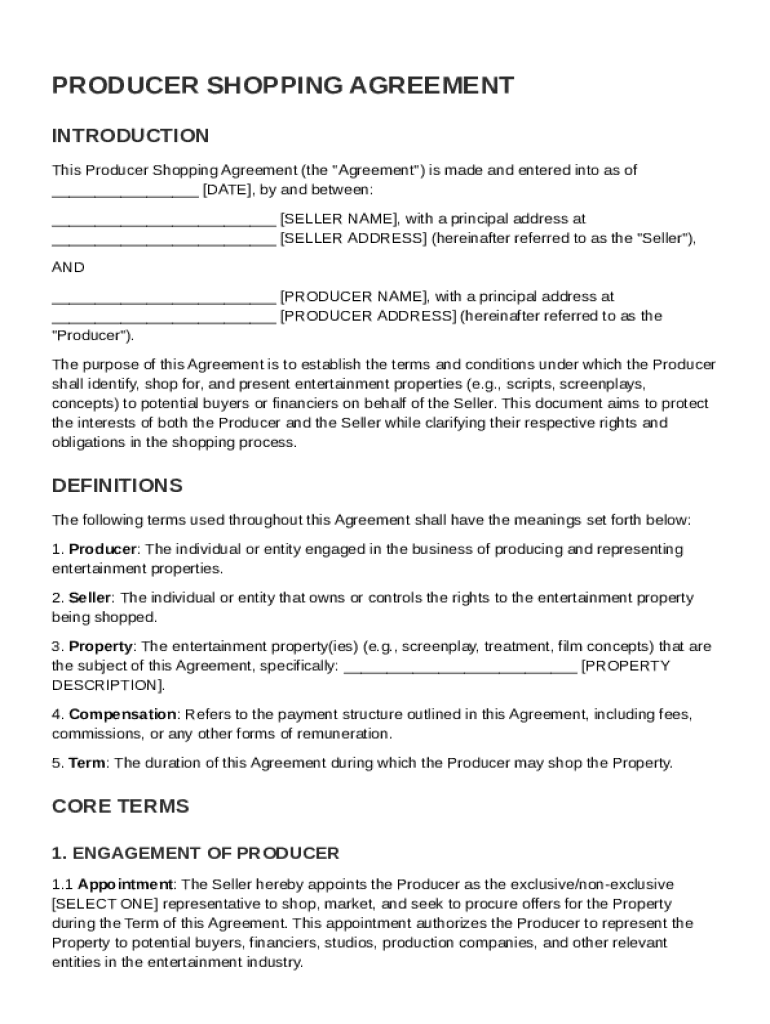
The Producer Shopping Agreement Template is a legally binding document that outlines the partnership between a producer and a seller in the entertainment industry. Its primary purpose is to detail the roles, responsibilities, and conditions under which a producer is appointed to identify and present entertainment properties to potential buyers or financiers. This includes crucial aspects like compensation structures, confidentiality clauses, and dispute resolution mechanisms. By clearly defining these elements, the template ensures that both parties’ interests are safeguarded while facilitating effective marketing and negotiation of properties.
- Roles and Responsibilities: The template delineates the specific duties and obligations of both the producer and the seller, ensuring clarity in their working relationship.
- Compensation Structures: It lays out how and when the producer will be compensated, whether through fixed payments, commissions, or royalties from successful deals.
- Confidentiality and Dispute Resolution: It includes provisions for maintaining confidentiality and resolving disputes, thus providing a legal framework for addressing conflicts.
Key Elements of the Producer Shopping Agreement Template
A comprehensive Producer Shopping Agreement Template includes several key components that specify the expectations and legal obligations of the involved parties. These elements serve as the backbone of the agreement, ensuring both clarity and enforceability.
- Parties Involved: Clearly identifies both the producer and seller, including their legal names and contact information.
- Scope of Work: Details the specific entertainment properties or projects the producer is responsible for shopping, along with any geographic or demographic focus.
- Performance Metrics: Defines any performance standards or targets that the producer must achieve for bonuses or continued engagement.
- Duration and Termination: Specifies the agreement's duration and any conditions under which it can be terminated by either party.
Steps to Complete the Producer Shopping Agreement Template
Filling out the Producer Shopping Agreement Template involves several crucial steps to ensure accuracy and compliance with legal standards. This step-by-step guide assists users in completing the document effectively.
- Gather Information: Collect all necessary details about the parties and the entertainment properties involved.
- Define Terms: Clearly outline all roles, compensation structures, and confidentiality clauses to prevent future misunderstandings.
- Review Legal Clauses: Pay close attention to dispute resolution mechanisms and ensure they align with both parties’ expectations.
- Consult a Legal Expert: Before finalizing, have a lawyer review the agreement to verify compliance with relevant laws and regulations.
- Finalize and Sign: Both parties should carefully review, agree upon all terms, and then sign the document to make it legally binding.
Why Use the Producer Shopping Agreement Template
Utilizing a Producer Shopping Agreement Template is advantageous for both producers and sellers in the entertainment industry. This template offers a structured approach to formalizing business relationships and securing mutual benefits.
- Clarity and Transparency: The template brings structure to the relationship by clearly outlining roles, duties, and compensation, reducing potential for disputes.
- Legal Protection: Ensures that both parties are legally protected, especially in cases of disagreement, through predefined terms and dispute resolution conditions.
- Efficiency: Streamlines negotiations by providing a well-structured starting point that can be customized to suit specific project needs.
Who Typically Uses the Producer Shopping Agreement Template
Various stakeholders in the entertainment industry make use of the Producer Shopping Agreement Template. This tool is particularly beneficial for parties involved in the acquisition and distribution of entertainment properties.
- Producers: Individuals or companies aiming to shop and market entertainment properties to buyers and financiers.
- Sellers: Entities looking to appoint producers to sell or market their entertainment projects.
- Entertainment Lawyers: Legal professionals who draft or review agreements on behalf of clients to ensure compliance with laws.


Important Terms Related to Producer Shopping Agreement Template
Understanding the terminology within a Producer Shopping Agreement Template is crucial for its proper use and implementation. Several essential terms commonly found include:
- Exclusivity: Whether the producer has sole rights to shop the property to buyers or if multiple parties can be involved.
- Compensation: Details the payment method, whether fixed or based on achievements like sales targets or project milestone completions.
- Territory: The geographic area in which the producer has the rights to market the properties.
Legal Use of the Producer Shopping Agreement Template
The legality of the Producer Shopping Agreement Template relies on its adherence to contract law principles and regulations governing the entertainment industry. It serves as a critical legal tool for formalizing the relationship between a producer and a seller.
- Compliance: The document must comply with local, state, and federal laws applicable to entertainment contracts.
- Enforceability: To be legally enforceable, the agreement must clearly outline all terms, be signed by both parties, and include essential contract law elements like mutual consent and consideration.
State-Specific Considerations for the Producer Shopping Agreement Template
Understanding state-specific regulations is essential when using the Producer Shopping Agreement Template in the U.S., as different states might have unique legal requirements.
- Governing Law Clauses: Include a clause specifying which state’s laws will govern the agreement, especially if the parties are in different locations.
- Regulatory Compliance: Adhere to any particular regulatory requirements or industry norms in the state where the contract is executed or performed.