







Definition & Meaning
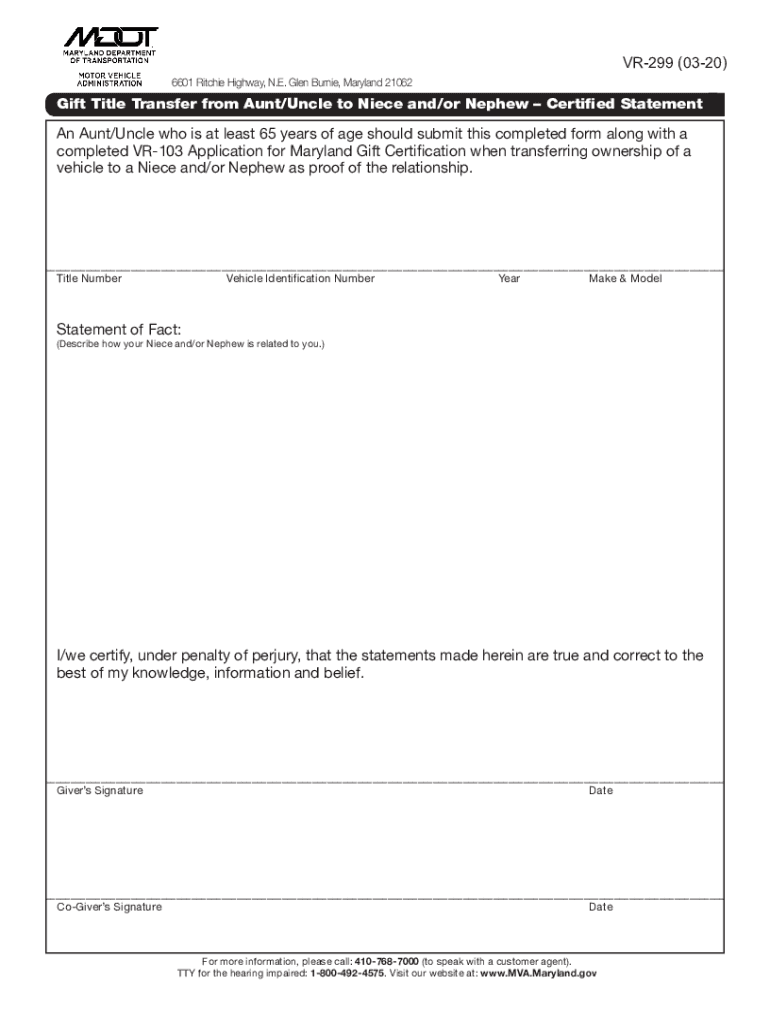
The VR-299 form, officially titled the Certified Statement for Transfer of Ownership of a Vehicle From an Aunt or Uncle Aged 65 or Older to their Niece and/or Nephew, is a legal document used in Maryland. This form facilitates the transfer of vehicle ownership under specific familial and age conditions. The transfer process requires a detailed declaration of the relationship between the involved parties, ensuring the transaction is both legal and recognized by the state's motor vehicle administration.
How to Use the VR-299 VR-299
The use of the VR-299 VR-299 involves several steps to ensure a smooth transfer of ownership. Follow the detailed procedures below:
- Confirm Eligibility: Ensure the vehicle owner is an aunt or uncle aged 65 or older, and the recipient is a niece and/or nephew.
- Complete the Form: Fill out the VR-299 with accurate details, including full names of both parties, the relationship, and the vehicle information.
- Pair with VR-103: You must complete and submit the VR-103, Application for Maryland Gift Certification, alongside the VR-299 to certify the transaction as a gift.
- Submit Optional Documents: Attach valid identification and proof of relationship, such as birth certificates or other legal documents.
- Finalize Transfer: Visit a Maryland Vehicle Administration office to submit the forms, paying any applicable fees.
Steps to Complete the VR-299 VR-299
Completing the VR-299 requires precision and attention to detail. Here are the steps to ensure correctness and compliance:
- Gather Necessary Information: Obtain relevant details about the vehicle, owner, and recipient. This includes VIN, make, model, and year of manufacture.
- Fill Out Personal Details: Provide accurate personal details of both the seller and recipient, ensuring full names and correct addresses.
- Declare the Relationship: Clearly articulate the familial relationship that validates the use of this certified statement for the transaction.
- Sign and Date: Both parties should sign and date the form in designated areas to validate the information provided.
- Double-Check the Form: Review the completed form for any errors or omissions that may lead to delays or rejections.
Who Typically Uses the VR-299 VR-299
The primary users of the VR-299 form are family members involved in intergenerational vehicle ownership transfers. These typically include:
- Older Relatives: Aunts or uncles aged 65 or older wishing to gift a vehicle to their niece and/or nephew.
- Nieces and Nephews: Individuals receiving a vehicle as a gift from their elderly relatives.
- Legal Representatives: Individuals or legal entities handling estate or familial transactions, ensuring compliance with state laws.

Important Terms Related to VR-299 VR-299
Understanding key terms on the VR-299 form is crucial for accurate completion:
- "Certified Statement": A legally-binding declaration of the transfer details and eligibility conditions.
- "Ownership Transfer": Legally changing the vehicle's registered owner from the current holder to a relative.
- "Gift Certification": An acknowledgment that the vehicle is being transferred as a gift, not a sale.
Legal Use of the VR-299 VR-299
The VR-299 VR-299 must adhere to specific legal protocols:
- Compliance with State Laws: The transaction must be guided by Maryland's vehicle transfer regulations, verifying all involved parties' eligibility.
- Gift Transactions Only: The form is valid only for gift transfers and not for sales, ensuring that no financial exchange occurs.
- Accurate Representation: False declarations on the form can lead to penalties, emphasizing the importance of honest and precise information.
Key Elements of the VR-299 VR-299
The VR-299 form comprises critical components essential for its completion:
- Vehicle Information Section: Includes fields for VIN, make, model, and year, providing a comprehensive overview of the vehicle in question.
- Personal Information Section: Gathers the name, address, and relationship details of both the donor and recipient.
- Signature Fields: Sections for signatures, confirming acknowledgment of transfer conditions and terms.




