
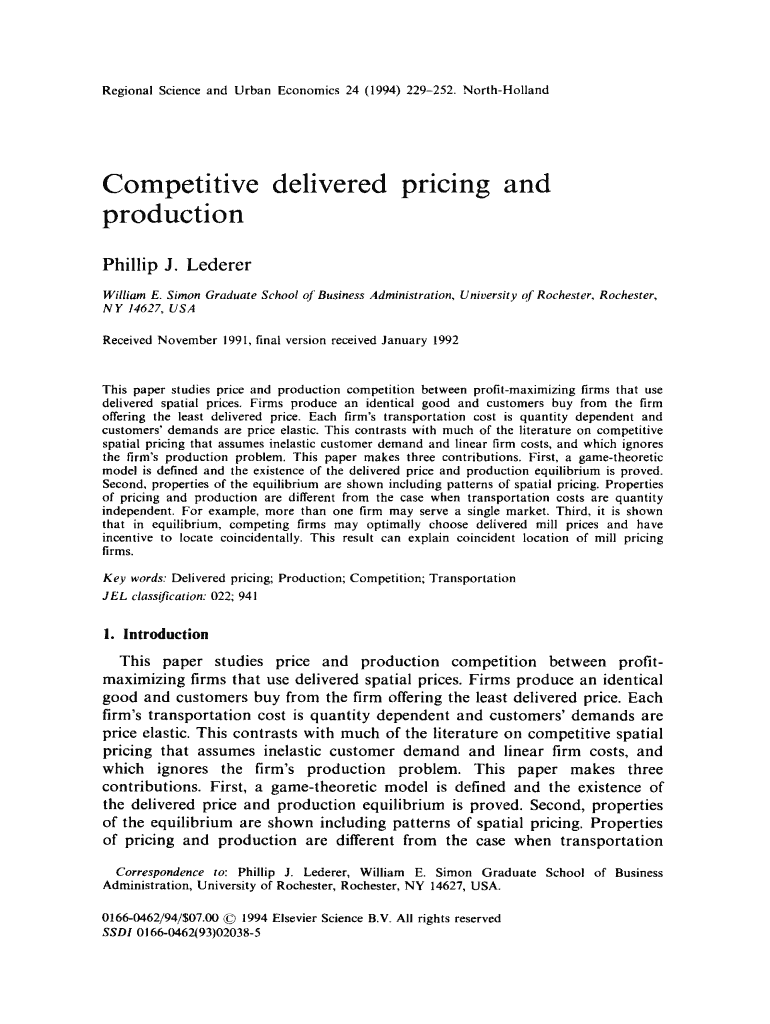







Definition and Meaning of Delivered Pricing
Delivered pricing is a strategy where the final cost of a product or service includes the transportation charges to the buyer's location. This ensures that customers have a transparent understanding of the total cost without unexpected additional fees. The concept often impacts competitive dynamics by allowing firms to compete on equal footing, regardless of their geographical location. This approach benefits both businesses and consumers by simplifying purchase decisions and fostering market competition.
Key Features of Delivered Pricing
- Inclusive Cost: The final price paid by the customer includes delivery, making it easier to compare total expenses.
- Market Expansion: Businesses can serve wider markets without the constraints of local delivery cost variations.
- Predictability: Customers can budget more efficiently as they know the exact cost upfront, minimizing fluctuations related to transportation.
How to Use Delivered Pricing
Implementing delivered pricing involves a few strategic steps to ensure it's both efficient and customer-friendly. Understanding the logistics and pricing structure is vital for both businesses and end-users.
Business Implementation Steps
- Analyze Delivery Costs: Calculate transportation expenses based on distance, weight, and volume to determine appropriate pricing.
- Set Pricing Models: Decide whether to use a flat rate for simplicity or a tiered structure based on proximity to distribution centers.
- Communicate Clearly: Ensure all prices reflect the delivered cost upfront in marketing materials and customer invoices.
Consumer Considerations
- Research Price Competitiveness: Compare prices across vendors to ensure fair value.
- Review Shipping Policies: Understand terms and conditions related to delivery times and potential surcharges.
Steps to Complete Delivered Pricing and Documentation
Successfully integrating a delivered pricing model involves several procedural steps to align operations, finance, and customer service.
Procedure
- Draft Pricing Structures: Create various pricing tiers that include delivery costs for different customer categories or geographical zones.
- Develop Contracts: Include clear terms in business contracts that outline delivery-related pricing and obligations.
- Integrate Technology: Use software for efficient pricing calculations and real-time updates to reflect changing logistics costs.
Documentation Requirements
- Cost Analysis Reports: Maintain detailed records of cost evaluations to substantiate pricing decisions.
- Customer Communication Logs: Document interactions to ensure transparency in price negotiations.
Why Utilize Delivered Pricing
Choosing delivered pricing can provide several strategic advantages to businesses and customers alike. It simplifies logistics and supports competitive pricing strategies.
Advantages
- Enhanced Customer Loyalty: Simplicity and transparency in pricing build trust and long-term relationships.
- Operational Efficiency: Streamlines logistics by minimizing negotiation time over delivery costs.
- Market Penetration: Facilitates entry into new regions by standardizing prices, reducing barriers of perceived value discrepancies.
Key Elements of Delivered Pricing
Understanding the components of delivered pricing is crucial for successful implementation. These elements ensure cohesive strategies and customer satisfaction.
Essential Components
- Price Calculation: Considers all factors influencing delivery, such as fuel, distance, and local taxes.
- Customer Segmentation: Differentiates pricing strategies based on customer location and order volume.
- Technical Infrastructure: Employs precise software tools to manage dynamic and complex pricing models.
State-Specific Rules for Delivered Pricing
While delivered pricing is largely universal, specific regulatory considerations may vary by state in the United States. Businesses must ensure compliance with regional regulations.
State Variations
- Sales Tax Regulations: Affects how delivered pricing should be broken down and reported.
- Transport Regulations: Influences the logistical feasibility and pricing structure based on state-specific transport laws.
Compliance Recommendations
- Monitor Changes: Stay informed about regulatory changes in key operational states.
- Legal Consultation: Work with legal experts to ensure pricing models adhere to all applicable laws.
Important Terms Related to Delivered Pricing
Familiarity with industry jargon and related concepts is essential for both practitioners and consumers working with or selecting delivered pricing.
Vocabulary
- FOB (Free on Board): A term indicating price includes goods placed on board, with the buyer taking liability from that point.
- CIF (Cost, Insurance, Freight): Similar to Delivered Pricing, but includes separate specified costs like insurance.
- Zone Pricing: Adjusts prices based on geographic zones relative to the delivery destination.
Examples of Using Delivered Pricing
Recognizing how delivered pricing applies in practical terms can provide clarity and showcase its utility across various business models.
Scenario Illustrations
- Retail Goods: A furniture retailer incorporates a flat delivery fee within the price of items to ensure consistency across their network.
- E-commerce Platforms: Online marketplaces may offer free delivery above certain purchase thresholds to mitigate customer hesitation.
Through these approaches, delivered pricing demonstrates operational advantages by fostering transparent client relationships and simplified cost structures.




