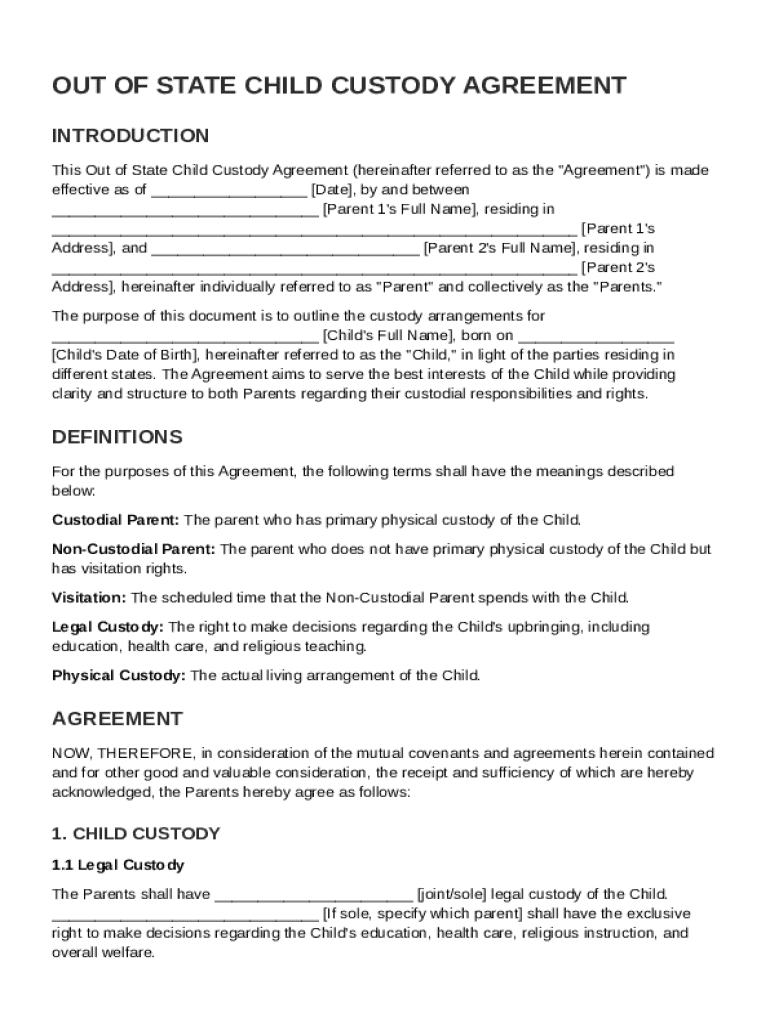







Definition and Meaning of the Out of State Child Custody Agreement
The Out of State Child Custody Agreement outlines custody arrangements for parents residing in different states. This legal document establishes the responsibilities and rights of both custodial and non-custodial parents. It details arrangements such as legal and physical custody, visitation rights, and decision-making responsibilities regarding key areas like education and healthcare. By stipulating these conditions, the agreement aims to minimize disputes and ensure a child-centric approach, prioritizing the best interests of the child involved.
How to Use the Out of State Child Custody Agreement Template
Using the Out of State Child Custody Agreement Template involves several crucial steps. First, import and open the template on DocHub, where you can edit and customize the document according to your needs. Begin by filling in basic information about each parent and the child or children involved. Specify the custody and visitation schedules, then outline decision-making responsibilities and financial obligations, ensuring both parents understand their roles and commitments. After completing the document, both parties should review and agree on the terms before signing the agreement electronically on DocHub.
Steps to Complete the Out of State Child Custody Agreement Template
-
Input Personal Information: Begin by entering the names, addresses, and contact details of both parents. Include the child’s full name and birth date.
-
Define Custody Terms: Specify whether the custody will be joint or sole, and indicate which parent will have physical and legal custody.
-
Establish Visitation Schedules: Frame a detailed visitation timetable, including holidays, weekends, and vacations.
-
Outline Decision-Making Responsibilities: Allocate responsibilities for significant decisions regarding education, medical care, and extracurricular activities.
-
Specify Support Obligations: Include details on child support payments, stating the amount, frequency, and payment method.
-
Include Additional Provisions: Add any extra conditions relevant to your situation, such as protocol for travel or relocation.
-
Review and Finalize: Both parties should thoroughly review the entire document, making any necessary revisions before finalizing.
-
Sign and Distribute: Use DocHub’s electronic signature feature to sign the agreement. Distribute the document to relevant parties and keep a copy for records.
Important Terms Related to the Out of State Child Custody Agreement Template
-
Custodial Parent: The parent who has primary physical custody of the child.
-
Non-Custodial Parent: The parent who does not have primary custody but retains visitation rights.
-
Legal Custody: Refers to the authority to make significant decisions regarding the child's welfare, such as healthcare or education.
-
Physical Custody: Determines where the child lives and which parent provides daily care.
-
Visitation Rights: Scheduled time that the non-custodial parent spends with the child.
-
Child Support: Financial payments made to the custodial parent to help cover the expenses of raising the child.
-
Joint Custody: Both parents share legal or physical custody of the child.
-
Sole Custody: One parent has both legal and physical custody of the child.
Key Elements of the Out of State Child Custody Agreement Template
-
Child Information: Full names and birth dates of the children involved.
-
Parent Details: Contact information and addresses for both parents.
-
Custody Arrangement: Clarification of legal and physical custody terms.
-
Visitation Schedule: Detailed plan for when and how the non-custodial parent will spend time with the child.
-
Decision-Making Protocols: Guidelines on how decisions about the child's upbringing are shared between parents.
-
Financial Details: Information about child support payments, including amounts and schedules.
-
Conflict Resolution: Steps to resolve any disagreements that may arise concerning the agreement.
-
Modification Clause: Process for making changes to the agreement as circumstances change.
State-Specific Rules for the Out of State Child Custody Agreement Template
Each U.S. state has unique laws regarding child custody agreements, which can impact the enforceability of an Out of State Child Custody Agreement. For instance, states like California have specific guidelines about relocating with a child, while Texas emphasizes the preservation of a child’s relationship with both parents. It's crucial for the agreement to comply with the laws of the child’s home state. Review relevant state statutes or consult with a legal professional to ensure the agreement aligns with local legal requirements and seeks court approval if necessary for enforcement.
Legal Use of the Out of State Child Custody Agreement Template
The Out of State Child Custody Agreement Template is a legal document that should be used in accordance with applicable laws. It must accurately reflect the arrangements both parents consent to and be drafted with an understanding of the jurisdiction governing the child’s residence. It's advisable for both parties to seek independent legal counsel to review the agreement before it becomes legally binding. Once signed, the agreement may be presented to a court to support the custody arrangement if disputes arise.
Who Typically Uses the Out of State Child Custody Agreement Template
This template is primarily used by divorced or separated parents living in different states. It is also relevant for parents who are legally separating and wish to formalize custody arrangements across state lines. Family law professionals, including attorneys and mediators, may use this template to facilitate agreements between their clients. Additionally, it is useful for parents in the military or those whose employment requires frequent relocation, ensuring their custody arrangements remain clear despite geographical challenges.