






Definition & Meaning
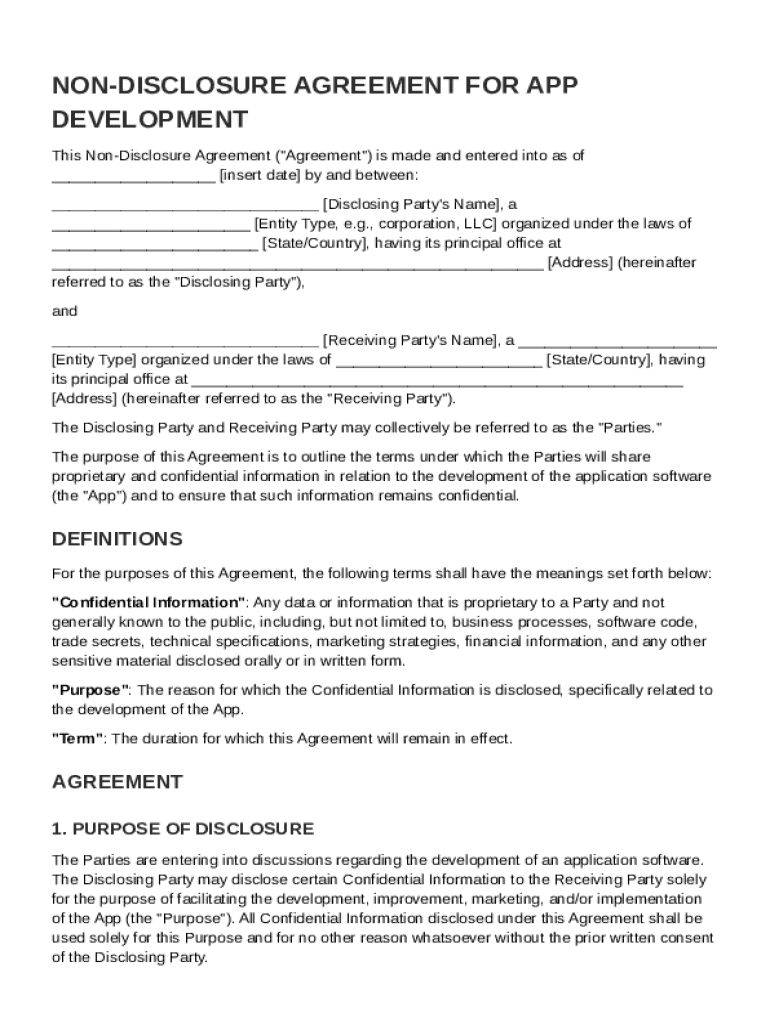
A Non-Disclosure Agreement (NDA) for App Development is a legal document that outlines the terms under which two parties, typically referred to as the Disclosing Party and the Receiving Party, will share confidential information related to the creation and development of an application. This agreement is crucial for protecting proprietary information, ensuring that the receiving party does not disclose or misuse sensitive data.
- Confidential Information: Refers to any non-public information that a party wishes to protect, including technical specifications, business strategies, and client data.
- Obligations: The receiving party must commit to safeguarding the disclosed information and using it solely for app development tasks.
- Exclusions: Certain information may not be considered confidential if it becomes public through no fault of the receiving party or if it was already known prior to disclosure.
Key Elements of the Non-Disclosure Agreement
When drafting or reviewing a Non-Disclosure for App Development Agreement Template, several key elements must be included to ensure comprehensive protection.
- Identification of Parties: Clearly define who the Disclosing and Receiving Parties are.
- Definition of Confidential Information: Specify what constitutes confidential information in the context of app development.
- Duration: Define the time period during which the agreement is effective and how long the confidentiality obligations continue post-expiration.
- Obligations and Restrictions: Outline what the receiving party can and cannot do with the information.
- Remedies for Breach: Specify legal consequences if either party does not comply with the agreement terms.
Steps to Complete the Non-Disclosure Agreement Template
Completing a Non-Disclosure Agreement template involves several methodical steps to ensure it is filled out correctly and legally binding.
- Review the Template: Understand the structure and requirements of the NDA.
- Enter Party Details: Fill in the name and contact information for both the Disclosing and Receiving Parties.
- Specify Confidential Information: Clearly outline the types of information considered confidential.
- Set Duration and Terms: Define how long the agreement will last and any specific terms.
- Include Legal Provisions: Ensure that provisions for breach, governing law, and amendment processes are included.
- Sign the Agreement: Both parties must sign the document, either physically or electronically, to make it enforceable.
Who Typically Uses the Non-Disclosure Agreement Template
This kind of agreement is a staple in the tech industry, particularly among those involved in app development.
- App Developers: Individuals or teams who create, design, and code applications.
- Startups: New companies that may rely on NDAs to protect innovative app ideas during development stages.
- Entrepreneurs: Business owners who need to share confidential business plans or strategies with developers or partners.


Important Terms Related to Non-Disclosure Agreements
A thorough understanding of essential terms enables parties to better navigate and negotiate NDAs.
- Non-Compete Clause: A provision that prevents parties from entering into business engagements that directly compete with the subject app.
- Intellectual Property (IP) Rights: Legal rights given to individuals or companies over creations of their minds, such as app algorithms or designs.
- Return/Destruction of Information: Obligations related to how the receiving party must handle confidential information at the termination or expiration of the agreement.
Legal Use of the Non-Disclosure Agreement
An NDA serves several legal functions that extend beyond mere protection of information.
- Preservation of IP Rights: Ensures that intellectual property is secured and not disclosed inadvertently.
- Protection in Legal Disputes: Acts as a document of proof that clearly states the terms agreed upon, providing a foundation in case of litigation.
- Breach of Contract: Defines explicit penalties and remedies if the agreement is violated by either party, providing legal recourse.
State-Specific Rules for Non-Disclosure Agreements
While the core structure of NDAs remains consistent, certain state laws can affect components such as enforceability and provisions.
- California: Known for stricter scrutiny on non-compete clauses due to laws promoting business competition and innovation.
- New York: NDAs must be explicit and narrowly tailored to ensure enforceability, especially regarding the scope of confidential information.
- Texas: State laws emphasize that NDAs should not restrict employees from engaging in subsequent employment opportunities.
Software Compatibility for Drafting NDAs
Creating, editing, and managing NDAs can be streamlined by using document management platforms.
- DocHub: Facilitates the drafting and editing of NDA documents with features for adding annotations, signatures, and other essential details.
- Microsoft Word or Google Docs: Commonly used for their flexible text editing and formatting capabilities.
- PDF Software: Valuable for finalizing and securing NDAs in a format that prevents unauthorized editing.
Each section of this guide provides a comprehensive examination of respective aspects related to the Non-Disclosure for App Development Agreement Template, offering insights and guidance for effectively managing sensitive information during app development projects.