
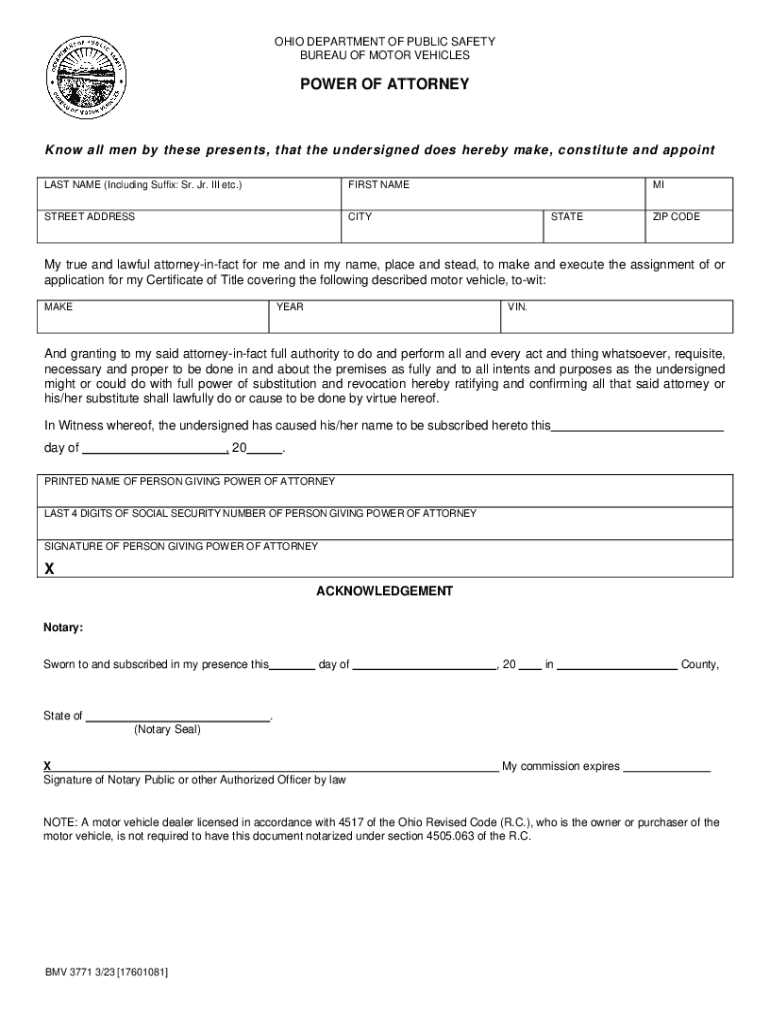







Definition and Meaning
A power of attorney (POA) is a legal document that grants an individual, known as the agent or attorney-in-fact, the authority to act on behalf of another person, referred to as the principal. This document can be comprehensive or limited in scope, allowing the agent to perform specific tasks such as managing financial affairs, signing legal documents, or making healthcare decisions. The flexibility of a POA makes it a valuable tool for individuals who anticipate being unavailable or incapacitated.
Types of Power of Attorney
- General Power of Attorney: Grants broad powers to the agent, allowing them to handle a wide range of matters on behalf of the principal.
- Limited Power of Attorney: Restricts the agent's authority to specific tasks or for a certain period.
- Durable Power of Attorney: Remains in effect even if the principal becomes incapacitated, ensuring that the agent can continue to manage the principal's affairs.
- Healthcare Power of Attorney: Allows the agent to make medical decisions for the principal in scenarios where the latter is unable to do so selbst.
How to Use the Power of Attorney
The function of a power of attorney is to enable someone to make decisions or perform actions on behalf of the principal. It is crucial for both the agent and the principal to understand the obligations and limitations of the document.
- Understand the Scope: Clearly define what actions the agent is authorized to take. This can range from managing banking transactions to selling property.
- Maintain Documentation: It is vital to keep a copy of the POA document handy to validate the agent's authority, especially when dealing with financial institutions or legal scenarios.
- Communicate Effectively: Regularly update the principal about actions taken if possible, ensuring transparency and trust in the agent’s decisions.
How to Obtain the Power of Attorney
Acquiring a power of attorney involves a few key steps. It's essential that the process complies with state laws to ensure its validity.
- Choose an Agent: Select a reliable and trustworthy person who will act in your best interest.
- Define Authority: Clearly determine the extent of the powers granted. This may involve consulting a legal advisor to draft the document accurately.
- Sign and Notarize: Both the principal and the agent may need to sign the document in the presence of a notary public.
Legal Compliance
- Verify state-specific regulations that may dictate additional witnessing or recording requirements.
- Ensure all parties involved understand the responsibilities and legal implications.
Steps to Complete the Power of Attorney
Completing a power of attorney form involves several steps to ensure legality and enforceability.
- Draft the Document: Use state-specific templates or consult an attorney for precise drafting.
- Review the Terms: Double-check the powers, conditions, and duration outlined in the document.
- Execute the Document: Have the final document signed by the principal, agent, and notary public as required.
Ensuring Validity
- Confirm the document’s compliance with your state laws.
- Keep all parties informed about any conditions or revocations of the document.
Why Should You Have a Power of Attorney
A power of attorney is crucial for effective estate planning and personal management under various circumstances.
Benefits
- Financial Management: Allows for seamless management of financial affairs if the principal is unavailable.
- Healthcare Decisions: Ensures medical wishes are respected and executed as desired.
- Continuity and Security: Provides peace of mind that personal or business matters will be handled appropriately in unforeseen situations.
State-Specific Rules for Power of Attorney
The rules governing power of attorney can vary significantly across different states.
Examples of Variations
- Notarization Requirements: Some states require additional witnesses.
- Healthcare Directives: Specific regulations may apply to medical decisions in certain jurisdictions.
Importance of State Laws
Understanding the nuances in state laws helps in drafting a POA that is legally binding and meets all compliance requirements.
Important Terms Related to Power of Attorney
An understanding of terminology is vital for all parties involved.
- Principal: The person who grants authority to another through the POA.
- Agent/Attorney-in-Fact: The individual authorized to act on behalf of the principal.
- Durability: The ability of the power to remain effective even if the principal becomes incapacitated.
- Revocation: The process by which a principal can cancel the power granted through the POA.
Clarification of Terms
Providing clear definitions ensures all parties have a mutual understanding of their roles and responsibilities.
Examples of Using Power of Attorney
Power of attorney is utilized in various scenarios, each highlighting its practical application.
- Real Estate Transactions: An agent can buy, sell, or manage property for the principal.
- Medical Decisions: Agents can consent to medical treatments on behalf of the principal.
- Financial Transactions: Agents might manage bank accounts, investments, or file taxes.
Case Studies
Providing scenarios helps illustrate the POA's utility in real-world applications, ensuring comprehensibility for principals and agents alike.
By covering these blocks in-depth, you gain a comprehensive understanding of the power of attorney, addressing its scope, purpose, and practical applications effectively.




